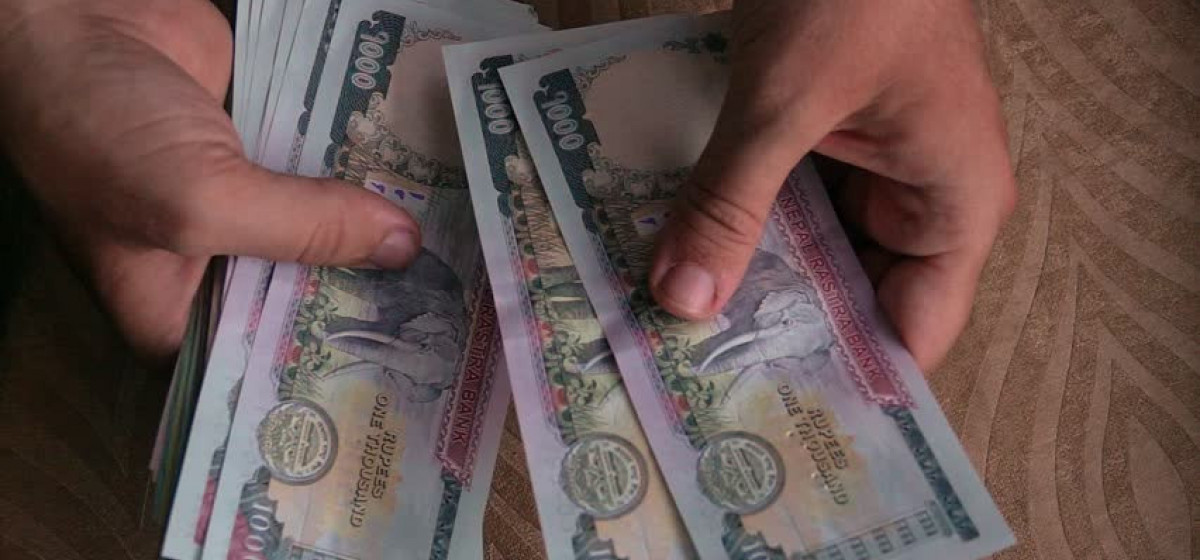
KATHMANDU, June 16: Cases of money laundering during cross-border trade have been on the rise, with the involved parties suspected of using multiple aspects of imports and exports to carry out illicit financial transactions.
According to a study carried out by the Financial Intelligence Unit (FIU) of Nepal Rastra Bank (NRB), the Financial Action Task Force (FATF) has pointed out that Nepal has been facing growing risks of trade-based money laundering (TBML).
According to FATF, TBML is the process of disguising the proceeds of crime and moving value through the use of trade transactions in an attempt to legitimize their illicit origins. “In practice, this can be achieved through the misrepresentation of the price, quantity or quality of imports or exports,” the FATF states.
Revised interest rate corridor system introduced

As per the FIU, over-invoicing is one of the mechanisms that are being used for money laundering under the TBML. The exporter invoices the goods at a price significantly higher than their actual market value. The importer pays this inflated price. An individual, who wants to move embezzled funds offshore, may buy cheap goods from a company they control in the home country, while they pay an exorbitant price for their goods abroad.
In case of under-Invoicing, the exporter invoices the goods at a price significantly lower than their actual market value. The importer pays this low price, receives the goods, and then sells them on the open market for their true value, while converting excessive amounts of revenue into legitimate profits.
In case of multiple invoicing of the TBML, a single shipment of goods is invoiced multiple times. While the goods only cross the border once, the importer makes several separate payments to the exporter, or to multiple entities associated with the exporter, using the same, or slightly altered, documentation. Multiple financial institutions may process payments for the same underlying transaction.
Similarly, illegal transactions may be done through over-shipment. In such cases, the invoice shows smaller amounts while larger quantities of goods are actually loaded into the container. The importer receives extra goods, selling them for unaccounted “clean” profit. In case of under-shipment, the invoice claims a larger quantity of goods as less amount is exported. In the process, the larger amount of money paid by importers of other countries is received as legitimate earnings.
Likewise, in falsely described goods cases, relatively low-grade exports are made in invoice, but high value goods are actually exported. The importer of another country in turn pays for the high value associated goods.
The Asset (Money) Laundering Prevention Act, 2008 has defined these acts of concealment, transformation, or transfer of illicit funds as illegal.
According to a study report of the Asian Development Bank unveiled in 2024, Nepal’s trade with India and the People’s Republic of China are among the most affected routes in terms of suspected TBML exposure, based on the volume of international trade. The goods and commodities that are commonly linked to suspicious trade transactions include kitchenware, small cardamom, chemicals, and vehicle parts.