The Supreme Court (SC) of Nepal has a backlog of over 22,000 cases. And many of them are pending for years due mainly to various procedural and administrative delays. And amid an Everest of unresolved cases, and controversy, Manoj Kumar Sharma, a junior justice at the SC, has been appointed as the chief justice (CJ).
Soon after the Constitutional Council recommended Sharma as the CJ, legal professionals including the members of Nepal Bar Association (NBA) protested against the selection of a junior justice, breaking the 70-year-old tradition of appointing seniormost justice to the post of CJ in the apex court. Sharma was in fourth place in terms of seniority. The NBA even organized a torch rally on May 19, 2026.
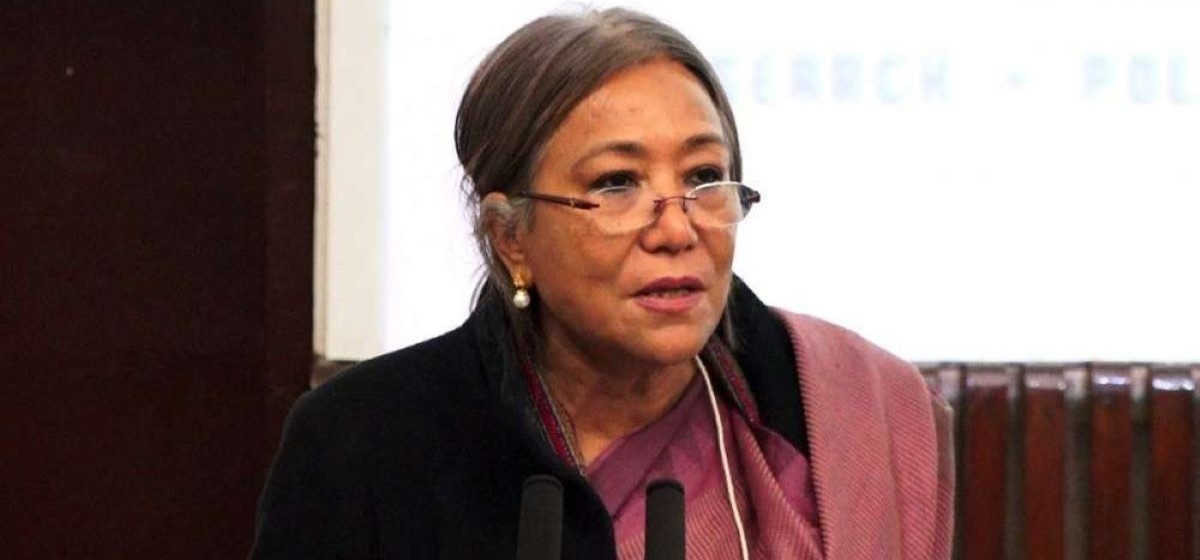
The government had revised the Constitutional Council Act through an ordinance which has made a bizzare provision that three members out of six is deemed as the majority, making a farce of the arithmetic and judicial practice. After the recommendation, the justices of the SC stood for and against the ‘departure’. The disgruntled group led by seniormost CJ-aspirant Sapana Pradhan Malla has shown signs of non-cooperation to the new CJ. Malla has been on a 20-day leave from May 19.
The new CJ bears the double brunt: the piles of pending cases and non-cooperation from his colleagues and the bickering of the NBA. This will further delay the decision of the pending cases, and the new cases. When elephants fight, it is the grass that suffers. The litigants who have been waiting for the verdicts of their cases and are exhausted by the institutional failure, delayed justice, burden of bribery and the human cost of judicial inefficiency are sure to suffer more.
Problems
Transitional Justice in Nepal: Justice Delayed, Collective Cons...

The major problem in Nepal’s judiciary is systemic. Given the number of cases the SC receives, it faces acute shortage of judges, reels under the procedural complexity, excessive adjournments, weak case management, poor digitization, politicization of judicial appointments, lack of performance accountability, and growing litigation load, among others.
Dozens of cases have remained pending for decades. The poor and elderly litigants, mainly women from remote areas, have been repeatedly travelling for hearings for decades as the court makes endless adjournments, rendering justice meaningless through time. Bishnu Kumari Pandey, a 76-year-old woman from Pokhara, has spent 12 years repeatedly travelling from Pokhara to Kathmandu, seeking justice in her son’s murder case, only to face endless postponements. The agony of an elderly mother forced to travel from Pokhara to Kathmandu is unfathomable.
Devi Sunuwar from Kavrepalanchowk, mother of Maina Sunuwar, who was killed by the security forces during the Maoist insurgency, has spent decades pursuing justice but the case moved painfully slowly through the system and institutional resistance. The gravest case of delayed justice is that of Krishna Prasad Adhikari of the Gorkha district. An 18-year-old Adhikari was abducted and killed by Maoist cadres in Chiwtan in 2004. His parents, Nanda Prasad Adhikari and Ganga Maya Adhikari, spent 22 years demanding justice through courts, hunger strikes and public appeals.
This case epitomizes delayed justice and conflict-era impunity as hearings were repeatedly postponed, accused were released on bail, political actors openly commented on the ongoing case, and the judicial process moved painfully slow. Nanda Prasad died in September 2014 at Bir Hospital after an 11-month hunger strike demanding justice for his murdered son. Even after her husband’s death, Ganga Maya continued her protest from Bir Hospital.
The case of Krishna Prasad has revealed serious systemic problems in Nepal’s judiciary. When courts decide cases with excessive delay, legal suffering becomes intergenerational, it destroys entire families, and procedural delay often benefits the powerful while exhausting ordinary citizens, and judicial inefficiency ultimately weakens public faith in democracy itself. Krishna Prasad was killed once in 2004. But his parents were made to relive his death for years inside Nepal’s justice system.
There are years-long deferred urgent cases like forceful disappearance, abductions and murders. Has any of the justices of the SC ever faced a similar situation?Are the SC and the government aware of how this malpractice has affected the judiciary? The public perception of the judiciary is that delayed justice is normal, backlogging is an institutional culture, and citizens increasingly perceive courts not as protectors of rights but as spaces of exhaustion and injustice.
But now the judiciary will find a ready-made excuse: all documents were destroyed in the ransacking and torching of the SC and other courts on September 9, 2025 and it would take a longer time to recover or recollect the documents and decide the cases. They will also give examples of Asian countries where the disease is as catastrophic as ours.
India too has millions of pending cases. Endless adjournments has become a culture, inspiring criticism. The Indian SC has acknowledged delay as a threat to constitutional rights. Bangladesh also faces large judicial backlogs, suffers from political influence, and weak access to justice for ordinary citizens. The case of Bangladesh demonstrates how overloaded courts disproportionately hurt the poor, while elites often find informal or political shortcuts. Pakistan’s higher judiciary is politically visible and activist, yet ordinary case disposal remains painfully slow. It appears that Nepal’s judiciary has become more visible in politics than effective in delivering routine justice.
However, Singapore provides the opposite model.Its judiciary emphasizesspeed, case management, digital administration, strict procedural timelines, and institutional accountability. Efficient justice is not merely about wealth; it is also about institutional culture, management, and accountability.Likewise, the Japanese courts generally avoid extreme delays because procedural discipline is stronger, adjournments are limited, and courts prioritize timely resolution. But the judiciary in Nepal is plagued with habitual postponements,lawyer-driven delay tactics, and administrative sluggishness.
Delay punishes citizens without wealth, connections, or political access. Judicial delay itself becomes a form of violence, especially for poor litigants, women, persons with disabilities, elderly citizens, and victims awaiting compensation or recognition. A verdict delivered after death is legally valid but morally hollow.A judiciary survives not through force, but legitimacy.When cases remain pending for years, citizens stop believing in courts, informal settlements rise, political mediation replaces legal remedy, and democracy weakens.
Delay in delivery of cases render courts as producers of inequality as people withmoney, political access, influence, or networkscan oftenaccelerate cases, secure better lawyers, or avoid procedural suffering. Ordinary citizens cannot afford it.Thus, delay reproduces class inequality inside the justice system. The SC is the custodian of the constitution. Nepal constitutionally guarantees access to justice and constitutional remedies. But what is the meaning of constitutional rights if courts cannot deliver timely decisions?
Conclusion
By appointing politically neutral, technically skilled, morally strong and professionally sound justices in an ethical and transparent manner, adopting judicial digitization at all levels of courts as cases move upwards, rendering registration totally online and e-filing, conducting virtual hearings, and fast-track courts, the judiciary can expedite the delivery of justice and regain its image. Nepal cannot dismiss its backlog as ‘normal’ merely because larger South Asian systems also struggle. A smaller country with far fewer cases should theoretically be more manageable. The crisis is systemic, institutional, and historical.So, go for systemic reform and be accountable to the citizens.