


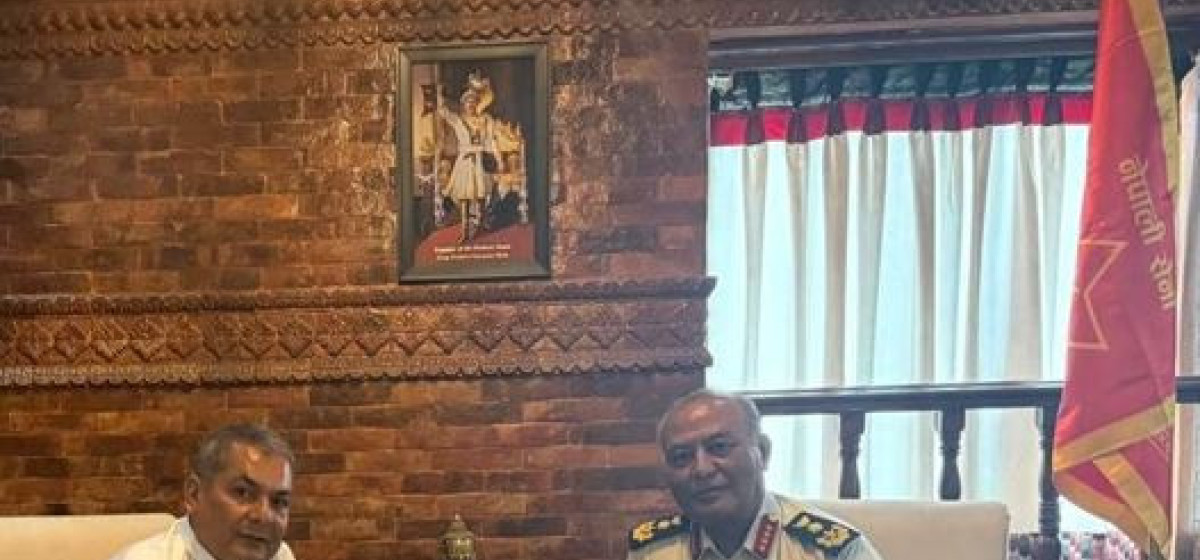
KATHMANDU, Oct 19: The Nepali Army on Friday said it has no interest in politics. Speaking at a press conference organized to brief about the post-Gen Z movement situation, Major General Anup Jung Thapa stated, “The Army does not engage in politics. It is clear from the dialogue with Gen Z that the Army does not do politics. During critical times, the Army only evaluates the security situation objectively and takes necessary initiatives to maintain peace and order.”
During the press conference, a journalist asked whether the Army had been aware of the protest beforehand and whether there had been coordination with other security agencies. The Army, however, chose not to answer the question. When the same question was repeated, Major General Thapa eventually said, “The Army always informs the government about the security situation. The Army provides updates on the nation’s security status.”
He refrained from elaborating further. It is assumed that the Army may not have wanted to discuss the security report submitted to the government. Revealing that the report was reportedly ignored could have been interpreted as the Army engaging in politics, which might explain why Thapa avoided the topic.
According to information obtained by Republica, the Directorate of Military Intelligence (DMI) under the Nepali Army had submitted reports to the Office of the Prime Minister and Council of Ministers (OPMCM), mentioning that the country’s peace and security situation was fragile. The DMI prepares and submits a report every 15 days to the Chief of Army Staff, who then forwards it to the OPMCM.
Nepali Army says Gen Z protest response were guided by objectiv...

It remains unclear who has been reviewing these reports since mid-April 2025. Within the OPMCM, such reports are submitted to a highly confidential section under the Chief Secretary. The staff in that section are responsible for presenting the Army’s report to the Prime Minister and other concerned authorities.
“All reports since mid-April mention a deteriorating peace and security situation, and the report for September says the same,” said a military officer. According to him, most of the recent reports have highlighted cyberattacks as a growing concern.
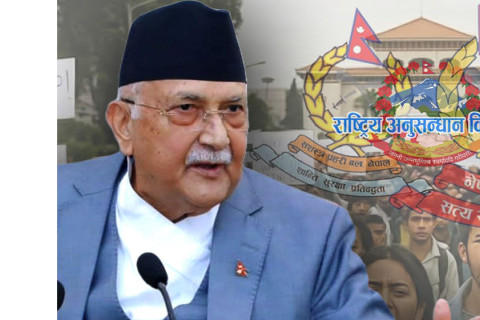
However, it is not yet known whether former Prime Minister KP Sharma Oli was made aware of the security reports submitted by the Army. Neither officials from the OPMCM nor the Army have been willing to speak on the matter. According to sources, the Corps of Intelligence compiles the data, and the Army submits it to the OPMCM.
In collecting such information, the Army has reportedly been using individuals such as journalists, teachers, local representatives, and civilians who maintain positive relations with security agencies. This method of intelligence gathering has been in practice for about five years. To collect information, these individuals approach journalists, teachers, local representatives, and the general public under various pretexts.
“The Nepali Army collects information through various channels. In coordination with journalists, teachers, local representatives, and civilians who maintain positive relations with security agencies, we gather information and submit the report to the OPMCM. Copies of the report are also shared with the Ministry of Defense, the National Security Council, and the Army Chief,” said a military official.
At the press conference, Major General Thapa acknowledged that the Army is aware when security challenges arise or protests are likely to occur, but stated that it cannot always predict their exact nature or intensity.
He added that the Gen Z movement emerged globally and, in Nepal’s case, developed not as a gradual evolution but as a sudden eruption. “Although the global waves of the Gen Z movement had been visible for some time, in Nepal, it appeared abruptly as an eruption rather than a sequential evolution. The Nepali Army, therefore, evaluated the security situation objectively and took initiatives as per the principle of necessity,” he said.
This indicates that the Army was aware of the developments. However, doubts have arisen over whether the then Prime Minister, Defense Minister, and relevant authorities were informed in time.
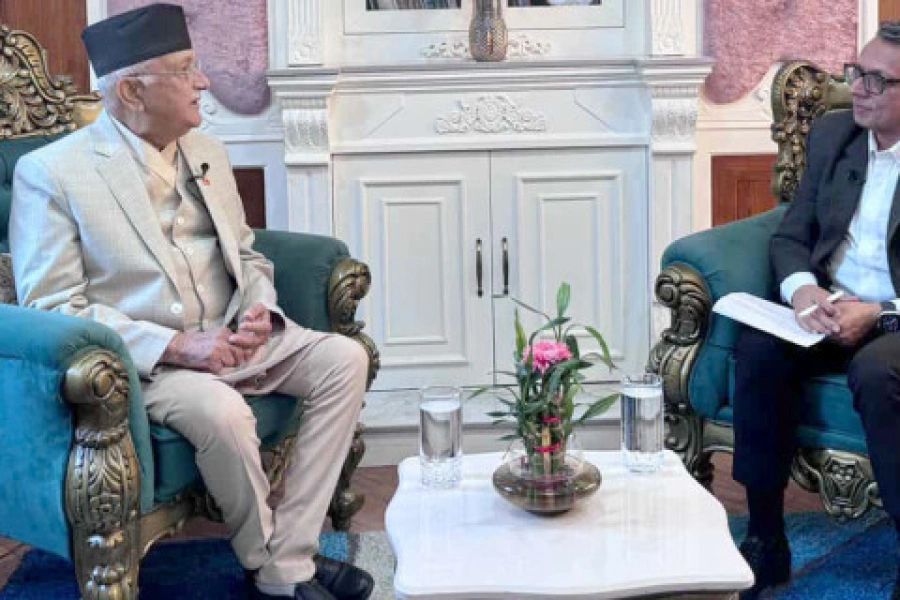
Questions are also being raised about whether the security reports submitted to the OPMCM were not communicated to then Prime Minister Oli, or if he ignored them even after being informed. Earlier, Republica Daily had reported that former Prime Minister Oli disregarded reports provided by security agencies and failed to mobilize the National Security Council effectively.












-1200x560-1779450784.webp)


