

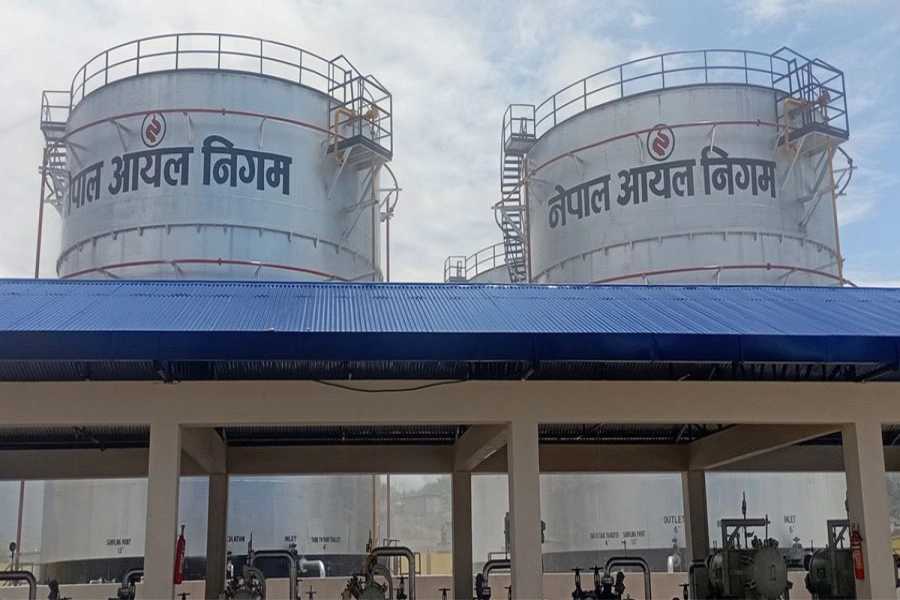
KATHMANDU, July 2: The Nepal Oil Corporation (NOC) has introduced a digital locking system for aviation fuel tankers in a move aimed at preventing fuel leakage, theft and unauthorized access during transit.
The NOC has already completed a successful trial of the technology by transporting aviation turbine fuel (ATF) from the Barauni Depot of the Indian Oil Corporation (IOC) using a digitally locked tanker. According to Pradip Yadav, chief of the NOC's Aviation Fuel Depot in Sinamangal, the pilot project confirmed that the new system works effectively.
"IOC sent a tanker equipped with a digital lock for testing purposes, and the trial was successful," Yadav said. "Since it is an advanced technology, it will help prevent fuel leakage."
Under the new system, tankers are digitally locked at the IOC depot before departure and can only be unlocked after reaching the NOC's depot in Kathmandu. Each tanker is fitted with a digital smart lock that is activated electronically once fuel is loaded. The lock can only be opened at the designated destination after authentication by an authorized person.
The system also records any attempt to tamper with the lock during transit. If someone tries to force it open or unlock it outside the designated location, the system automatically logs the incident and can immediately alert the concerned authorities.
According to Yadav, the lock operates using a unique digital code, similar to a mobile phone passcode, while the tanker's movement is continuously monitored through a GPS-based tracking system.
"Just as a smartphone is secured with a passcode, each tanker is protected by a digital code," he said. "If anyone attempts to unlock it outside the designated location, the system instantly sends an alert to the control system."
NOC slashes aviation fuel price, new airfare to come into effec...

The NOC believes the technology will significantly reduce unauthorized interference by drivers, improve fuel security and bring the entire transportation process under digital monitoring.
Officials say the system will also help curb long-standing problems of fuel leakage and theft. Under the previous mechanical sealing system, seals could be cut, replaced or tampered with during transit, allowing fuel to be siphoned off. Drivers have also occasionally faced allegations of stealing fuel while transporting it. Officials believe such activities will become extremely difficult once digital locking is fully implemented.
Binita Mani Upadhyay, chief of NOC's LPG and Aviation Department, said the corporation plans to install the digital locking system in all aviation fuel tankers.
"This is a much more advanced technology than the existing mechanical system," Upadhyay said.
He added that the IOC has proposed bearing the full cost of implementing the new system.
Officials say the technology will also substantially reduce the risk of fuel contamination because unauthorized opening of tankers during transportation will no longer be possible. Aviation fuel is highly sensitive, and even minor changes in its quality can affect flight safety. As a result, the digital upgrade is being viewed as an important step toward strengthening aviation safety.
The system also enhances accountability by maintaining a complete digital record of when a tanker was locked, whether any tampering occurred during transit, and when and by whom it was unlocked. Officials say these records will make it easier to investigate disputes or incidents while improving transparency and making both employees and transport operators more accountable.
Experts say the system could become even more effective if it is integrated with GPS tracking, fuel quantity measurement systems, real-time monitoring and a centralized control room. Such integration would allow authorities to monitor tanker locations, travel duration, route deviations and the entire transportation process through a single platform.
They also note that the technology will require regular maintenance of digital equipment, reliable communication networks, prompt technical support in the event of equipment failure and adequate training for personnel to ensure its long-term effectiveness.
The NOC plans to expand the digital locking technology beyond aviation fuel to the transportation of other petroleum products, including petrol, diesel and kerosene.
The corporation currently supplies aviation fuel to airports in Kathmandu, Biratnagar, Bhadrapur, Janakpur, Simara, Bharatpur, Pokhara, Bhairahawa, Nepalgunj, Surkhet and Dhangadhi, among others. The largest volume is sold at Tribhuvan International Airport, where around 500 kiloliters of aviation fuel are sold every day.
Airfares fall as fuel prices are reduced
Meanwhile, domestic airfares have fallen after the NOC reduced petroleum prices, while fares for public transportation are also set to be revised downward.
After the NOC cut the price of domestic aviation fuel by Rs 40 per liter with effect from Wednesday, airlines immediately adjusted their fares. Following the reduction in diesel and petrol prices, the Department of Transport Management (DoTM) is preparing to implement revised fares for inter-provincial public transport across the country from Thursday.
Passengers using both air and public transportation are expected to benefit from the lower fuel prices.
Under the revised airfare structure, passengers will receive fare reductions ranging from Rs 360 to a maximum of Rs 1,765 depending on the destination. The biggest reduction applies to flights between Kathmandu and Dhangadhi, where the fuel surcharge has been cut by Rs 1,765.
Fuel surcharges have also been reduced by Rs 1,375 on mountain flights, Rs 1,380 for Surkhet, Rs 1,305 for Nepalgunj, Rs 1,205 for Bhadrapur, Rs 960 for Biratnagar, Rs 825 for Bhairahawa, Rs 815 for Rajbiraj, Rs 735 for Tumlingtar, Rs 635 for Pokhara, Rs 515 for Janakpur, Rs 430 for Bharatpur and Rs 360 for Simara.
The Civil Aviation Authority of Nepal said the revised fuel surcharge has also been implemented for flights operating from airports outside Kathmandu.
Meanwhile, the DoTM has begun the process of revising fares for long-distance public transportation following the decline in fuel prices.
According to DoTM Director Mani Bhusal, new fares will be determined based on scientific criteria. Although fares for inter-provincial public transport will be reduced in line with the decline in petroleum prices, the exact percentage will be announced after the final calculations are completed.





-1782782519.webp)


