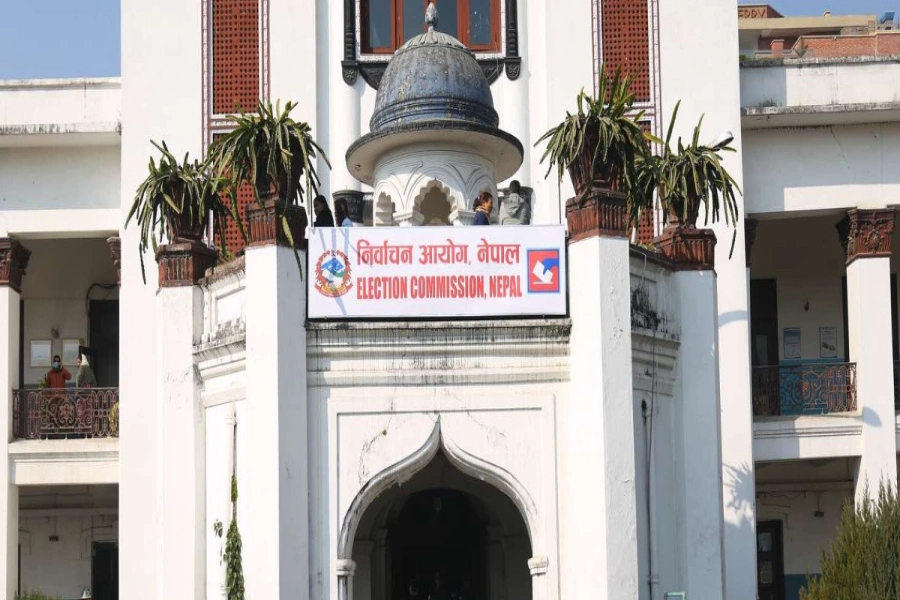
Kathmandu, Feb 5: The Election Commission has issued the “Vehicle Permit Procedure, 2025” in preparation for the upcoming elections.
The Commission said the procedure aims to regulate, maintain order, and control the use of vehicles during the election campaign period and on polling day. It has been introduced to clearly define the vehicle permit process for political parties, candidates, and their representatives using vehicles for election purposes.
Under the procedure approved on February 1, political parties, candidates, or their election representatives must submit an application in the prescribed format to the concerned election officer to obtain a vehicle permit. Upon receiving the application, the election officer may issue permits within the set limits.
Vehicle permit work procedure issued for upcoming elections
Candidates contesting House of Representatives or Provincial Assembly elections may use up to two light vehicles, two wheelers, three wheelers, or four wheelers, powered by electric or mechanical means. In areas where vehicles cannot operate, up to four horses may be used.
For local level elections, mayor or deputy mayor candidates in metropolitan and sub-metropolitan cities may use up to two light vehicles. Candidates for mayor, deputy mayor, rural municipality chair, or vice chair may use one light vehicle. Ward chair and ward member candidates may use one vehicle within their respective ward only. In areas without vehicle access, two horses may be used for municipal or rural municipality chiefs and deputies, and one horse for ward-level candidates.
While issuing permits, election officers must clearly inform applicants that vehicles cannot be used during the silence period. The silence period begins 48 hours before polling day and lasts until voting ends.
Vehicles used without permits, or those used during the silence period despite having permits, will be seized and returned only after the election concludes. District Code of Conduct Monitoring Committees will conduct regular monitoring and may instruct local administrations to seize vehicles in case of violations.
On polling day, no vehicles other than those with permits will be allowed to operate, except for air travel. Permits may be granted on polling day to candidates, security personnel, constitutional bodies and officials, observers, diplomatic missions, United Nations agencies, media, foreign tourists, international organizations, monitors, distinguished guests, and other entities designated by the Commission.
Candidates or their representatives must apply with a copy of the candidate's identity card to use vehicles on polling day. Other entities must apply with an official letter at least two days before polling day.
In Kathmandu district, permits will be issued through an integrated vehicle movement desk at the Commission premises. In other districts, district administration offices will issue permits in coordination with the chief election officers. Vehicles with foreign number plates will not be allowed for election campaigning.
Ambulances, fire engines, drinking water tankers, milk transport vehicles, hearses, hospital services, telecommunications and electricity service vehicles, and diplomatic mission vehicles with CD number plates are exempt from permit requirements.