There are journeys that challenge your body, and there are journeys that change your perspective. My recent trek to Gokyo Ri with the Sathsathi Foundation for the Gokyo Climate Change Summit was both.
As a nurse, I have always cared for people within hospitals and communities. But this journey took my role beyond clinical walls and into the Himalayas, where climate change is not theoretical, but visible, urgent, and deeply connected to human health.
The Trek: Beauty with a Warning
The journey to Gokyo was breathtaking. Turquoise lakes reflected the sky, glaciers stretched across the valleys, and the towering Himalayan peaks stood with quiet majesty. Every step through the mountains felt rewarding. Yet beneath this beauty lay a silent warning.
The glaciers are retreating. Weather patterns are shifting. Snowfall is becoming less predictable, and the mountains are changing faster than many realize.
Standing at the top of Gokyo Ri, surrounded by the vast Himalayan landscape, I felt both awe and responsibility. The view was extraordinary, but it also reminded me how fragile this ecosystem truly is and how closely human health depends on the health of the environment.
When the Mountains Test the Human Body
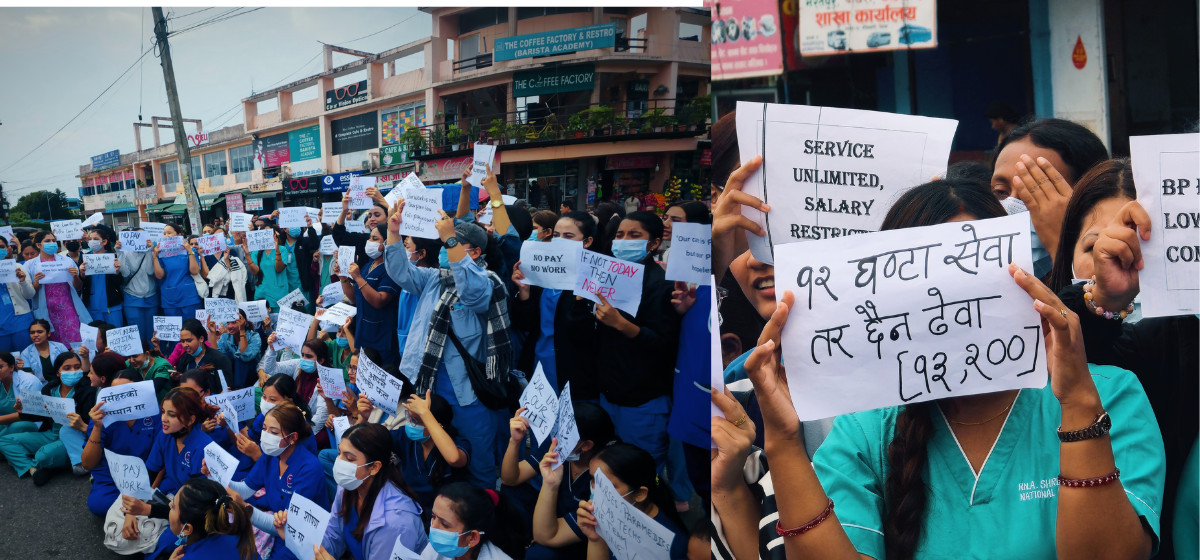
Nurses on the frontline in the battle against COVID-19 as Inter...

The trek was not only physically demanding, but also a reminder of how vulnerable the human body becomes at high altitude. As we gained elevation, many of us experienced symptoms of altitude sickness, including headaches, dizziness, breathlessness, fatigue, loss of appetite, and difficulty sleeping.
Even simple activities like walking uphill, eating meals, or having conversations required more energy than usual. The cold temperatures, dry air, and lower oxygen levels challenged both our physical and mental endurance.
As a nurse, it was both fascinating and concerning to witness how quickly altitude can affect the body. The mountains teach us humility. They remind us that oxygen is not just a necessity; it is life itself.
The experience also made me reflect on how environmental conditions directly influence human health. In remote mountain regions, access to healthcare is limited, and changing climates can make conditions even more difficult for local communities, trekkers, and rescue teams.
Climate Change Is Also a Health Crisis
In the Himalayas, climate change is not only an environmental issue; it is also a public health issue.
Retreating glaciers threaten clean water sources for millions of people downstream. Unpredictable weather increases the risks of injuries, hypothermia, dehydration, respiratory illnesses, and mental stress. Changes in the environment also affect food security, livelihoods, tourism, and the overall well-being of mountain communities.
As healthcare professionals, we often focus on treating illness after it appears. But this journey reminded me that protecting health also means protecting the environment people live in. Clean air, safe water, stable climates, and healthy ecosystems are all essential parts of public health.
The Himalayas are often called the “water towers of Asia,” and their condition affects not only Nepal, but millions of lives across the region.
A Powerful Gathering at High Altitude
What made this experience even more meaningful was the diversity of voices present at the summit. It was not just a gathering of trekkers, but a collective of changemakers. Journalists, environmental science students, environmentalists, forestry students, women leaders, healthcare workers, and representatives from parliament all came together with a shared concern for the future of the Himalayas.
These diverse perspectives created powerful conversations connecting science, policy, climate advocacy, healthcare, and grassroots realities. One of the most inspiring moments of the summit was the presentation of the nine-point declaration, which will now be submitted to the government as a call for stronger climate action and greater protection of the Himalayan region.
Reflection Beyond the Mountains
This journey changed the way I see healthcare, nature, and responsibility. As a nurse, I went to Gokyo to attend a climate summit, but I returned with a deeper understanding that caring for people also means caring for the planet they depend on.
The mountains gave us beauty, perspective, and a message. The question now is whether we are willing to listen.
“From the summit of Gokyo Ri, I realized that caring for people also means caring for the planet they depend on.”
The author is an RN at Nepal Orthopaedic Hospital, Kathmandu.