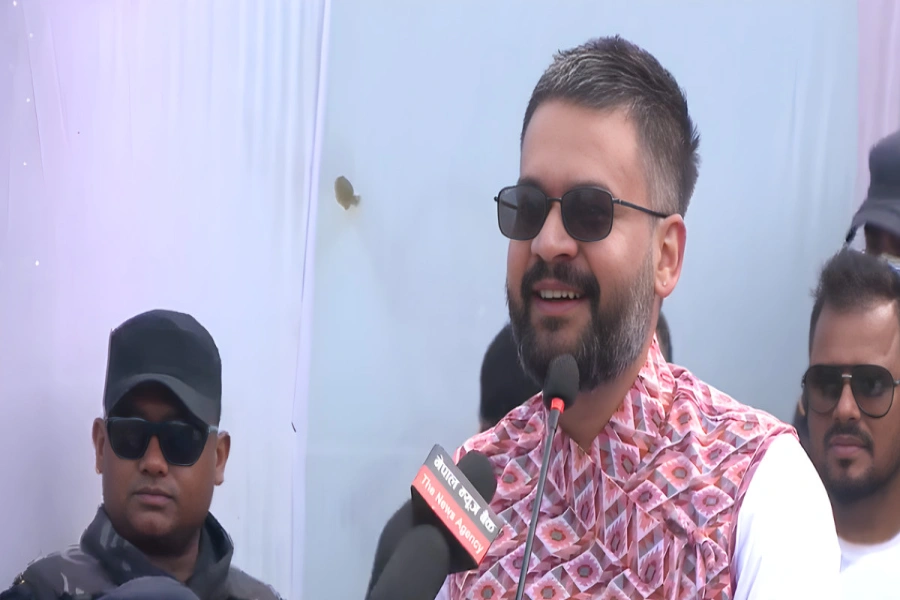
Dear Mr. Prime Minister,
Congratulations.
Your rise has been meteoric, representing something rare in Nepal’s modern political journey—a break from entrenched patterns and a signal that merit, credibility, and public trust can prevail over patronage networks.
Your mandate at this moment carries not just hope but a quiet urgency: the need to redefine governance in a country plagued by political instability and corruption.
Nepal does not lack laws or constitutional frameworks. What it lacks is disciplined implementation. The rift between policy and practice has become the breeding ground for inefficiency and malgovernance.
If your tenure is to mean anything enduring, then it must begin with closing this divide.
Good governance is not an abstract ideal; it is measurable in everyday interactions between citizen and the state.
It is reflected when services are delivered on time and public offices function with efficiency rather than discretion. However, this requires systems—not personalities.
Nepal has historically leaned heavily on individuals rather than institutions. Your challenge will be to reverse that course. Accountability must be institutionalized, not episodic.
In the past, investigations into corruption have begun with noise only to fizzle out. Strengthening independent agencies and ensuring time-bound judicial processes for corruption cases are essential steps.
But accountability must also begin at the top. A Prime Minister who voluntarily subjects his office to scrutiny through financial disclosures, transparent decision-making, and open communication sets a tone that cascades downward.
Corruption in Nepal is not merely a legal issue; it is systemic and cultural. It thrives in opacity. The most effective antidote is transparency, particularly through digital governance.
Under fire over expressway consultancy process, Army changes le...

With a large majority of citizens now connected via mobile phones, every tax payment, license issuance, utility payment, procurement process, and service request should be digitized, traceable, and time-stamped.
When citizens can pay taxes online, track applications in real time, and receive receipts without intermediaries, the space for petty bribery shrinks dramatically. Technology, in this context, becomes an instrument of integrity.
At the same time, Nepal must adopt an objective national target: to become one of the least corrupt nations in Asia within the next decade. Such a goal would provide direction, accountability, and a benchmark against global standards.
Independent collaboration with international bodies, i.e., Transparency International, can further reinforce domestic reforms and lend credibility to this effort.
Yet governance is not only about the state—it is equally about society. While we rightly scrutinize lawmakers and public officials, we must also demand accountability from citizens themselves. A culture of indiscipline cannot coexist with a culture of good governance.
Nowhere is this more visible than on our roads. Lane discipline is routinely ignored, two-wheelers overtake from the left as a matter of habit, public vehicles stop arbitrarily to pick up or drop passengers, and heavy trucks and tippers often behave like road bullies—overspeeding and overtaking without regard for safety or regulation. What begins as individual indifference has evolved into collective normalization.
Countries like Singapore have demonstrated that public discipline is not accidental—it is cultivated through consistent enforcement, public education, and a shared understanding that rules apply equally to all.
Nepal, too, must move toward a model where civic behavior is expected, enforced, and internalized. Laws must not only exist; they must be seen to work.
This brings us to another overlooked but deeply symbolic aspect of governance: sanitation and dignity in public spaces. Public toilets in government offices, schools, and bus stations are often neglected, poorly maintained, and inaccessible to vulnerable groups. This is unacceptable.
Every taxpayer who walks into a public office deserves basic dignity. Clean, functional toilets should not be a privilege reserved for private establishments. Government facilities must aspire to have a modest but consistent standard of hygiene comparable to at least a three-star establishment. This includes regular cleaning protocols, accountability for maintenance staff, accessibility for persons with disabilities, and provision of diaper-changing facilities for mothers with infants.
Such measures are not extravagant; they are fundamental. Cleanliness is governance in its most visible and human form.
Administrative reforms, though less attractive, are equally critical; consider the basic matter of working hours.
In many government offices, extended lunch breaks disrupt service delivery, forcing citizens to wait unnecessarily. Adopting a “no lunch hour” policy (i.e., Anti-Red Tape Act 2007, Philippines), where officials take rotational breaks while front desk services continue uninterrupted, would significantly improve efficiency.
Even marginal gains matter. Adding just one extra service hour per day across a working month translates into substantial productivity gains for a nation already constrained by time and resources.
Similarly, aligning Nepal’s weekly holiday calendar more closely with global norms, i.e., Sunday off with half work on a Saturday, could improve international coordination and reduce inefficiencies in transactions and communication.
Urban governance also offers opportunities for immediate impact. Consider the inefficiencies in the vehicle pollution testing system. Long queues at limited centers waste both time and fuel, discouraging compliance.
Decentralizing these services to authorized petrol pumps (like in India) would improve accessibility and reduce congestion.
Equally important is how power is exercised in everyday life.
All V.I.P. motorcades must not bring cities to a standstill. Roads should not be cleared at the cost of ordinary citizens’ time and movement. Public office must reflect humility, not privilege; blaring of sirens is a complete no.
Consider also the structure of governance itself. Nepal’s federal system remains a work in progress, often constrained by overlapping authorities and political bargaining.
The constitutional capping of the Prime Minister’s tenure to two terms would encourage leadership renewal and prevent concentration of power.
Introducing directly elected executive leadership, i.e., Chief Minister (like Mayoral office) at the provincial level, could similarly strengthen accountability. When citizens know exactly who is responsible for governance outcomes, democracy becomes more meaningful.
At the national level, the role of the President must remain above politics—neutral, dignified, and non-partisan. It should embody constitutional guardianship, not political accommodation.
Political culture, too, demands reform. Cronyism, nepotism, and dynastic succession erode public trust and discourage merit. Leadership positions must not become hereditary privileges. Governance is not a reward system; it is a responsibility.
International examples remind us that leadership is temporary. In many stable democracies, leaders return to ordinary life after their tenure. Public service is seen as a phase—not a permanent entitlement. Nepal must gradually move toward this ethos, encouraging generational renewal and broader participation.
Inclusivity must remain central to this transformation. Nepal’s diversity is its strength, and governance must reflect it. Linguistic and cultural accessibility in public administration is not merely symbolic—it is essential for equitable service delivery.
Ultimately, your success will not be measured by announcements but by outcomes. The public is weary of promises; it seeks results.
Each reform—whether in digital governance, civic discipline, sanitation, or institutional restructuring—must be implemented with clarity, monitored rigorously, and refined pragmatically.
You stand at a pivotal moment of both possibility and challenges. Whether that possibility becomes progress depends on what you choose to prioritize.
If you can institutionalize accountability, enforce discipline both within government and society, and uphold dignity in the everyday lives of citizens, then your tenure could mark a genuine turning point.
Congratulations once again and good luck. You will need both.
Yours sincerely,
A Citizen Observer