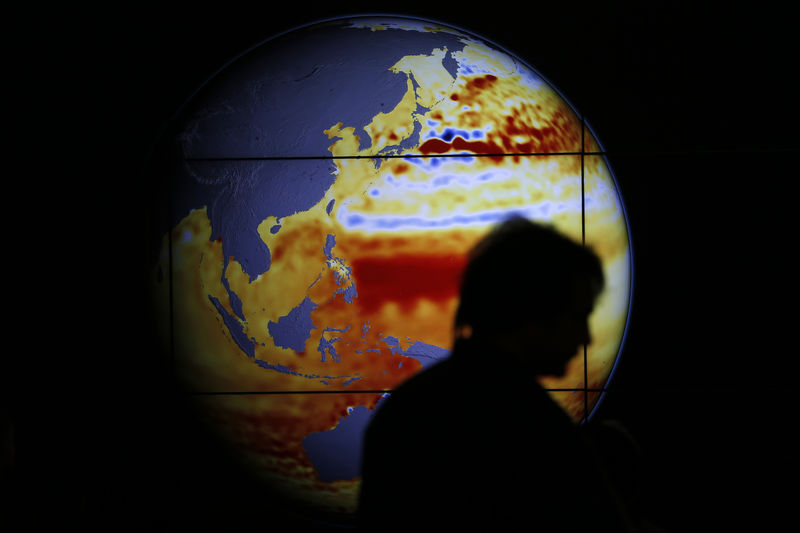
KATHMANDU, Aug 6: A strengthening El Niño event is likely to increase the risk of above-normal temperatures and drier-than-normal conditions across South Asia, including Nepal, in the coming months, according to the World Meteorological Organization (WMO).
The global climate agency has warned that a strong El Niño developing in the Pacific Ocean, combined with exceptionally warm global oceans and the possible development of a positive Indian Ocean Dipole (IOD), could significantly influence weather patterns across the Indian Ocean region, increasing the risks of heat, drought and other climate extremes.
In its latest Global Seasonal Climate Update, released recently, the WMO said El Niño is expected to continue strengthening during the August–October 2026 season. The seasonal outlook indicates that the Indian subcontinent is among the regions with a strong likelihood of above-average temperatures, while rainfall patterns show an increased possibility of below-normal conditions.
Although the forecast does not mean every location will experience drought or extreme heat, scientists say it provides an important early warning for governments, communities and climate-sensitive sectors to prepare for potential impacts.
Implications for Nepal
For Nepal, the emerging El Niño warning comes amid growing climate pressures, including rising temperatures, changing rainfall patterns, prolonged dry spells, water shortages, and increasing stress on agriculture and energy systems.
Agriculture could be among the most vulnerable sectors if rainfall becomes erratic or dry periods persist during critical crop-growing seasons. Nepal's farming system remains highly dependent on monsoon rainfall, and changes in the timing and distribution of rainfall can affect crop planting, production and food security. Farmers growing major crops such as rice, maize and wheat may face increased uncertainty if rainfall deficits occur.
Warming El Nino set to return in mid-2026: UN

Government agencies and local authorities could use seasonal climate forecasts to provide timely guidance on crop planning, irrigation management and water conservation. The forecast also carries implications for Nepal's water resources and hydropower sector.
Changes in precipitation patterns can affect river flows, reservoir management and electricity generation planning. At the same time, intense rainfall events may still occur even during an overall drier climate pattern, creating risks of floods and landslides in vulnerable mountain regions. In the Himalayas, rising temperatures combined with changing precipitation patterns could further affect snow and glacier systems, with possible long-term consequences for water availability and mountain hazards.
Early warning for policymakers
Climate experts say the El Niño forecast should be viewed as an opportunity for early preparedness rather than as a prediction of a single disaster.
Nepal's policymakers may need to strengthen coordination among weather forecasting agencies, agriculture authorities, disaster management institutions, local governments and communities to reduce potential impacts.
Expanding climate information services at the local level will be critical. Farmers, municipalities and vulnerable communities need timely and accessible forecasts to make informed decisions before climate-related risks become severe.
The WMO has emphasized that seasonal forecasts provide a "window for early action" and support decision-making in climate-sensitive sectors such as agriculture, health, water management and disaster preparedness.
Global climate concerns
Beyond South Asia, the WMO expects above-average temperatures across large parts of the world, including Africa, southern Europe, the Arabian Peninsula, eastern Asia, Central America, the Caribbean, southern Africa, much of South America and New Zealand.
The organization said the developing El Niño is occurring against the backdrop of record-breaking ocean heat and rising global temperatures, conditions that could amplify its effects.
El Niño is a naturally occurring climate phenomenon associated with warmer-than-average sea surface temperatures in the central and eastern tropical Pacific Ocean. It is one of the most influential drivers of year-to-year climate variability worldwide.
According to the WMO, climate models indicate that sea surface temperature anomalies in key El Niño monitoring regions could exceed 2.9°C during the August–October period, suggesting a strong event.
The possible development of a positive Indian Ocean Dipole, in which the western Indian Ocean becomes warmer while the eastern Indian Ocean becomes relatively cooler, could further influence rainfall patterns across the Indian Ocean basin.
The WMO said the combined influence of El Niño and other climate drivers could increase the likelihood of drought in some regions while raising the risk of floods and wildfires in others.
Forecasts provide time for action
WMO Secretary-General Celeste Saulo, in her remarks on the El Niño update, said climate forecasts alone do not prevent hazards, but timely action based on reliable information can reduce their impacts.
"Forecasts provide a window of opportunity to anticipate risks and act before impacts unfold," Saulo said, emphasizing the importance of ensuring climate information reaches vulnerable communities.
UN Secretary-General António Guterres also warned that the strengthening El Niño is adding pressure to a planet already experiencing record heat, extreme wildfires and warming oceans.
However, scientists caution that El Niño does not produce identical impacts everywhere. Its effects depend on its strength, duration, timing and interaction with other climate systems.
For Nepal and other South Asian countries, the emerging El Niño serves as an important reminder that climate preparedness must stay ahead of climate disasters. Strengthening early warning systems, improving climate-resilient agriculture, and integrating climate forecasts into national planning will be crucial to reducing future risks.