The Sustainable Development Goals (SDGs), adopted in 2015 as a continuation of the Millennium Development Goals (MDGs), have served as a universal framework guiding global development for nearly a decade.
With less than five years remaining until 2030, the global community must urgently design a new framework that ensures a realistic approach, inclusivity, and adaptability to sustain progress while reducing overly complex mandates in an increasingly interconnected world.
Current data show that only 18% of the SDGs are on track to be achieved, while 17% are making some progress. Almost half are progressing too slowly, and about 20% are actually regressing.
A study published by the World Bank shows that, compared with a decade ago, millions of people have gained access to basic services and social protection. Yet inequalities between high-income countries and middle- and low-income countries have widened over the past decade.
Let us examine the SDGs that remain off track as of 2025.
According to the World Bank, SDG 1 (No Poverty) has seen limited progress, with extreme poverty declining by just 1% over the past decade, leaving 8.9% of the global population still living in extreme poverty. The Food and Agriculture Organization (FAO) reports that SDG 2 (Zero Hunger) remains in a critical state, with 8.2% of the world's population experiencing hunger and 2.33 billion people facing moderate to severe food insecurity.
UN-Habitat reports that challenges under SDG 11 (Sustainable Cities and Communities) persist, with around 3 billion people struggling to access affordable housing and 1.12 billion living in slums or informal settlements without basic services. Meanwhile, SDG 14 (Life Below Water) reports that only 8.4% of the ocean is protected, with just 46% of key marine biodiversity areas under protection. SDG 15 (Life on Land) shows some progress in conservation; however, biodiversity loss, increasing species extinction risks, and land degradation continue to threaten livelihoods and ecosystems.
According to the Sustainable Development Goals Report 2024, SDG 16 (Peace, Justice and Strong Institutions) remains one of the most challenging goals, with nearly 50,000 lives lost due to conflict in 2024 and 123.2 million people forcibly displaced worldwide, disproportionately affecting women and children.
Overall, the failure to achieve these SDGs continues to undermine environmental sustainability, peace, and human well-being globally.
Nepal requires more investment to meet SDG targets by 2030

The combined impacts of the COVID-19 pandemic, wars, climate change, political tensions, economic uncertainty, the rising cost of living, and debt crises have contributed to the slow global progress on the SDGs.
Without urgent action to change the current trajectory, the world risks facing prolonged crises and uncertainty. These crises will be driven by interconnected problems such as poverty, inequality, hunger, disease, conflict, and disasters, each reinforcing the others.
The experience of SDG implementation offers several important lessons. Financing gaps, particularly in low- and middle-income countries, remain too large to achieve the SDG targets. Prioritizing goals that are realistic, measurable, and achievable is essential to balancing global aspirations with diverse local realities.
Recent global experience suggests that the world's approach to achieving the SDGs has not matched the scale of the challenge.
According to the International Institute for Sustainable Development (2024), achieving the SDGs requires sustained investments of several trillion dollars annually, far exceeding what traditional development assistance provides. UN agencies estimate that annual global investments of between USD 5.4 trillion and USD 7.6 trillion are needed to make significant progress toward the 2030 targets. This financing gap highlights the need for more realistic planning, stronger financial commitments, and greater collective responsibility.
Global catastrophic risks—including wars, climate change, pandemics such as COVID-19, and recurring economic crises—continue to undermine development gains and require urgent action. Addressing these risks should be a core development priority.
Global targets must also recognize regional diversity. The Global North and the Global South face different development realities and possess different capacities. Applying identical goals to both may fail to reflect these differences. Therefore, region-specific targets should be developed to ensure context-appropriate progress.
Future SDG frameworks should strongly promote bottom-up approaches, in which local needs, priorities, and expectations shape planning, implementation, and monitoring.
Localization means translating global commitments into local action by aligning them with local development priorities and capacities while contributing to national and international goals. It requires adapting strategies, monitoring systems, and evaluation mechanisms to subnational contexts, enabling local and regional governments to advance SDG implementation from the ground up.
For example, countries such as Colombia and Germany have integrated development goals into municipal planning to strengthen implementation at the community level.
Integrating the SDGs into local development plans while ensuring that municipalities and local governments are responsible for implementation should be central to localization efforts. Developing local road maps can strengthen community ownership, improve coordination among local stakeholders, ensure that no one is left behind, and promote long-term sustainability.
Localized road maps help align local development plans with national and global commitments while providing flexibility to address local social, economic, environmental, and contextual challenges. They enable subnational governments to improve basic service delivery, optimize resource utilization, integrate global goals into local contexts, and encourage community participation in development. Such mechanisms create practical pathways for achieving both local and global commitments. However, understanding local realities remains essential for effective implementation.
Many SDGs are interconnected, and progress in one area often accelerates progress in others. Therefore, the post-2030 agenda should consider merging and realigning related goals to reduce overlap and improve coherence. A smaller number of well-defined goals would make monitoring indicators easier and more effective. Rather than setting overly ambitious goals, it is more practical to establish fewer, realistic, and achievable targets.
Using SDG 17 (Partnerships for the Goals) to strengthen collaboration among multiple stakeholders, mobilize resources, share knowledge, and address challenges through shared responsibility would reinforce both local and global partnerships.
The SDGs have demonstrated that global ambition alone is insufficient. Progress remains uneven, and inequalities persist. Only by grounding development efforts in regional realities and community ownership can the world achieve sustainable, lasting change.
In Nepal, the SDG Progress Report shows moderate but uneven progress. While the country has made gains in human development, it continues to lag in economic transformation, reducing inequality, and strengthening climate resilience.
Following the youth-led anti-corruption movement in September 2025, the World Bank estimated that civil unrest caused economic losses equivalent to around 1.3% of GDP. These economic losses and continuing political instability have slowed Nepal's development progress.
The new government, led by Prime Minister Balendra Shah, has an opportunity to redesign and implement a comprehensive good governance framework—one of its highest priorities—that uses the SDGs as a nationally focused development blueprint with transformative effects through local implementation.
In doing so, the government should act as an enabler and facilitator because localizing the SDGs requires practical implementation plans led by local governments with support from provincial and federal governments.
In practice, this means Singha Durbar can achieve its broader objective of good and inclusive governance by empowering local governments to lead locally driven regeneration inspired by the SDGs.
To strengthen the implementation of the SDGs, the newly formed government should seize this momentum by improving coordination among the three tiers of government, strengthening monitoring systems, reducing duplication, mobilizing resources more effectively, and improving local-level data collection and progress tracking.
The government should also create new opportunities for domestic economic growth rather than relying heavily on remittances and foreign aid.
A genuine commitment to localizing the SDGs requires prioritizing investments that improve Human Development Index indicators such as education, health, and income, all of which are closely linked to the SDG framework.
Strategic development planning and stronger coordination among multiple stakeholders can accelerate SDG progress by actively involving local citizens. Designing, planning, and implementing the SDGs at the grassroots level provides an opportunity to strengthen democratic governance.
Beyond 2030, any new global development agenda must be realistic, inclusive, locally driven, supported by measurable targets, backed by strong financing, and resilient to future crises. Until then, Nepal's new government should make the fullest possible use of the SDGs to advance its ambitious development agenda.
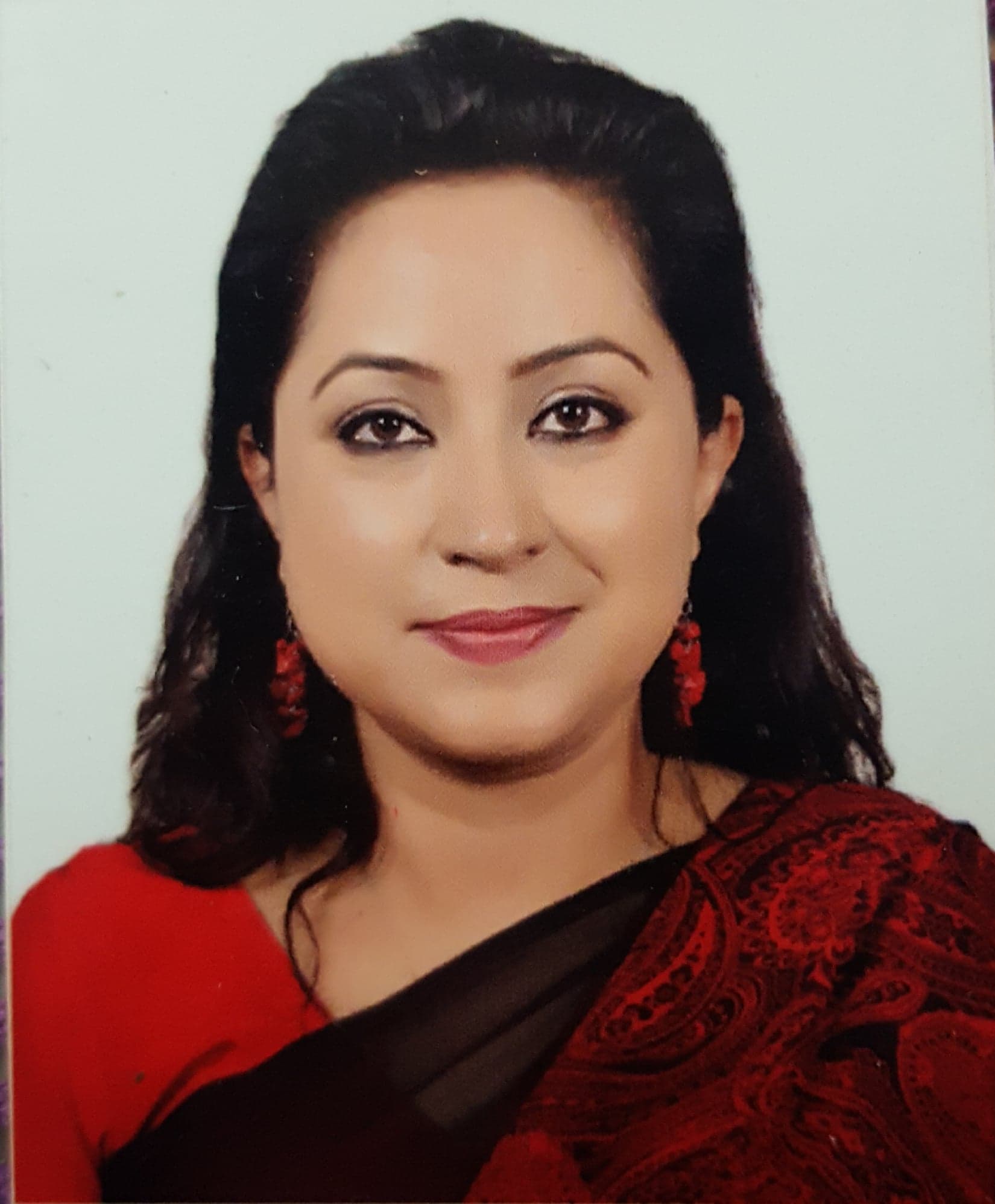
The author is a development practitioner and a member of Gradus and the Good Leadership Community of Practitioners on the Post-2030 Development Agenda. She holds a Master's degree in Conflict, Peace and Development Studies, specializing in climate justice.