



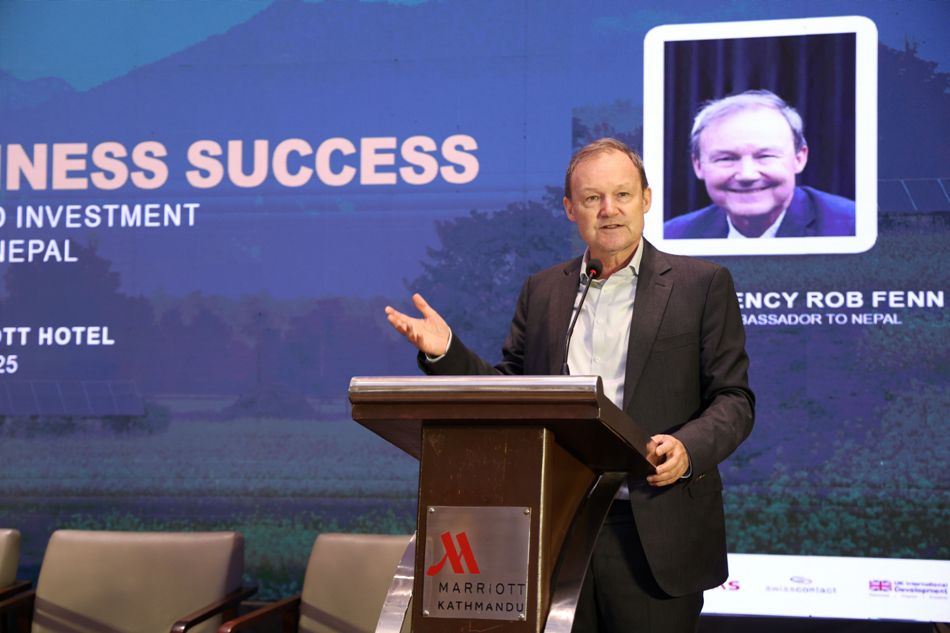
KATHMANDU, July 23: The Commercial Agriculture for Smallholders and Agribusiness (CASA), a UK-funded programme, mobilized over Rs 830 million (5.37 million pound sterling) in private investment, while it connected more than 156,203 smallholder in the past six years.
The program that was launched in 2019 and implemented by NIRAS and Swisscontact Nepal, worked to address a persistent challenge underlying Nepal's agriculture sector. During this period, it focused on how to turn smallholder-based supply chains into commercially viable business opportunities. The program was expected to have provided 62 percent of the benefitted smallholder farmers to market access.
Although Nepal’s agriculture sector has been providing employment to over 60 percent of the country’s population, the sector still remains critically under-financed, with banks meeting only 20 percent of the estimated US $3.6 billion financing gap, according to UN-ESCAP. In this context, CASA worked to demonstrate how targeted support to agribusinesses could help address key barriers to investment and market inclusion. Throughout the programme period that has officially come to an end, 37 agribusinesses across high-potential value chains became more investment-ready and better connected to farmers. CASA has helped prove what works.
Chobhar Dry Port sees imports worth Rs 830 million, zero export...

Addressing the closing ceremony of the CASA program, British Ambassador to Nepal Rob Fenn, said “There’s a clear need for financial support to reach medium-sized businesses, particularly in agribusiness, as that’s where quality jobs are created to retain young people in Nepal or encourage their return. The British Embassy’s new program, Nepal in Business (NIB), draws on the lessons from CASA and is set to put those insights into practice.”
Manish Bikram Shah, CASA Nepal Country Manager at Swisscontact, said the traditional lending models don’t work for agri-SMEs. “With just 3.9 percent of total PEVC investments since 2012, Nepal’s agribusiness sector remains critically underfunded despite its economic significance. What these businesses need is flexible capital, strategic support, and market access, and that’s where the development sector must step in to unlock their true potential,” Shah added.
CASA’s work ranged from designing climate-smart smallholder training packages, energy audits and export certification to investor matchmaking and governance reform. Many small and medium enterprises in the dairy and vegetable sectors as well as a herbal product exporter and a fish feed manufacturer, are not only increasing their profits but expanding the number of farmers they engage with.
Steve Morris, CASA Team Leader at NIRAS, said the program has been on a learning journey, piloting innovative solutions to shift the dial on investment in inclusive business in Nepal. According to him, the program could offer valuable direction for future agri-investment efforts in Nepal.
As Nepal faces rising climate threats and growing food system demands, the program is expected to have left behind a tested model: invest in the businesses that buy from smallholder farmers, and to grow the entire chain with equitable returns, reads a press statement issued by Swisscontact Nepal.





