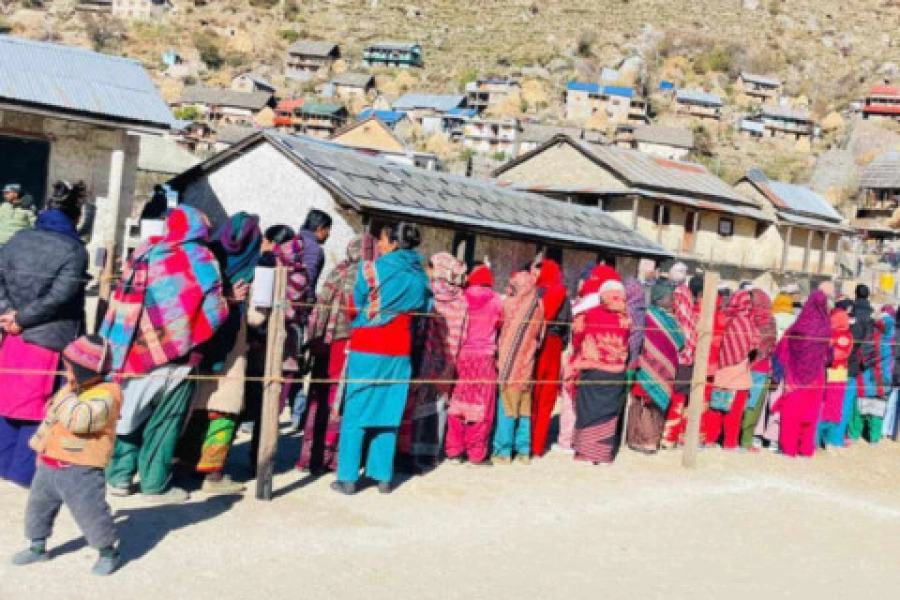
KATHMANDU, Feb 23: With the House of Representatives (HoR) election just around the corner, political activity has intensified across the country. Political parties and leaders, who were elected for a five-year term in the November 2022 elections, are once again knocking on voters’ doors just three years into their mandate, seeking renewed public support.
Although voter enthusiasm appears comparatively lower than in previous elections, only 10 days remain until polling day on March 5. The election, being held two years ahead of schedule due to recent political developments, has pushed parties and candidates into last-minute efforts to sway undecided voters and secure favorable outcomes.
Learning from past shortcomings, political parties and candidates have intensified their campaigns, adopting both traditional door-to-door outreach and digital platforms to communicate their promises. Meanwhile, voters are asking tougher questions about accountability and performance. While some voters have already made up their minds, a significant portion remains undecided.
Changing family voting dynamics
This election appears to be witnessing a shift in family voting patterns. Unlike in the past, when household heads often influenced voting decisions, younger family members—sons, daughters, and grandchildren—are now playing a more active role in shaping political choices within families.
Lahan’s Laxmipur tense as more votes than total votes cast foun...

Young people living abroad are also increasingly influencing voting decisions by advising their parents and relatives about which parties or candidates to support. In some cases, younger family members are even using emotional pressure to persuade elders if their opinions are not accepted, a factor that could have an unpredictable impact on results.
Previously, with a few exceptions, family members typically followed the political preferences of the household head. Parties and candidates often estimated their vote bases based on this pattern. However, that traditional structure appears to be weakening as youth voices gain greater influence.
Influence of overseas Nepalis
Millions of Nepalis living abroad will again be unable to vote directly, as voting rights for overseas citizens remain unimplemented despite repeated promises from major political parties.
However, overseas Nepalis are still expected to play an indirect but significant role in shaping voting behavior. Compared to the 2022 elections, their influence is believed to have increased as they actively communicate with family members back home.
Many migrant workers, having experienced governance systems abroad, have expressed dissatisfaction with domestic political management. In many cases, they are not only advising but also pressuring family members to vote for specific parties or candidates. Since migrant earnings remain the primary income source for many households, their political opinions carry substantial weight.
Growing role of women voters
Increasing political awareness among women may also influence election outcomes. Women have been more visibly active in campaign rallies and political gatherings, signaling a stronger role in household political decision-making.
Voter Preferences and Emerging Concerns
Ideally, voters should choose representatives based on character, qualifications, competence, past contributions, and policy proposals. Strong democratic practice depends on selecting capable leaders.
However, concerns are growing that voters are increasingly influenced by caste, regional identity, geography, and religion rather than merit and policy agendas. Meanwhile, some candidates are seen prioritising support mobilisation through religious and community networks rather than structural policy reforms. Such trends could affect both proportional representation and direct electoral contests.
Analysts suggest that these evolving voter dynamics may particularly challenge traditional political parties' ability to maintain their electoral bases.