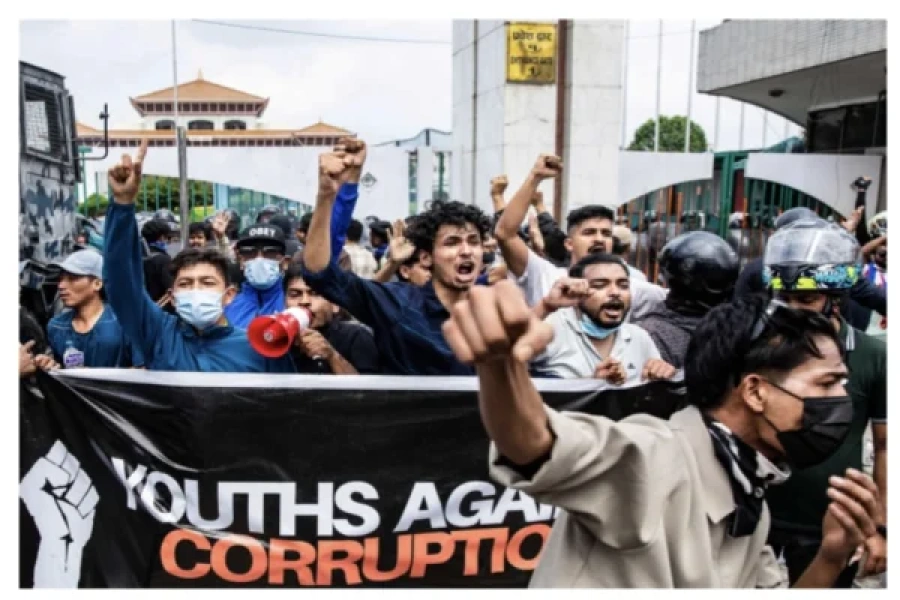
KATHMANDU, Nov 23: Mohan Sardar, 40, of Itahari–14 had been resting at home for days after hurting his leg on a worksite. He barely knew anything about the rising Gen Z protests that were unfolding across Nepal.
On an ordinary late-monsoon he stepped out of his home with a simple plan. He would go to the market with a neighbour, stop by the community health centre to have his injured leg checked and return home before dark to his wife, Manju, and their two little daughters.
But that day—September 8—he never came home.
When he didn’t return by evening, Manju began to worry. She called the neighbour, Shravan, who told her they had become separated in the crowds. “There was a protest in the market,” he said. “We got split up and after that, I couldn’t find him.” The words chilled her. She called Mohan’s phone again and again. It was switched off. Relatives tried to comfort her: “He’ll be back soon. Don’t worry.” But Manju’s anxiety only grew.
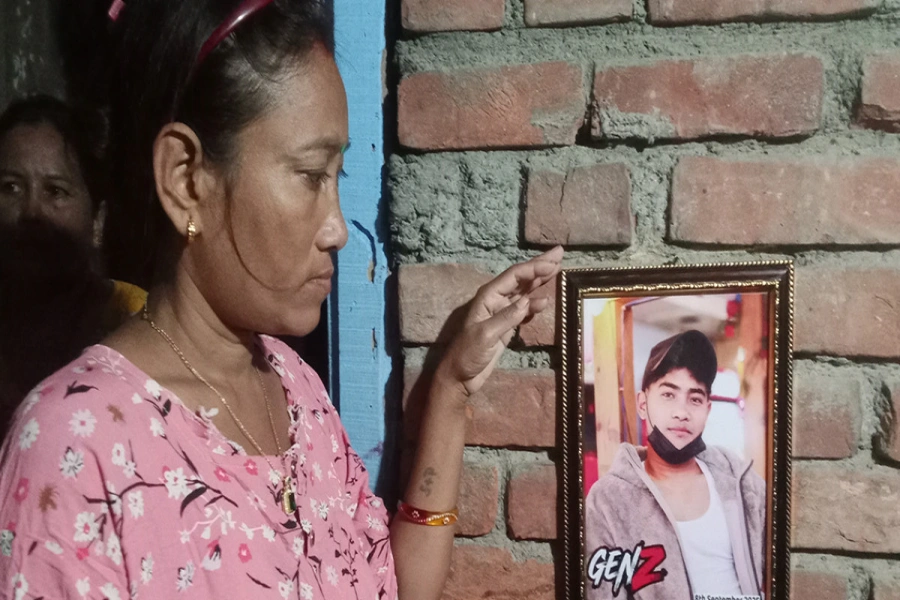
Late that night, she opened Facebook—almost on instinct—and saw what no wife should ever have to see: a video of a man lying on the street, shot during the protest. It was Mohan.
She fainted on the spot.
Heart to Heart with Malvika

When she regained consciousness, relatives were already rushing to search for him. By the next day, the family received confirmation: Mohan’s body had been placed in the mortuary of BP Koirala Institute of Health Sciences.
Eight years of marriage had come undone in a single afternoon.
Manju, now 27, met Mohan years ago when he was building a house in her village in Ramdhuni–8. They fell in love quietly, married in a temple and built a life together—piece by piece, rupee by rupee—constructing a small home on unregistered land with the money Manju saved during two difficult years working in Kuwait and whatever Mohan earned as a mason. They dreamed a simple dream: raising their daughters, now five and seven, with dignity.
Today, Mohan’s name brings tears to Manju’s eyes before she can utter a single sentence. The girls, especially the younger one, keep asking about their father. “She talks about him all the time,” Manju says. “How do I explain death to a child?”
For now, she has told the younger one that her father has gone abroad for work—the same way Manju once did. “But how long can I lie?” she asks. “What will happen the day she learns the truth?”
Life, once held together by two pairs of hands, is now unbearably heavy for one. The house still stands, but the income is gone. “I keep asking myself—how will I raise my daughters alone?” she says. “That question never leaves my mind.”
She has placed her hopes on a promise made by Prime Minister Sushila Karki. Ahead of Tihar, during a gathering of Gen Z activists in Kathmandu, leaders from Jhapa brought Manju to meet the Prime Minister. There, the PM assured families of the deceased that they would be given employment according to their qualifications. Since then, Manju has been waiting.
“The Prime Minister said she would give me a job. I’m holding on to that hope,” she says. “I haven’t even looked for work yet—I’ve been waiting for the government’s word to come true.” Still, she is willing to take any job she can. “I’ve been working since I was young. I survived Kuwait. I can do anything. I just want something so I can feed my daughters.”
The government has provided her with 1.5 million rupees—one million as compensation and five hundred thousand for funeral expenses. She has saved everything that remained after the rituals. “Whatever the struggle, I won’t let my daughters lack anything,” she vows.
Since she cannot afford their schooling, donors are helping educate the girls at Maryland Boarding School in Itahari. She says she is grateful, but she knows such help is temporary.
The Gen Z protests claimed two lives in Itahari that day—Mohan’s, and that of sixteen-year-old Abhishek Shrestha, who had been staying with relatives in the city. Their families continue to wait for relief funds promised by the provincial and municipal governments—promises that, so far, remain only on paper.
As for Manju, she keeps her eyes on the future, though the path ahead feels steep. “We promised each other we’d live together and die together,” she says softly. “But he left too soon. Now I have to live for our daughters.”
In her small home, the girls sleep beside her every night. Manju sits awake longer than she should, thinking not of protests or politics, but of the simplest of hopes—that one day, a job will come, and with it, the ability to raise her children without fear.
With inputs from RSS









_20240311121839.jpg)