

The cataclysmic April 2015 earthquake and its devastating aftermath had Nepal reeling. The loss of lives and property, damage to topography and terrain and the sledgehammer blow to the country’s economy have been extensively documented. The scars of the trauma will take a long time to heal.
However, the great trembler’s impact on country’s heritage remains less probed, less analyzed and less understood. We do realize how the moorings of our faith, not necessarily religious, were rocked when we saw what nature’s whim had done to around 700 monuments including Swayambhucaitya, Bhaktapur Darbar Square, Batsala Devi temple, Kashthamandap, Changunarayan and the historic Dharahara tower. We were shell shocked. The damage to the monuments was no less debilitating for the Nepali psyche than the loss of life and property. Our heritage seemed lost.
Or was it so?
We need to ponder over this today on the occasion of World Heritage Day. Usually, school children are taken around important historical monuments, museums, prominent local sites and such places today. We also talk of mankind’s rich historical past. We are reminded of the UNESCO-recognized world heritage sites including Lumbini, Chitwan and Sagarmatha national parks.
In fact, the World Heritage Day is rooted more in the concern for monuments and sites which are viewed as the “shared wealth of humankind” requiring protection and preservation for future generations.
It was on April 18, 1982 that the International Council for Monuments and Sites (ICOMOS) organized a symposium in Tunisia and gave the call for celebration of an “International Day for Monuments and Sites” all over the world. The idea was picked up by UNESCO General Conference which passed a resolution in November 1983. The world has been celebrating the International Monuments and Sites Day also known as World Heritage Day since then on April 18 every year.
But there is much more to heritage than what we tend to believe. Heritage goes beyond places of worship, historical monuments and natural and wildlife sanctuaries. Every country, society or community has a distinctive culture. Cultural heritage is an amalgamation of certain social values, beliefs, religions and customs of a people. It gives us a sense of personal identity and creates affinity among people with similar mindsets and backgrounds. It is a unifier.
However, not all feel connected to their cultural heritage, especially those who feel overawed by the influence and affluence of many foreign countries. Like many lower and middle income countries, Nepal is also witnessing this distressing development. A large section of the younger generation in our cities and towns considers our traditions and customs archaic and irrelevant.
The youth may be right to some extent as all tradition cannot be perfect. Reform and change is always needed and should be part of life. But then all traditions are not senseless either. The fact that most of us are still together and care for one another is testimony to the eternal unifying strength of our cultural heritage. The family remains a major binding factor. Concern for fellow-beings is still valued. The culture of individualism has still not overpowered Nepal, thanks to its social values.
Historical monuments, places of worship, ancient centers of learning or nature parks are pretty physical. They are tangible. But their sight evokes sentiments in us which are intangible. Yet it is this manifestation of cultural heritage that serves as the strongest bond in a society.
The physical will vanish some day but the idea it represents will last much longer. Cultural heritage enables us to better understand previous generations and the history of where we come from. Having a vacuum for a past can be very disturbing for a person. “No man is an island,” sang the English poet John Donne way back in 1624.
So while we can see cultural heritage in cities, buildings, archaeological remains, farms and countryside, we can also find it through books, artifacts, objects, pictures, photographs, arts, music, oral tradition, food, clothes, religions and skills among other things. Sometimes we can touch and see what makes up a culture; other times it is intangible.
Even in large cities like London, New York, Delhi or Mumbai, there are large communities based around certain cultural heritages. The Nepali diaspora spread across the world draws emotional sustenance from a common cultural heritage. While adjusting with and adopting the culture of the host country, migrants retain connection with their homeland through the intangible called cultural heritage. Preserving cultural heritage also ensures support from the same community. This is true for other communities, societies and countries as well.
The popular Heritage Cycle model by Simon Thurley explains how we can discover and incorporate culture in our lives to our advantage. We first need to understand our culture. Only then will we be able to value it, care for it and enjoy it. Greater the enjoyment, deeper the learning and understanding.
Conscious and determined practice of this model is vital for a country like Nepal which is an assemblage of diverse faiths, communities, customs, food habits, languages, literature, music, ideologies spread across different geographies. The government, administration, politicians, educational authorities, social and religious leaders, and most importantly parents need to inculcate among children and youth the need to understand and imbibe the concept of unity in diversity. They need to be exposed to various sub-cultures in the country. With proper mentoring and mature statesmanship, Nepal’s political and social leadership can turn the common cultural heritage into a tool for nation building.
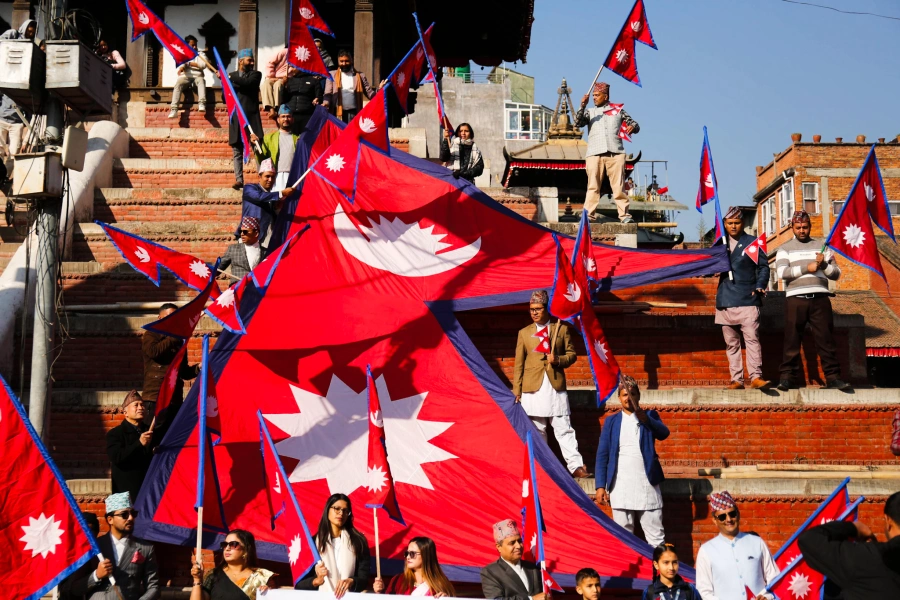
Social and political scientists have established the fact that heritage is the best means to strengthen awareness of national identity among citizens. While the nation may be an “imagined political community”, it is rooted in a socially constructed group that people perceive as their own.
However, a flawed present often erodes the good of the past. Youngsters are more prone to believe that an outdated past is responsible for the unsatisfactory present. They quickly abandon the baggage of the past and latch on to the enticing and alluring but untested and unknown present. It is over time they realize the folly of casting away precious and eternal values of the past, entirely. But it’s often too late, leaving them neither here nor there.
Nepal’s leaders from all spheres of life need to accept the fact that only they are responsible for presenting a ruined present and a bleak future to the new generation. They need to mend their ways by mixing the best from our cultural heritage with whatever new that is needed.
Only then will the youth trust us and the positive face of our cultural heritage.
It is such a cultural heritage that Nepal needs to swear by on World Heritage Day today.
The author is the Founder of Basant Chaudhary Foundation, poet, writer and social enthusiast
Related story
UNESCO mission wants Valley heritage in danger list













-1779250876.webp)





