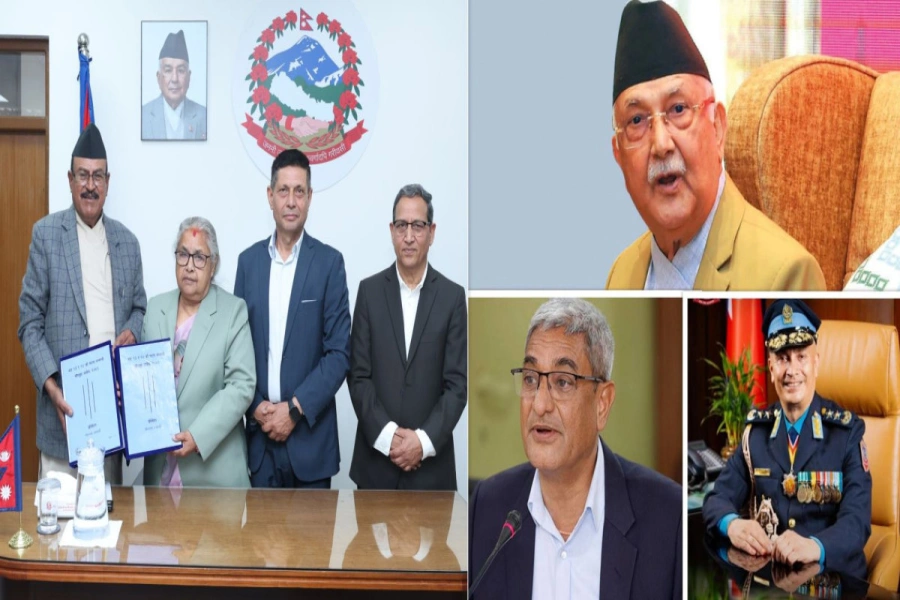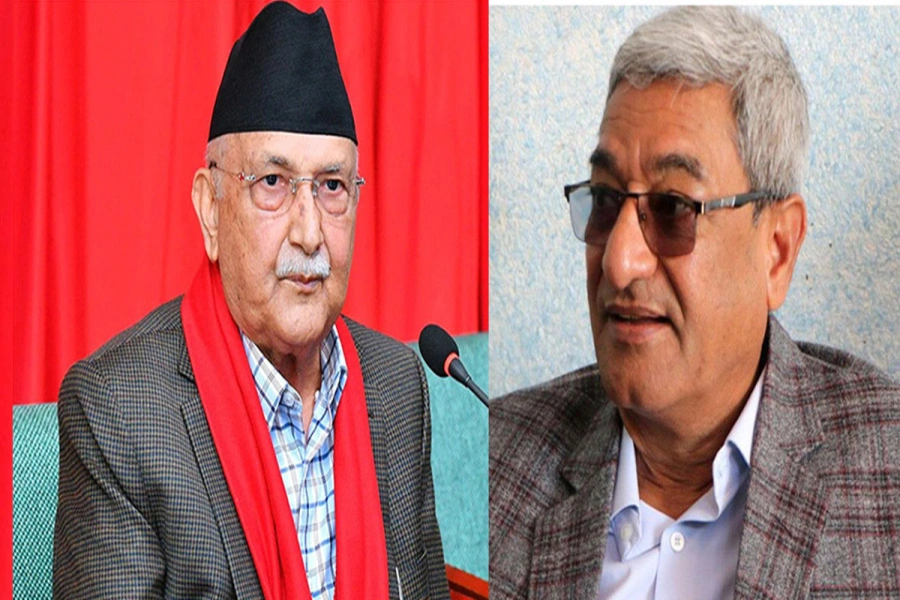
KATHMANDU, Nov 27: While former Prime Minister KP Sharma Oli continues to refuse to acknowledge the existence of the probe panel led by former Special Court Chair Gaur Bahadur Karki—formed to investigate the deaths and destruction during the Gen-Z movement—his former cabinet colleague and Home Minister, Ramesh Lekhak, appears ready to face the commission. The panel, which has barred both leaders from leaving the Valley, is preparing to summon them for statements.
“We have been informed that the former home minister will come once he is summoned,” a commission official said. Lekhak resigned on the morning of September 9, a day after 22 people were shot dead during the Gen-Z protests. Hours after his resignation, Kathmandu and several other locations saw widespread vandalism, arson, and looting.
Lekhak, however, says the commission has not contacted him yet. “I have not received any information so far,” he said. Asked whether he would appear if called, he responded cautiously: “There has been no notice, no call; if they call, we will think about what to do.”
One of his private secretaries said their policy is clear: if summoned, Lekhak will attend. Commission officials also say they have received indications that he will appear. “We are coordinating the timing to call both Oli and Lekhak,” an official said.
India always ready to cooperate with Nepal's development endeav...

So far, the commission has taken statements from Rastriya Swatantra Party Chair Rabi Lamichhane and several police personnel. Two months into its mandate, it has collected details of damages and questioned security officials, civil servants, and eyewitnesses.
On Tuesday, the commission recorded statements from former National Investigation Department chief Hut Raj Thapa and Sudurpaschim DIG Om Rana—who was the acting chief of Kathmandu Valley Police on September 8. Thapa was questioned again on Wednesday.
Oli, meanwhile, has repeatedly said he will neither recognize the commission nor provide a statement, arguing that the panel’s members have already framed a verdict. “There is no obligation to accept them as an impartial commission. I am an independent citizen. I act with conscience,” he said, adding that he had already “heard the decision” of the government.
Oli maintains that a probe is necessary but not under the current panel led by former Chief Justice Karki. He said his cabinet had already decided on September 8 to form a commission under a former judge. “That decision was mine,” he said. “The September 9 incident made a commission even more necessary.”
He argues the Karki-led commission is unacceptable due to its remarks, actions, and what he claims is clear prejudice. “Recognizing such a commission would be foolish. I will not recognize it. UML will not recognize it,” he said.
With a travel ban in place, Oli has remained inside the Kathmandu Valley. The UML has even shifted its general convention from Pokhara to Kathmandu. Its affiliated National Youth Association Nepal has urged cadres to be on standby to resist any attempt to arrest the former prime minister.
After questioning former Chief Secretary Eaknarayan Aryal, the commission is moving toward the top leadership. It still needs statements from Oli, Lekhak, Home Secretary Gokarnamani Duwadi, IGP Chandra Kuber Khapung, and Kathmandu CDO Chhabi Rijal.
The Nepal Army, however, has refused to cooperate. Citing the chain of command, it said it cannot provide the details requested by the panel and will address any internal faults on its own. Police also initially declined to share information about commanders on duty that day, prompting the commission to impose a Rs 500 fine and make the matter public. The commission has remained silent on the Army’s non-cooperation.