KATHMANDU, Sept 8: 365 days.
A year can be a long time in a country’s political life.
In the 365 days since young Nepalis took to the streets in September 2025, Nepal has changed governments, dissolved Parliament, held an election and handed an overwhelming majority to a political party that had entered national politics only a few years earlier.
People who were on the streets are now inside the institutions they were demanding to change. Those people who took part in those protests now hold offices in the institutions which they wished to reform. Forty-five of seventy six people, who have lost their lives in the movement, have been given the status of martyrs, and 2,660 injuries have been verified. An inquiry into the violence has been conducted, a 10-point agreement has been signed between the government and representatives of Generation Z, and September 8 has been declared a national holiday called Gen-Z Martyrs' Day.
All of that happened in one year.
So what, exactly, changed?
The political answer is obvious. The more revealing answer lies in what happened after the streets emptied.
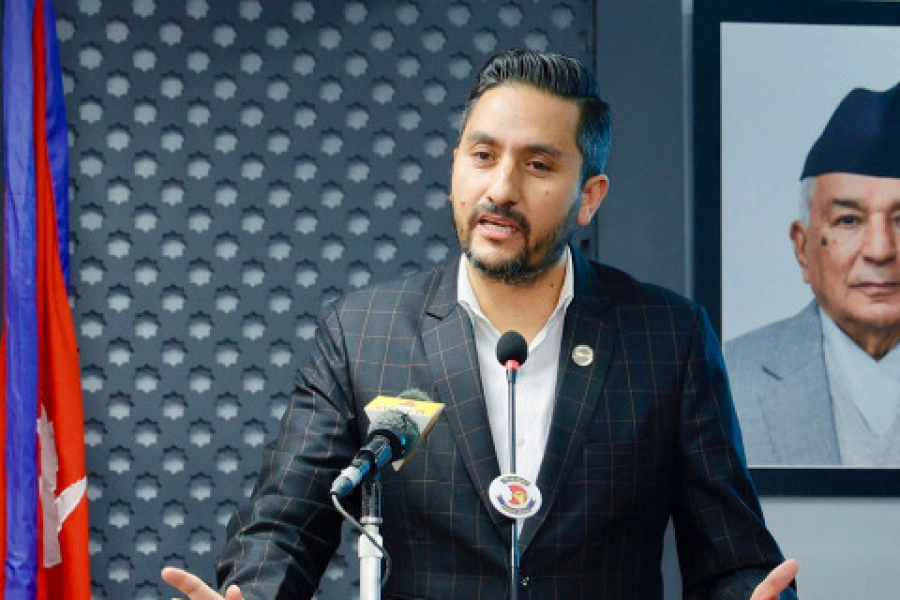
On September 8 last year, Sudan Gurung was among the organisers and prominent faces of the movement. As the coordinator of Hami Nepal, he was involved in organising the Maitighar protest and later became one of the Gen Z figures involved in negotiations with the government.
Today, Gurung is the home minister. He resigned from the post in April amid questions over his financial dealings, saying the allegations should be investigated, but returned to the ministry in June after a government probe cleared him of the allegations.
His trajectory is more revealing than a general statement that “Gen Z entered politics”. A man who was organising protests outside the state last September is now responsible for the ministry overseeing internal security and, among other things, implementing some of the movement’s demands.
The March 5 election completed the broader political transition. The Rastriya Swatantra Party won 182 of the 275 seats, and Balendra Shah became the country's youngest prime minister.
From Uprising to Unfinished Business

The history is familiar enough. What remains less clear is what happens when the people who demanded change become responsible for delivering it.
That is where the 10‑point agreement signed on December 10 matters. The 10‑point agreement is more than a list of promises. The 10‑point agreement provides a benchmark against which the government’s year can be judged. The 10‑point agreement calls for rehabilitation and compensation for victims, an investigation into the September 8 violence, action against corruption and political interference, electoral and constitutional reforms, greater transparency and the creation of a Gen Z Council.
Some of those commitments moved quickly. Forty-five people were recognised as martyrs, families received compensation, and injured protesters were provided with treatment and other forms of support.
The deeper reforms, however, have taken longer.
A recent assessment by the Democracy Research Center Nepal found that implementation was strongest where the government could act through existing mechanisms. Commitments that required institutions, legislation or wider political restructuring remained largely pending.
That is the difference. The state was quicker to react to the fallout from the uprising than to the issues that fuelled the anger behind the uprising.
This process is incomplete as shown by the government’s actions. Nine months after signing the agreement the government created a coordination mechanism to oversee implementation of the Gen Z agreement and the rehabilitation package for injured protesters and families of martyrs.
The question is not whether the state did anything. The state did. The record demonstrates.
The question is why some demands became decisions while others remain trapped in implementation.
The clearest unfinished business however is accountability for the violence itself.
There are more than one official accounts of what happened in Nepal on September 8 and 9. Gauri Bahadur Karki led the inquiry commission which submitted its 907‑page report in March. Its contents were leaked by the media but the government is yet to formally release it. Human Rights Watch also urged the government to publish the report. The leaked findings recommended investigation, against the then‑prime minister KP Sharma Oli, the then‑home minister Ramesh Lekhak and the then‑police chief Chandra Kuber Khapung among other recommendations. The report itself did not provide a complete account of the violence on September 9 when arson, vandalism and deaths continued after the government had fallen.
The National Human Rights Commission then investigated both September 8 and 9.
The report went further in some areas. It named Oli, Lekhak and former communications minister Prithvi Subba Gurung in connection with human rights violations and suggested legal action. It also recommended action against senior police and Armed Police Force officials. It called for investigation into dozens of other individuals.
The report did not spare those connected to the movement itself. The NHRC has also called for investigation into the roles of several people linked to the Gen Z movement, including some lawmakers. It recommended investigations into former prime minister Sushila Karki and former home minister Sudan Gurung over their roles in the protests. It also recommended an investigation into Gauri Bahadur Karki, who led the government’s inquiry commission.
This leaves questions unanswered. Who is responsible for the deaths on September 8? Who should be held responsible for the violence and arson that day? What was the role of leaders and security officials? What exactly happened at Nakkhu Prison when Rabi Lamichhane was released during the unrest?
The NHRC has asked for an investigation into Lamichhane’s release. Reports at the time said he was released as the situation around the prison worsened. Lamichhane however later told the Karki Commission that he had not escaped and was released with the knowledge of the police.
These are still unresolved parts of what happened in September 2025.
A year later, Nepal has several reports and recommendations, but there is still no clear process for deciding who should be held responsible and what action should follow.
The longer this takes, the harder it becomes to establish what happened. Public attention also moves on, while the events of September 8 and 9 risk being remembered simply as part of the wider Gen Z uprising rather than as a series of incidents that still need answers.
The people who paid the price cannot afford that simplification.
According to the Karki Commission, 76 people were killed and 2,522 injured during the September 8–9 unrest. The government has officially recognised 45 of those killed as martyrs and provided Rs 1.5 million each to 53 families and introduced treatment, financial assistance, education and employment-related support for victims and their families.
Those measures matter. But the government was still establishing mechanisms for rehabilitation and implementation months after the agreement was signed. Support, like accountability, is therefore not a closed chapter.
September 8 is now Gen-Z Martyrs’ Day and a nationwide public holiday. A memorial is being built inside the Federal Parliament premises. The state is preserving the names of those who died during the movement.
That is a remarkable transformation in itself.
But remembering the movement is easier than resolving it.
In 365 days, Gen Z went from Maitighar to the ballot box, from the ballot box to Parliament, and from Parliament into government. The movement changed who holds power in Nepal.
The harder work is now in the record: making the Karki report public and acting on its findings; determining how the NHRC recommendations will be implemented; establishing responsibility for the violence of September 8 and 9; sustaining support for those injured and the families of those killed; and turning the political and institutional reforms promised in the 10-point agreement into functioning rules and institutions.
The movement changed Nepal’s political direction.
Its unfinished business is to make that change endure.