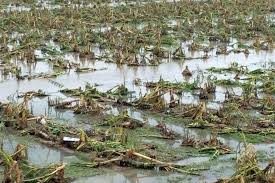
Once again, the Terai region of our country has fallen victim to a natural disaster. Paddy fields have been submerged. The unseasonal rains caused by Cyclone Montha, originating in the Bay of Bengal, have hit farmers in Koshi, Bagmati, and Terai provinces twice as hard. The cyclone’s impact has been particularly severe in the Terai and Koshi plains. This untimely rainfall has pushed farmers into severe economic, social, and psychological crises. A few months ago, drought had dried up the fields; now, the fields with paddy ready for harvest have been submerged. This extreme imbalance in nature is a direct manifestation of climate change. During the drought, former Prime Minister KP Sharma Oli had announced a plan to install 500 deep bore wells in the Terai and replenish groundwater through ponds in the Chure region. However, the plan remained only on paper. As a result, farmers had to rely on bore wells and generators for irrigation and drinking water. When rainfall did not occur by the end of July, seedlings withered, transplantation was delayed, and crop yields were bound to decline. But nature did not stop there. When the paddy was ready for harvest, Montha brought heavy rain and storms, causing significant crop losses. This came shortly after floods last month caused damage estimated at around Rs 7 billion.
SHIFT for Our Planet: Youths urge authorities to make climate j...

Rain or drought are not merely seasonal events—they are warnings of climate change. The Terai’s agricultural system is under direct threat. On one side, there is prolonged drought, and on the other, untimely rainfall. These twin events have not only reduced productivity but also lowered farmers’ morale. While nature is becoming increasingly unbalanced, state policy remains confined to outdated seasonal relief and empty rhetoric: promises of bore wells during water scarcity and relief after floods. This is Nepal’s agricultural policy. The effects of climate change are intensifying every year. Forest fires occur during dry winters, floods strike when rains fail in July but arrive in October, and temperatures continue to rise, altering crop cycles. Yet our policies, programmes, and budgets remain limited to declarations such as the “Year of Increased Paddy Production.” Government plans remain restricted to annual speeches and ad hoc relief. There is neither coordination nor preparedness among the Ministry of Agriculture, provincial governments, and local bodies. Consequently, farmers face the double burden of nature and policy every year. If the government strengthens its information dissemination system, farmers can reduce the damage caused by climate change. The time has come to teach farmers how to cultivate safely under such conditions.
Nearly two-thirds of Nepal’s population depends directly or indirectly on agriculture, yet both productive land and farmers are in crisis. Inability to transplant paddy during droughts and harvest during floods raises serious questions about the country’s food security. The Terai is not just geopolitically important; it is Nepal’s food basket. Weak agriculture here means empty kitchens nationwide. Fundamental changes in agriculture are now essential. Fields, crops, and farmers are on the frontline of the climate crisis, requiring climate-adaptive policies. Irrigation, water conservation, groundwater recharge, and modern farming technology are no longer optional. Provinces must adopt crop systems suited to local weather, temperature, and rainfall, supported by timely weather forecasts delivered within 24 hours. Climate-smart farming, crop insurance, disaster funds, and farmer-focused preparedness are crucial to prevent worsening losses. Long-term water management programmes in the Chure and inner Terai must be implemented effectively. The state must ensure pre-disaster preparation and protection, not merely post-disaster relief. Farmers are battling not only extreme weather but also the effects of state inaction and poor planning.