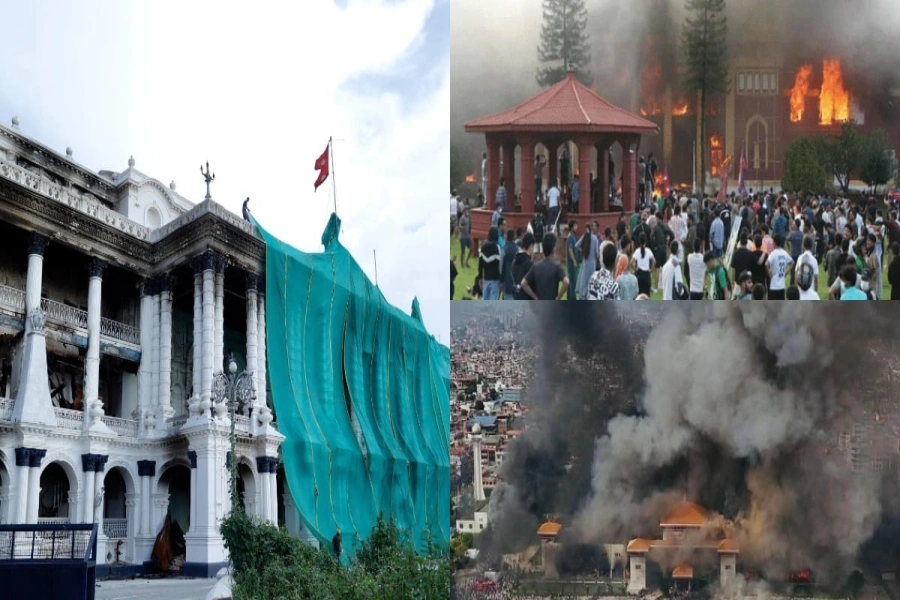
KATHMANDU, Oct 8: Public perception of the country’s direction has deteriorated sharply following the Gen Z movement, with seven in 10 respondents saying Nepal is heading in the wrong direction, according to the Nepal Public Opinion Survey 2025.
The survey entitled A Survey of Nepali People in 2025, found that only 17.5 percent of respondents in the Follow-up Survey 2026 believed the country was moving in the right direction, down from 23.7 percent in the Pre-Gen Z Movement Survey 2025. Meanwhile, the proportion saying the country was heading in the wrong direction increased from 61.8 percent to 70 percent.
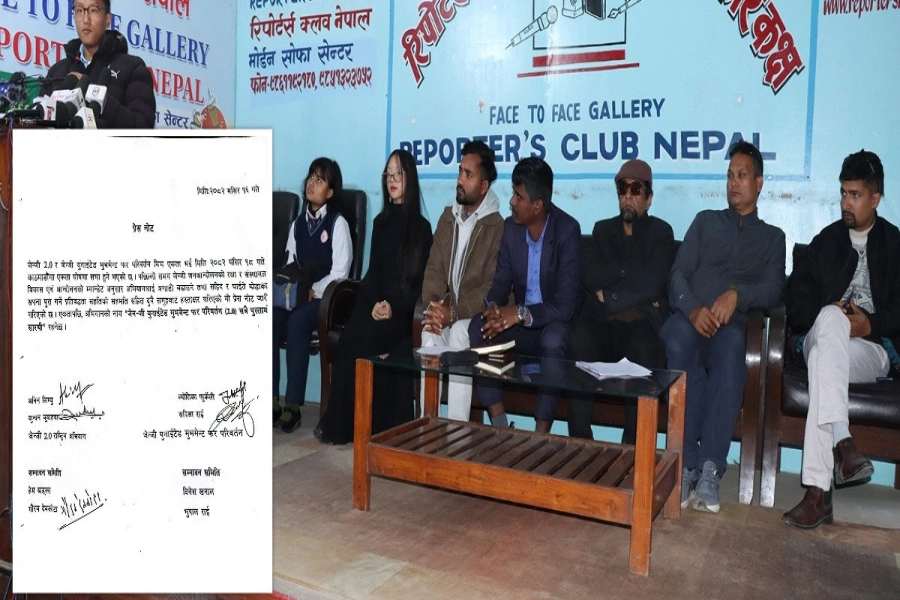
The survey, conducted by the School of Arts at Kathmandu University in collaboration with Interdisciplinary Analysts and the Strengthening of Local Government Program, is the fifth in a series that began in 2017. The Swiss Agency for Development and Cooperation supported the survey in 2022 and 2025.
The 2025 survey was initially designed to cover 8,211 respondents, but demonstrations, strikes, road blockades and political uncertainty disrupted fieldwork. A total of 6,394 respondents were surveyed by September 8, 2025, before the Gen Z movement. The survey team later conducted a nationally representative follow-up survey among 1,428 respondents to assess changes in public opinion after the political upheaval.
Who hijacked the Gen Z movement? MP BK demands investigation

Economic concerns and corruption emerged as major sources of public dissatisfaction. The proportion citing increased corruption as a reason for believing the country was moving in the wrong direction rose from 58.9 percent to 63.4 percent. Similarly, 54.5 percent cited difficulties with livelihoods and employment, while 40.5 percent pointed to deterioration in the economy and 32.9 percent to rising prices of essential goods.
Perceptions of local conditions also worsened considerably. The proportion saying their local area was improving fell from 54.4 percent before the Gen Z movement to just 10.1 percent in the follow-up survey. Likewise, the share saying their household’s economic situation had improved stood at only 10.5 percent.
The survey authored by Dhiraj Giri and Dr Uddhab Pyakurel also found declining satisfaction with local government services. Average satisfaction with health services fell from 6.3 points in 2020 to 5.5 points in 2025, while satisfaction with road services declined from 6.3 to 5.6 points. Satisfaction with education services stood at 5.7 points in both the 2025 and 2026 surveys.
Public engagement with local governments appears weak. Only 12.2 percent of respondents in the follow-up survey said they were aware of local government projects, while just 10.2 percent were aware of public hearings. Willingness to pay additional local taxes if services improved also declined from 77.6 percent in 2017 to 45.6 percent in 2026.
The survey, however, found continued support for social and gender equality. Some 85.3 percent rejected the view that sons should be given greater importance than daughters, while 92.7 percent rejected the notion that women should not work outside the home. Acceptance of inter-caste marriage reached 76 percent in the pre-Gen Z survey.
The Gen Z movement itself received widespread public attention. As many as 98.7 percent of respondents said they were aware of the movement. The leading reasons cited for the movement were the campaign against corruption, at 79.8 percent, and demands to lift restrictions on social media, at 63.6 percent.
Despite the broader pessimism about the country’s direction, 53.8 percent said they expected the Gen Z movement to take the country in the right direction, while 40.2 percent expected the opposite. Asked about its impact on Nepali politics, 23.8 percent anticipated positive change and 26.8 percent expected partial change.
The survey also found that friends, family and neighbors, at 63 percent, and social media platforms such as Facebook and TikTok, at 61 percent, were the leading sources of information on current affairs, education, health, agriculture and employment.
The report cautions that the two surveys cover different reference periods and were conducted amid significantly different political and social circumstances. It says the findings should therefore be interpreted in the context in which the data were collected.