On Rashtriya Ekta Diwas, the ideals of unity, mutual respect and shared prosperity offer a meaningful perspective on one of South Asia’s most enduring relationships.
Every year on October 31, India observes Rashtriya Ekta Diwas, or National Unity Day, commemorating the birth anniversary of Sardar Vallabhbhai Patel, the statesman whose leadership helped consolidate independent India. Although the occasion is rooted in Indian history, its underlying message of unity amid diversity carries relevance beyond India’s borders, particularly for Nepal, a country connected to India through centuries of shared civilisation, culture and human relationships.
Patel’s contribution to integrating more than 500 princely states into the Indian Union reflected his conviction that political unity could provide the foundation for stability, development and national progress. His achievement emerged from a particular historical context, but the broader principles of cooperation, dialogue and collective purpose remain relevant in contemporary South Asia.
For Nepal, an independent and sovereign nation with its own proud history, Patel’s legacy offers an opportunity to reflect on how neighbouring countries can preserve their distinct identities while strengthening their common interests.
India and Nepal share a relationship that extends far beyond conventional diplomacy. Their open border, deep familial connections, religious traditions and economic interdependence have created a unique bond between their peoples. From Janakpur and Ayodhya to Pashupatinath and Kashi, shared spiritual and cultural traditions have connected communities for generations.
Ekta Diwas and the Himalayan Ideal of Unity

These relationships are not merely historical memories. They remain living connections, sustained through marriages, education, employment, pilgrimage and everyday movement across the border.
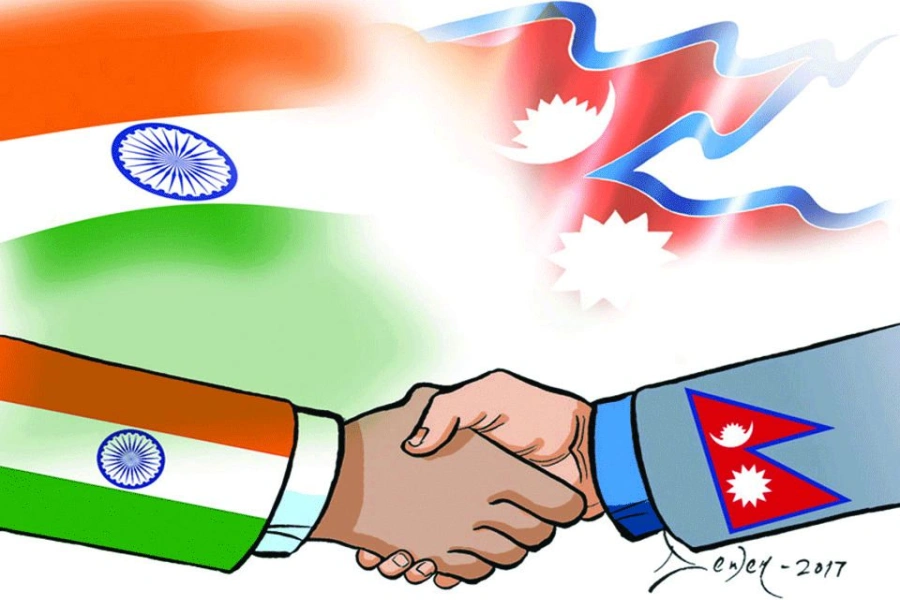
The India-Nepal relationship has also demonstrated considerable resilience. Differences over political issues, territorial questions and perceptions of unequal influence have occasionally created friction. Yet these disagreements have not erased the underlying social and economic connections that bind the two societies.
Indeed, the spirit of Rashtriya Ekta Diwas offers a useful lesson: lasting unity does not require uniformity. It requires respect for differences, confidence in dialogue and a willingness to pursue common objectives.
For India and Nepal, this means recognising that their partnership must rest on sovereign equality, mutual sensitivity and practical cooperation.
Recent years have witnessed important developments in cross-border connectivity, energy cooperation and infrastructure. Nepal’s growing electricity exports to India, expanding transmission links, railway connectivity and integrated border facilities illustrate how geographical proximity can be transformed into economic opportunity.
India’s role as a major trading partner and transit route for Nepal also highlights the practical importance of maintaining predictable, cooperative relations. Equally, Nepal’s hydropower potential offers opportunities for cleaner energy, investment and wider regional integration.
Such cooperation becomes especially significant at a time when South Asia faces common challenges, including climate change, natural disasters, youth unemployment and economic uncertainty. The Himalayan ecosystem, shared river systems and interconnected markets make collaboration increasingly necessary.
There is also a deeper social dimension to this partnership. Nepal’s democratic evolution, cultural diversity and aspirations for economic advancement deserve understanding on their own terms. A confident India-Nepal relationship should accommodate differences of opinion without allowing them to define the entire partnership.
Patel’s emphasis on national cohesion can therefore be understood not as a prescription for Nepal, but as a reminder that strong institutions, social harmony and constructive engagement are essential to national development.
As both countries navigate a changing regional and international environment, the future of their relationship will depend increasingly on younger generations. Educational exchanges, digital connectivity, entrepreneurship, tourism and cultural cooperation can give fresh meaning to a bond inherited from history.
Rashtriya Ekta Diwas is ultimately an Indian commemoration, but its message can inspire a wider regional conversation. The challenge before India and Nepal is not to erase their differences, but to ensure that those differences never overshadow their shared possibilities.
Sardar Patel helped demonstrate how diversity could coexist with a larger collective purpose. For India and Nepal, the enduring lesson is that friendship becomes stronger when rooted in mutual respect, shared opportunity and trust.
The Himalayas may define the geography of the two nations, but it is the warmth of their people-to-people connections that continues to define their relationship.