

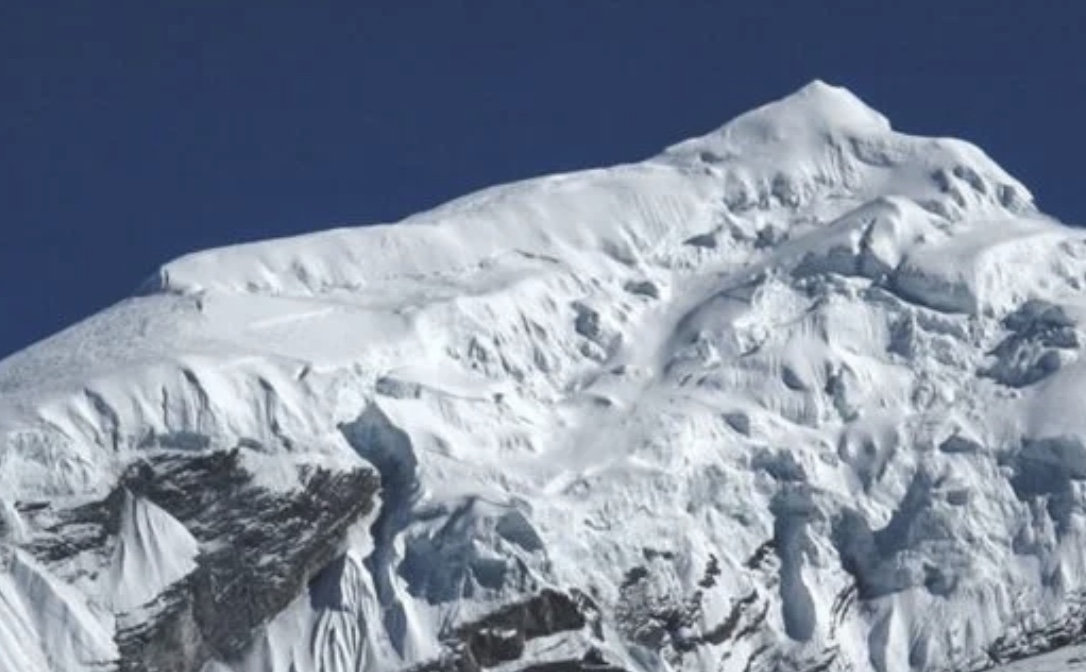
At 8:37 on the morning of August 26, 132 million cubic meters of glacier and rock broke away from the northern side of Langtang Lirung mountain. Seven minutes later, it reached the China and Nepal border immigration checkpoint at Rasuwagadhi, at the speed of 170 km per hour. The first text-message alert left Kathmandu at 9:15. By then the Bhotekoshi was already carrying homes, bridges and a customs post toward the Trishuli, and the Trishuli was carrying them toward Chitwan. The messages came too late for some border settlements in upstream areas, although they gave communities farther downstream more time to respond. More than 1,450 people were dead, over 5,000 went missing, and 13 hydropower projects were impacted, affecting nearly a tenth of the country's electricity production.
The disaster was not simply a case of a warning arriving late. Nepal's flood alerts were designed largely around rainfall and rising river levels, not the sudden collapse of a mountain slope. Satellite based assessment suggested up to 40 centimetres of line-of-sight deformation during the 48 days before the collapse. This does not mean the precise timing of the disaster could have been predicted. It does show why Nepal needs a system that can identify signs of instability, analyse their significance and connect that information to decisions before a hazard reaches communities below.
That is an uncomfortable lesson, hazard. Nepal's warning system did exactly what it was designed for: it watches rivers rise during the monsoon. But the hazard has changed. The traditional rainfall and river monitoring system is not enough to provide early warning for this kind of cascading. The August 2026 disaster began with a glacier and rock avalanche at 5100 meters. After 47 days, On October 11, a second event, on the Budhi Gandaki, began with a glacier, ice and snow avalanche in Chamar mountain, just 40 km apart from the August glacier collapse site. The July 2025 flood on the same Bhotekoshi river began with a glacial lake flood in Tibet. Each one started where no gauge could see it, crossed a mandate or a border, and arrived faster than any phone network.
This indicates that the nature of hazard is changing in the Himalayan region. In 2023, Sikkim lost a 1,200-megawatt dam to a glacial lake. In 2021, Chamoli lost two hydropower projects and 200 lives. That same year, the Melamchi disaster in Nepal swept away the emerging Melamchi market settlement among many others. Our neighbours' glaciers, our rivers and their floodplains share the same water, the same corridors and the same risk. Nepal and India have formalized real-time data sharing, while Nepal and China exchange flood information locally along their border. India and China let their own river-data agreements lapse. SAARC's disaster centre has been silent since 2016.
Revised interest rate corridor system introduced
The Rapid Damage and Needs Assessment was released by the National Disaster Risk Reduction Management Authority (NDRRMA) in September. The government estimates damage and loss from the August 26 flood at USD 2.7 billion dollars and the cost of recovery at USD 4.8 billion — roughly a tenth of the national output. Three weeks after the disaster, 2% of that need had been raised. The Fund for Responding to Loss and Damage approved USD 2 million which is 0.4% of what Nepal needs for recovery. Nepal needs more dedicated support from the world for its recovery. To address the climate crisis and better prepare Nepal's efforts for resilience building, we propose four pillars of the Sajag Himalayan Compact – a shared, government-led plan that links risk monitoring, early action, resilient reconstruction and finance across Nepal’s river corridors and borders. ‘Sajag’ means alert; the compact is how Nepal stays that way:
Know. Stop counting dangerous lakes once a decade and start watching the whole corridor every week: slopes, lakes, tremors, rivers and the assets beneath them should be assessed together. The radar data that showed Langtang moving is free and public. What is missing is an institution to analyse that data, with Nepali, Chinese and Indian scientists working together.
Anticipate. Join the warning to the action and the action to the finance before the event, not after. Every exposed municipality and every hydropower site should have a pre-agreed plan keyed to alert levels, sirens that work without phones, and a fund that releases on a forecast. Nepal endorsed a National Anticipatory Action Framework in May 2026. The framework provides guidance on how a forecast becomes a decision, a decision becomes action and action is funded before the water reaches the ground.
Protect. Nearly five billion dollars is to be spent on rebuilding and recovery. Spend it with the hazard in the drawing. Screen every bridge, intake and powerhouse against the multi and cascading hazards across the river corridor; approve no new hydropower, road or settlement in a glacier-fed catchment without a multi-hazard assessment; treat springs, floodplains and storage as assets; insure what the public owns. Underground powerhouses survived August. Surface ones did not. That is a design lesson, not bad luck.
Transform. Resilience is not a cost to Nepal's growth; it is the precondition for it. The plan to build 28,500 megawatts by 2035 and export more than half of it depends on lenders, insurers and buyers believing the corridors will hold. Royalties and payments for ecosystem services can flow to the upstream villages that keep slopes stable for everyone below. The communities that lost the most in August — hill farmers, site workers, women-headed households — should be first in every trigger, not last in every queue.
AI generated illustration of the Sajag Himalaya Compact
None of this requires a treaty. It requires wiring together what already exists: the recent dialogue with national, research institutions and others prepared ten action points agreed in Kathmandu last month; and the Prime Minister's proposal at the United Nations for a Himalayan Climate Resilience Mechanism (HCRM) with India and China.
The arithmetic is not complicated. The compact would cost in the order of sixty to eighty million dollars over five years. The August disaster cost thirty times that in a single morning. Every serious estimate says a dollar spent before a disaster saves between four and fifteen afterwards, and more when the warning is measured in days rather than minutes.
In the second week of November, Nepal will be at the climate summit in Antalya. We can go as the country that suffered, or as the country that proposes. The mountain has already told us what is coming. The compact is how we answer.
Giriraj Amarnath is the Research Group Leader for Water Data for Climate Resilience at the International Water Management Institute (IWMI), Colombo, Sri Lanka and Santosh Nepal is Researcher for water resources and climate change and is based in IWMI, Kathmandu Nepal




-1793781552.webp)


