For decades, the story of India-Nepal relations has been framed through the lens of borders—open yet contested, historic yet politically sensitive. The 1,751-kilometre frontier has shaped diplomacy, trade, and periodic tensions. But today, a quieter transformation is underway. The real boundary between the two countries is no longer defined by geography; it is being redrawn by electricity.
In South Asia, power grids are emerging as the new borders, and nowhere is this more evident than in the rapidly evolving India-Nepal electricity partnership.
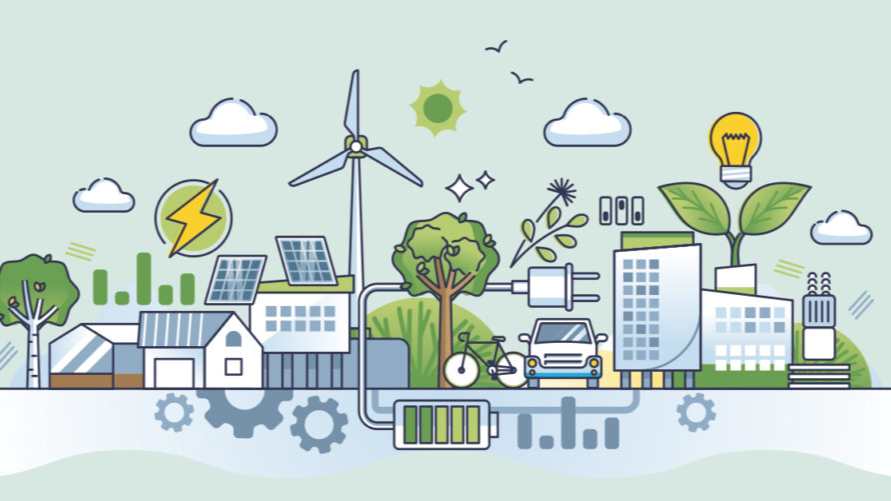
At the heart of this shift lies a simple reality: energy has become the most powerful instrument of regional integration. Nepal, once defined by chronic power shortages, is now transitioning into a surplus hydropower nation. With over 3,000 megawatts of installed capacity, the overwhelming majority hydroelectric, it has begun exporting electricity beyond its borders. India, with one of the world’s largest and most sophisticated national grids, has become both Nepal’s primary market and its gateway to the wider region.
This is not merely bilateral trade. It is the construction of a regional energy architecture.
Consider the scale of change. Nepal is already exporting close to 1,000 megawatts of electricity daily to India and, through India, to Bangladesh. In a landmark development, Kathmandu has begun exporting power to Dhaka via Indian transmission lines—an unprecedented trilateral arrangement that effectively positions India as South Asia’s electricity corridor. What was once a landlocked country’s vulnerability is now becoming its strategic advantage.
This is geopolitics, but not as we have traditionally understood it.
Historically, borders in South Asia have been sites of friction—disputes over territory, identity, and sovereignty. But electricity flows do not recognise these constraints. Power moves where demand exists, guided by infrastructure, economics, and mutual need. The emergence of cross-border transmission lines such as the Dhalkebar-Muzaffarpur corridor and the under-construction Butwal-Gorakhpur line has effectively created a parallel geography, one defined not by fences but by frequency.
Cooperation for trade

In this new geography, interdependence replaces isolation.
India imports surplus hydropower from Nepal during peak generation seasons and exports electricity back when Nepal faces deficits. This two-way flow stabilises both systems, reducing outages and balancing seasonal variations. More importantly, it creates a shared stake in each other’s stability. When grids are connected, disruption in one country becomes a concern for all.
This is why energy connectivity is fast becoming more consequential than territorial disputes.
Even as political disagreements occasionally surface, electricity trade has continued to deepen. Infrastructure projects are expanding, with thousands of megawatts of cross-border transmission capacity currently under development along the India-Nepal corridor. India has also committed to purchasing 10,000 megawatts of electricity from Nepal over the next decade—a long-term guarantee that effectively anchors Nepal’s economic future.
Such commitments are not just economic; they are strategic.
For Nepal, electricity exports represent a pathway to sustained growth, reduced trade deficits, and enhanced geopolitical leverage. Hydropower is no longer just a domestic resource; it is a diplomatic tool. Energy has become a quiet but powerful instrument of economic diplomacy.
For India, the benefits are equally significant. By integrating Nepal into its grid, New Delhi reinforces its position as the region’s energy hub. It also creates a counterweight to external influence by offering a model of partnership based on connectivity and mutual gain rather than debt or dependency.
But perhaps the most important shift is conceptual.
The traditional language of geopolitics—territory, sovereignty, control—is being supplemented by a new vocabulary: connectivity, integration, resilience. Power grids embody this transition. They are not zero-sum. They expand with cooperation. Every new transmission line strengthens not just economic ties, but strategic trust.
This is already visible in the emerging trilateral framework involving India, Nepal, and Bangladesh. Nepal’s ability to export electricity to Bangladesh through India’s grid demonstrates how national infrastructure can be repurposed into regional public goods. It also signals the possibility of a broader South Asian energy market—long discussed, rarely realised.
Now, it is quietly taking shape.
The implications are profound. When countries are bound together by energy flows, the cost of conflict rises, and the incentives for cooperation deepen. Electricity cannot be stockpiled indefinitely; it must be used in real time. This creates a constant, living interdependence, one that is far more dynamic than traditional trade.
In such a system, stability becomes a shared necessity.
Of course, challenges remain. Infrastructure gaps, regulatory hurdles, and political sensitivities continue to shape the pace of integration. Seasonal variations in Nepal’s hydropower output require careful coordination. And the region’s broader geopolitical complexities cannot be wished away.
But the trajectory is unmistakable.
South Asia is moving slowly but decisively from a region defined by borders to one connected by grids.
For India and Nepal, this transformation carries a deeper message. Their relationship is no longer just about managing proximity; it is about leveraging connectivity. The open border that once symbolised cultural and economic exchange is now being complemented by an invisible network of transmission lines carrying megawatts instead of goods.
In the process, the meaning of proximity itself is changing.
The future of India-Nepal relations will not be written in boundary negotiations or political rhetoric alone. It will be written in substations, transmission corridors, and power purchase agreements. It will be measured not in kilometres of contested land, but in megawatts traded and grids synchronised.
Because in the new geopolitics of South Asia, the most important borders are no longer drawn on maps. They are drawn in electricity.