

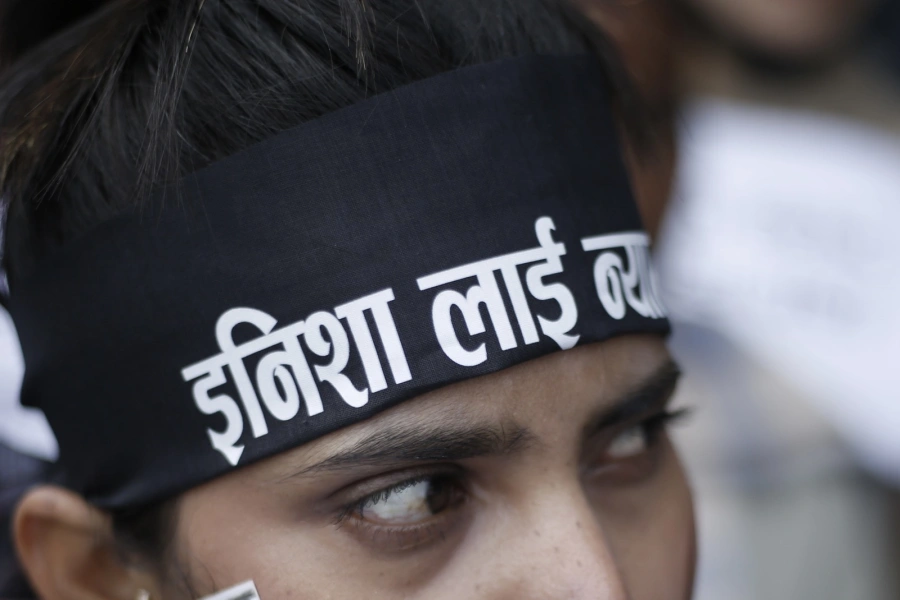
The rape and murder of 16-year-old Inisha BK of Surkhet has once again shaken the nation. Public outrage and street protests in the wake of such brutality are both natural and justified. Yet outrage alone will not break this vicious cycle. The more urgent question is why Dalit women and girls are disproportionately targeted. The state, society and political leadership must confront this reality with honesty and sensitivity. This is not an isolated crime—it is organised violence rooted in caste, gender, poverty and power. The majority of rape victims involving Dalit women and girls in Nepal is no coincidence; it reflects deep structural injustice. Centuries of untouchability, humiliation, poverty, devaluation of labour, limited access to education and political neglect have left Dalit communities acutely vulnerable. When a group is perceived as weak, voiceless or unable to resist, perpetrators see easy targets. Rape against Dalit women and girls, therefore, cannot be viewed merely as an individual crime—it is also a violent assertion of social dominance. Economically, Dalit communities remain among the most marginalised. A disproportionate share of Nepal’s poor belong to this group. Many families are landless, reliant on unstable incomes, and confined to low-paid labour with limited opportunities. In such conditions, pursuing justice becomes an uphill battle. From police stations to courts, justice demands time, money and access—resources many victims lack. As a result, cases are often suppressed, settled informally or silenced through financial inducements. This fosters a dangerous culture of impunity, emboldening perpetrators.
Investigation finds 4 to 5 km of Sikta canal vulnerable

The social dimension is even more entrenched. Despite constitutional provisions criminalising untouchability, discrimination and humiliation persist in practice. Dalit women bear a double burden of caste and gender, making them especially vulnerable. Understanding violence against them requires going beyond the general framework of “violence against women” to an intersectional lens that captures layered oppression. Political representation further compounds the problem. While inclusivity may exist on paper, Dalit women remain largely absent from policymaking, security institutions and the judiciary. Their suffering is often recorded but rarely addressed. Institutional sensitivity towards Dalit issues remains weak, leaving victims to navigate a justice system marked by delay, indignity and distrust. Ending such crimes requires decisive action. Impunity must be dismantled. Cases of rape and rape followed by murder demand swift, impartial and evidence-based investigations. Negligence, evidence tampering, or political interference must not be tolerated. Fast-track courts, mandatory forensic examinations, victim-friendly procedures and robust witness protection mechanisms are urgently needed. Prevention must begin at the grassroots. Schools and communities should promote education on consent, gender equality, personal and digital safety, and anti-caste discrimination. Local governments must institutionalise awareness programmes across neighbourhoods, schools, mothers’ groups, youth clubs and community networks.
Equally critical is the economic empowerment of Dalit communities. Scholarships, safe accommodation for students, skills training, employment opportunities, legal aid funds, social protection for vulnerable families and safe shelters for at-risk girls must be prioritised. Justice becomes meaningful only when victims have the means to pursue it. Zero tolerance for caste-based discrimination is essential. Untouchability, social exclusion, threats, coercion to settle cases and victim-blaming must be treated as serious offences. Society must abandon the tendency to scrutinise victims rather than perpetrators. Inisha BK and countless other Dalit victims are not just names; they are stark reminders of systemic failure. If Dalit daughters remain unsafe, our claims of democracy, constitutionalism and equality ring hollow. Addressing this injustice demands coordinated action across legal reform, social awareness, political representation and economic equity. The time has come to move beyond mourning and towards structural transformation. A just society is one in which no citizen is left vulnerable. By that measure, we are still falling short.











-1200x560-1779450784.webp)


