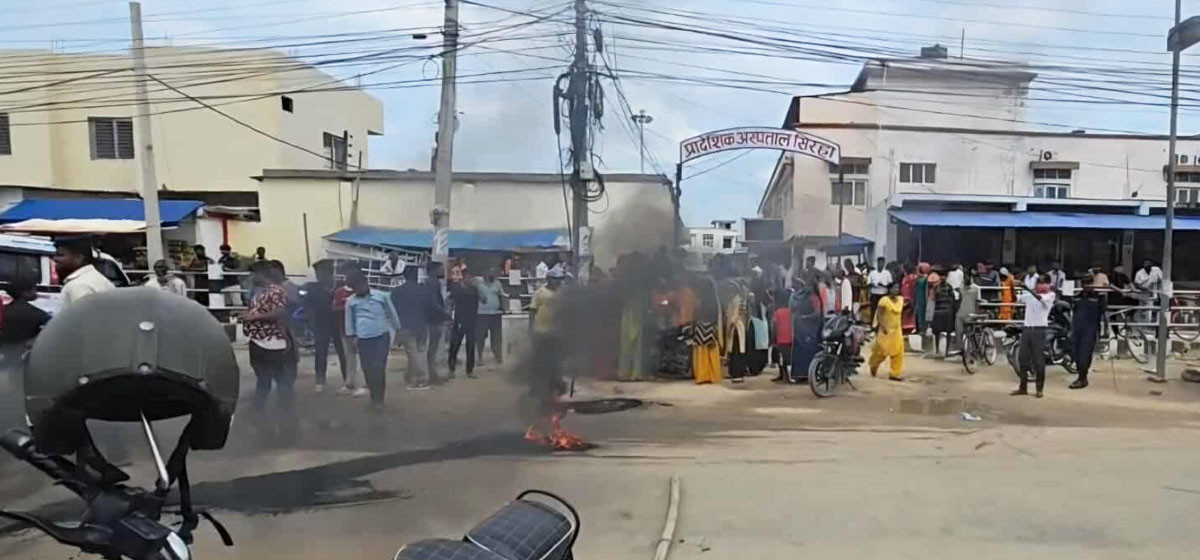
It is 10 am on the Kathmandu Ring Road, a Monday morning, in the middle of Kathmandu’s rainy season. Clouds cover the sky, punctuated by patches of clear blue, the humidity making the 26 degree heat seem much hotter. The clouds hide the Himalayas from view, and in the evening unleash torrential rain that remains in puddles throughout the day.
Despite the unfortunate timing of my trip in terms of weather, Nepal still has a natural beauty exceeding almost any other place on Earth–the lush green valleys make for breathtaking hikes, and the city boasts oodles of legendary temples and architecture. It is obvious the locals are fiercely proud of their city, and after a few days of exploring it’s not hard to see why. [break]

Republica
Buddhism and Hinduism coexist peacefully, creating a special mix of culture, architecture and religion unseen in the Western world. This is what makes one of the city’s biggest problems so hard to understand: pollution is gradually destroying Kathmandu, and robbing Nepal of its largest source of culture, income and employment–yet nothing seems to be done about it.
Like most tourists, after arriving in KTM airport I took a taxi through to the other side of the city, and it was immediately obvious that there was no escaping the clouds of black dust particles from the exhaust fumes. The World Health Organisation ranks Kathmandu as one of the most polluted cities in the world. A few hours of exposure to the main roads causes ‘black sneezes’ (particles coating the inside of your nose) and after a few weeks unprotected, it is common to cough up blood. Worryingly, these are just experiences reported by Western tourists who spend relatively short periods of time in Kathmandu–the impact on locals, especially taxi and bus drivers who don’t wear masks, is lethal.
The total population of Kathmandu valley is approximately 2.5 million, and the death rate attributable to exhaust fumes is approximately 95 persons out of 10,000 deaths: to put it another way, if everyone in Kathmandu were to die now, 23,750 people would die as a direct result of the pollution. And with a large swell in population, the death rate will increase exponentially.
The 6.12 percent annual rise in population in the last decade has overwhelmed the roads that weren’t designed for the deluge of traffic. Bizarrely, a government project is widening the main roads to cram in even more vehicles, regardless of the absence of catalytic converters on most vehicles that remove the dangerous chemicals such as carbon monoxide and nitrogen oxides from exhaust fumes. On structured roads, widening would increase safety and reduce traffic flow. However making the Kathmandu roads larger would only add to the chaos and, crucially, encourage people to take their own cars and motorcycles instead of the more environmentally-efficient buses.
Health risks aside, pollution causes numerous other problems in Kathmandu. The walls of buildings–including beautiful temples–that line the roads are coated in dust and crumbling at an accelerated rate, and effective restoration is financially unavailable. The roads have become extremely unpleasant to be on, and that discourages return visits–in terms of tourism, and therefore economy. Nobody wants to come back, and the health risks and inconvenience of wearing a mask are major factors. If measures aren’t taken to clean up, Kathmandu will lose its reputation as a popular tourist destination, and the already struggling economy will plummet.
Despite the Environmental Protection Act being passed in 1997, pollution has actually got worse. The Act states that “nobody shall create pollution in such a manner as to cause significant adverse impacts on the environment or likely to be hazardous to public life and people’s health,” but after a few seconds on the Ring Road, anyone can see that the enforcement of this law is a joke.
Kathmandu lacks the ability to sufficiently enforce all of its laws, and dealing with crime rightly takes priority over dealing with pollution. However, effective changes must be implemented as soon as possible before the damage escalates further. Ensuring catalytic converters are mandatory and raising the quality of fuel (for example, using gasoline rather than diesel) would be the most effective step in the reduction airborne pollution. But as Kathmandu has such limited resources and so many cars on the road, the solutions will take years to achieve success.
Kathmandu has an increasing number of problems related to its growing population such as insufficient medical care, rising unemployment, low income, and infrastructure that wasn’t designed to cope with so many people. At face value, pollution is a less important issue, but changes need to be made now.
The death rate will grow in proportion to the population increase, so it’s critical to fix the problem now! It’s very hard to get things done in Kathmandu; resources are low and the government is usually divided on important issues, but it’s good that air pollution is recognised as a serious problem. It follows that a clean-up project should be launched sooner rather than later.
The sad reality is that Kathmandu is a historic, vibrant city with more great tourist destinations than almost any other place on Earth. The market shopping of Thamel and Bhaktapur, Boudhanath Stupa, the monkey temple, three Durbar Squares, Kopan Monastery, the list goes on. So why does nobody want to come back to this great place after being here once? It’s a complex question, but air-pollution is a big reason. Leaving Kathmandu is a breath of fresh air in every sense. Until the issue is resolved, public health and the economy will continue to suffer.
jim-bobb@live.co.uk
Related story
Analysis of judicial precedents on medical negligence within Ne...