The GenZ movement in Nepal is nearing its second month. The two major festivals of Dashain and Tihar have passed in the meantime and the nation observed Chhath festival on Monday. Yet, what is usually a season of joy and celebration has felt uneasy this year. The ongoing protests, the martyrdom of young demonstrators and the ensuing episodes of vandalism, violence and arson are being examined from multiple angles. Collectively, these events have left a deep psychological mark on the nation. Entrepreneurs and businesspeople are increasingly despondent and the country once again seems to be moving through an unspoken phase of pain and uncertainty. Politically, the situation remains fluid. Nepal has witnessed political upheavals almost every decade, with major transformations in 1951, 1960, 1979, 1990 and 2006. Yet the GenZ movement of September 8–9 appears to have created an even wider ripple. Most of Nepal’s major movements have brought political change, gradually empowering citizens. The 1951 revolution ended the Rana oligarchy. The 1980 change saw democracy replaced by an autocratic system. The 1990 People’s Movement abolished the 30-year party-less Panchayat rule, but the democracy it restored was again undermined by the Maoist insurgency launched in 1996.
Alternative way of healing

The People’s Movement of 2006 once again restored peace and paved the way for the Constitution of 2015, which established Nepal as a federal democratic republic. That milestone raised hopes of long-term peace and stability. Yet within a decade, widespread frustration has once again pushed the country into turbulence. The economic growth that should have accompanied political progress never materialised. Those with proximity to power corridors and influence within the network of patronage politics have prospered, while the rest have struggled. The resulting inequality has deepened public anger. Political leaders failed to grasp that the lives of ordinary citizens have seen little substantive change — a failure that has culminated in the current crisis. Rather than pondering what could have or should have been, the present challenge is to manage the situation wisely. Different groups are now raising their demands, expecting fulfilment through pressure and street protest. Fresh protests are being announced, adding to citizens’ sense of insecurity and fatigue. The protests, in the name of revolution, have struck at the backbone of the tourism-dependent economy. Attacks on major hotels and private property have shaken public confidence. Businesses run on loans now face growing risks and few dare to invest in such uncertainty.
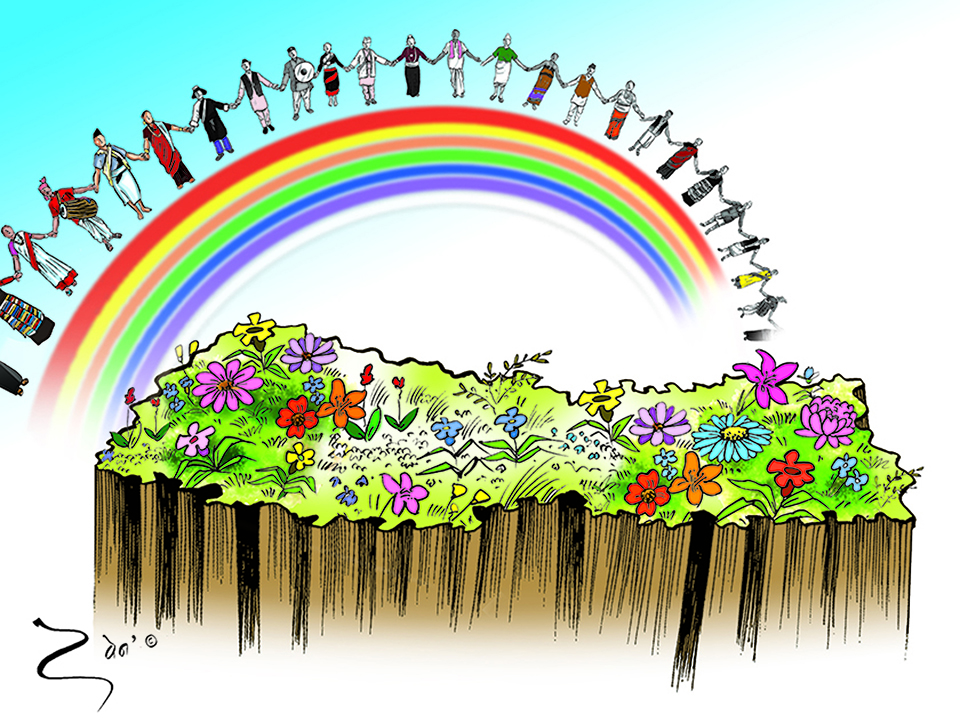
History shows that just as Nepal begins to make economic progress, it is repeatedly pulled back by internal discord. After the 1990 political change, the economy had shown promising growth. Similarly, following the promulgation of the 2015 Constitution, Nepal’s fragile economy had begun to recover despite the blockade and the COVID-19 pandemic. Infrastructure development had gained momentum, with new roads and reconstruction efforts after the earthquake producing visible progress. But once again, forces unwilling to see Nepal advance have dragged the nation backward. The unfolding circumstances suggest that Nepal must now endure another period of internal conflict and contradiction. To emerge from this, collective effort and unity of purpose among us are essential. The time has come to learn from the GenZ movement and its aftermath — not to deepen divisions but to strengthen the nation. This requires visionary and responsible political leadership. Failure to rise to the moment could cost the country its hard-won gains and push it toward even greater peril. It is time to awaken — and act before it is too late.