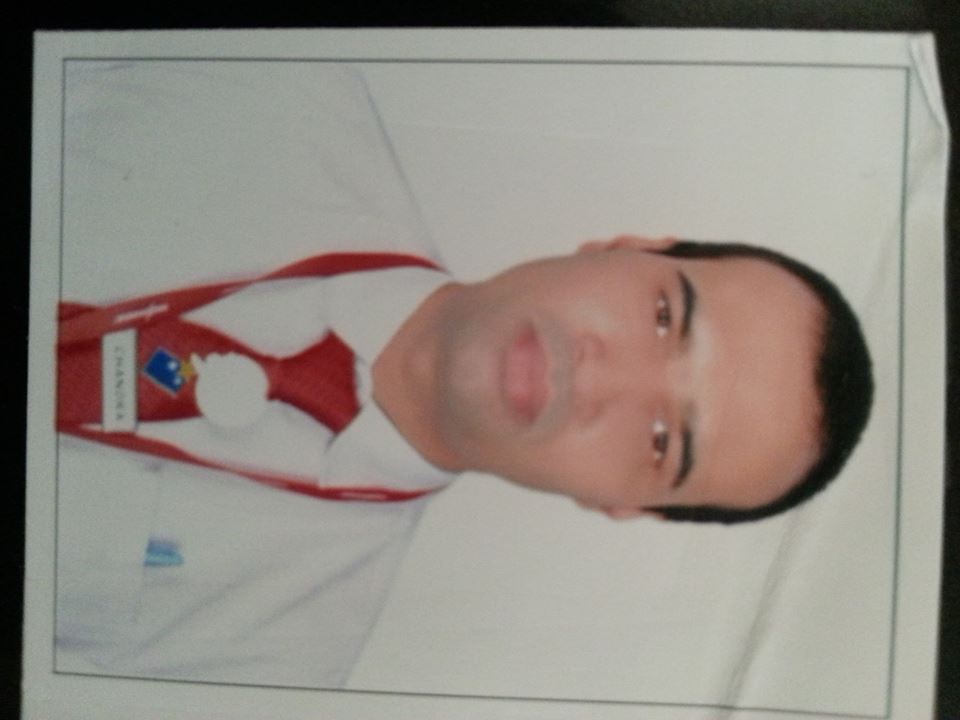
• Prashanta Pandey of Rupandehi was arrested on April 7, 2011 and produced in court after five days of incommunicado detention, during which he was tortured. He was charged under the Civil Code, with homicide, after 25 days in detention. After spending a year in detention, he was acquitted of the homicide charge but imprisoned for a year for his alleged indirect involvement in a bomb blast in Butwal.
• Sanjay Yadav of Dhanusha was produced in court after seven days of detention in August 2012, during which he was beaten. He has been charged with homicide and is currently out on bail.
• Harishchandra Mahato of Siraha was produced in court after four days of detention, during which he was tortured. He was charged with abduction on the fifth day of detention; though charges were later dropped due to a lack of evidence.[break]
These are some of the cases that represent a trend of arbitrary detention in Tarai which has become a pressing problem in the region and which has forced people living in Tarai to believe that the State has discriminated them.
And these are some of the cases investigated by Tarai Human Rights Defenders Alliance (THRD Alliance), a non-governmental organization that has been working towards raising the issues of human rights violations in the Tarai region.
THRD Alliance recently released a report titled “Arbitrary detention and torture in Tarai” which basically documents patterns of arbitrary detention and associated human rights violations in Tarai through an analysis of 25 cases of arbitrary detention.
The report written by Susan Appleyard based on the research conducted by THRD Alliance. The research was coordinated by Bhabes Kumar Labh and edited by Bhabesh and Dipendra Jha.
“Arbitrary detention and torture are issues of serious concern in Tarai,” states the report findings. “For these systematic violations to come to an end, more state accountability and a fundamental shift in attitudes toward Madhesi people are needed,” it further stated, adding, “Technical fixes related to training, legislation and individual remedies will not address the root causes of the problem.”
All the 25 cases documented in this report involve Madhesi victims of arbitrary and unlawful detention. In the majority of these cases, the victims were also tortured or subjected to cruel, inhuman or degrading treatment, according to the report. “All of the cases involve a violation of the right to fair trial, and almost half were initiated through arrests without any reasonable legal basis.”
The report has, meanwhile, claimed that there are indications that the identity of some of the victims led to the discriminatory treatment.
“The principal conclusion of the report is that this combination of violations constitutes an institutionalized pattern of abuse that merits urgent attention by the Government and the international community.”
In 18 of the 25 cases documented by THRD Alliance, the detainees were physically tortured or treated in cruel, inhuman or degrading manner. A common method of torture documented by THRD Alliance involved beatings with fists, boots, belt, batons and black plastic pipe on chest, back (especially waist area), buttocks, genitals, breasts and head whilst tied to a chair, with hands chained, prostrate on floor with hands chained, blindfolded or not bound in any way; being slapped including on the ears, face and breasts. Some detainees had extreme force applied to their hands – hands were stamped on, crushed by chair legs and force from police officers.
THRD Alliance has also revealed that the right to a remedy has also been systematically denied to victims of arbitrary detention and torture. “The rights to remedies including investigation, truth, cessation and guarantees of non-repetition and restitution, compensation, rehabilitation and satisfaction have not been realized for victims of human rights violations in Tarai,” it said. According to the Alliance, only one case was found in which compensation had been ordered by the court in relation to a civil remedy claim by the victim.
“The Nepali state is also failing to meet its obligation to investigate, prosecute, and punish gross violations of human rights,” said the Alliance.
The reason, according to the research, is the excessive judicial powers given to the Chief District Officer (CDO) and policies that have allowed the police to ignore human rights in pursuit of security. “This has further exacerbated the situation in Tarai,” it said.
The report has also claimed that the detentions in Tarai also take place within the broader context of discrimination and marginalization of Madhesis by the hill-dominated state institutions. “Addressing these deeper and longer-term issues will be necessary if human rights violations in Tarai are to end.”
Recommendations
The report has highlighted some of the recommendations to improve the situation. It recommends that the law should be amended to make it mandatory to provide an arrest warrant at the time of arrest, with clearly stated grounds for arrest; Legislation providing CDOs with powers to detain individuals without judicial review should be amended to ensure all detainees are required to be produced before a court within 24 hours of their detention; Procedures and practices making it difficult for detainees to challenge the lawfulness of their detention, such as non-production before the courts within 24 hours, should be amended; and legislation should be amended to guarantee the possibility of bail, except in cases where the individual may abscond or be a continued threat.
Besides these recommendations, the report also suggests that the disciplinary action should be taken against the police officers who fail to provide an arrest warrant, misuse the detention register, deny detainees access to court within 24 hours, restrict a detainee’s right to legal counsel and restrict a detainee’s right to medical care.
The police officers must ensure all detainees should be informed of their right to legal counsel and the government lawyer should be present during all statements made by the detainee, the report further suggests. “And, police officers must ensure that the families are informed of the reasons for arrest and the place of detention of their relative and that detainees are given access to their families with a reasonable time after their arrest.”
Some of the recommendations on the judiciary are - Judges should routinely enquire if an arrest warrant has been provided to the detainee, they should systematically ask detainees produced before them about the date of their arrest and how they were treated in custody and they should ensure that police are not present at court to avoid reprisals against the detainee.
It has also recommended that regular monitoring should be done to ensure all detainees have been produced before a court and the National Human Rights Commission should also conduct regular, detention monitoring.
Apart from calling on the government to improve the detention facilities, the report further recommends that the government should give utmost priority to the extensive pre-trial detention.
And above all, the report recommends that any forms of torture should be criminalized and there should be a law to ensure its prevention and effective investigation and prosecution should be put in place.
“The government should immediately ratify the Optional Protocol to the Convention against Torture and put in place a national monitoring mechanism,” the report further stated. “This would encourage the government to investigate and prosecute those responsible for crimes related to arbitrary detention, torture and ill-treatment.”
Related story
UN Working Group condemns Bhutan for arbitrary detention and HR...