The much-awaited election to choose a new House of Representatives (HoR) passed peacefully on Thursday as voters across the nation cast their ballots encouragingly. The election itself took place after a rare political moment. The protests of September 8 and 9, led largely by young citizens often described as the Gen Z movement, shook the political establishment. The unrest forced the government and political parties toward early elections of March 5. The level of participation in voting has carried a clear message-citizens want change, but they also want stability. They want elected leaders to listen, act with restraint and govern the nation wisely and with a sense of duty. The election results, which will start trickling within 24 hours of the vote, will determine which parties gain the upper hand. The Nepali Congress (NC), the UML, the Rastriya Swatantra Party (RSP), the Nepali Communist Party (NCP) and several Madhesh-based parties have hoped to perform well this time. As each party has promised reform, change and better governance after they faced Gen Z wrath, the nation can well hope for a better time ahead.
It’s everyone’s responsibility to help NC win in upcoming elect...

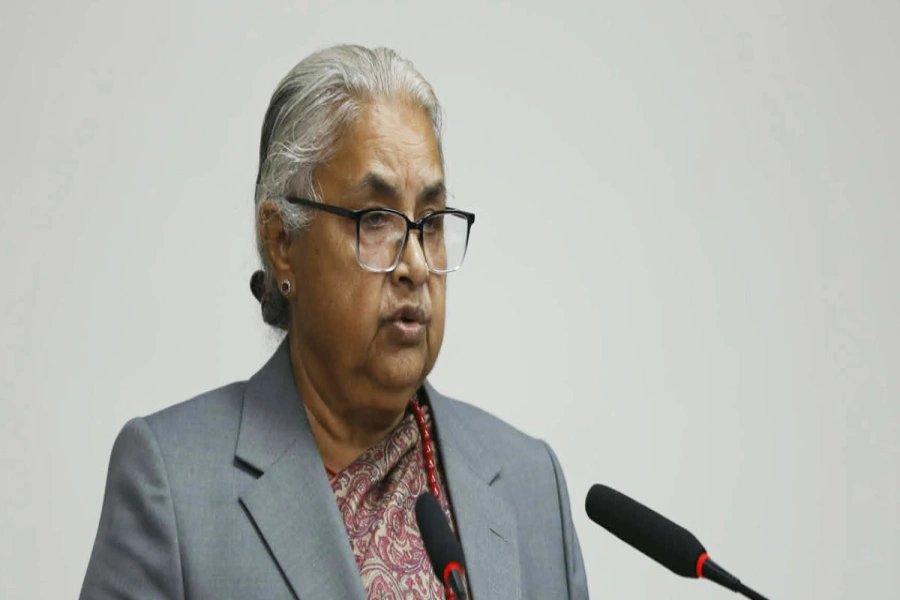
Despite facing stiff challenges throughout the six-month-long tenure, the interim government headed by Prime Minister Sushila Karki concluded the most significant task assigned to it-- holding the general election in a peaceful manner, which is a major achievement in safeguarding the nation from derailing from its democratic path. PM Karki, her team of ministers, especially Home Minister Om Prakash Aryal, and others, as well as the Election Commission, deserve our plaudits for making the election a success. Without their commitment and determination, the election could not have been held within the six months of the formation of thegovernment.PM Karki will be remembered for guiding the nation out of one of its worst political periods.Around 65 percent of the country’s 18.9 million eligible voters cast their ballots at 10,967 polling locations and 23,112 polling centers across the country. Under the First Past the Post (FPTP) system, 65 political parties and independent groups fielded 3,406 candidates, including 3,017 men, 388 women, and one candidate from another gender category. The Thursday’s ballot will elect 165 lawmakers directly from as many constituencies, while another 110 seats will go to parties based on their share of the nationwide vote, known as the proportional vote. Together they will form the 275-member House of Representatives (HoR), which will not only elect a new prime minister but will also guide national policy for the next five years.
It is certain that the next government elected through a nationwide ballot will face a difficult task. Political mistrust runs deep. Economic growth remains weak. Many young people still see few opportunities at home. General discontent with the country's governance and the ongoing political bickering has led to this election. The new leaders must learn from their predecessors and respect the constitution, gain the trust of the people who feel ignored, and make parliament a place for debate rather than obstruction. The parties must also learn that the people are watching them now more than ever. The enthusiasm shown in the Gen Z protests is a sign that there is a new generation that is willing to stand up and fight against political systems that are no longer in the interest of the people. Nepal stands at an important moment. The election has given citizens a chance to express their choice early. Now it is up to the winners to prove that democratic politics can still deliver stability, development, and hope for the future. They must give up their animosity and politics of provocation, petty words and expressions targeting leaders of rival parties. Instead, they should embrace a culture of dignified politics, dialogues and cooperation to guide the nation ahead towards peace and prosperity by also addressing issues pertaining to geopolitical sensitivities.