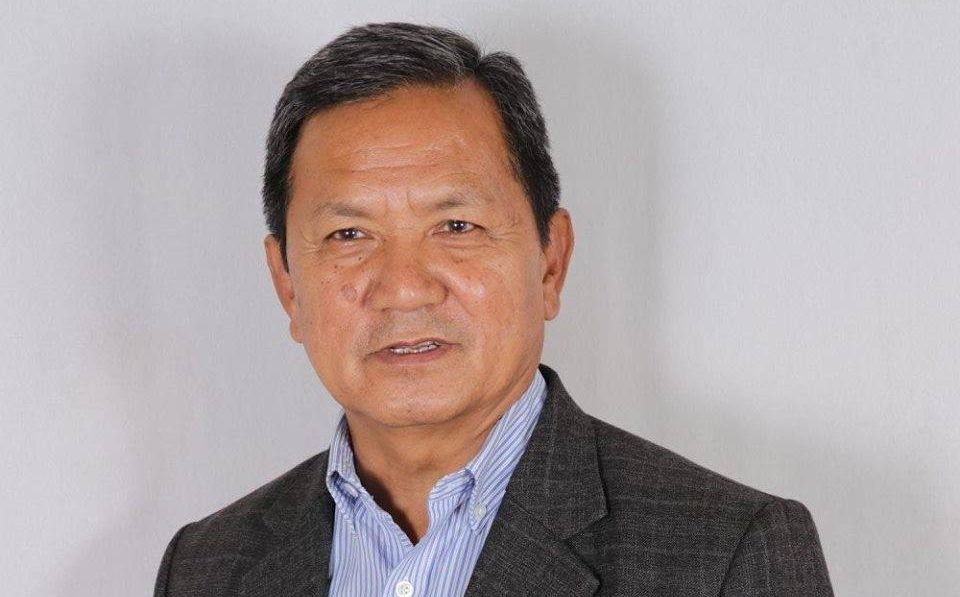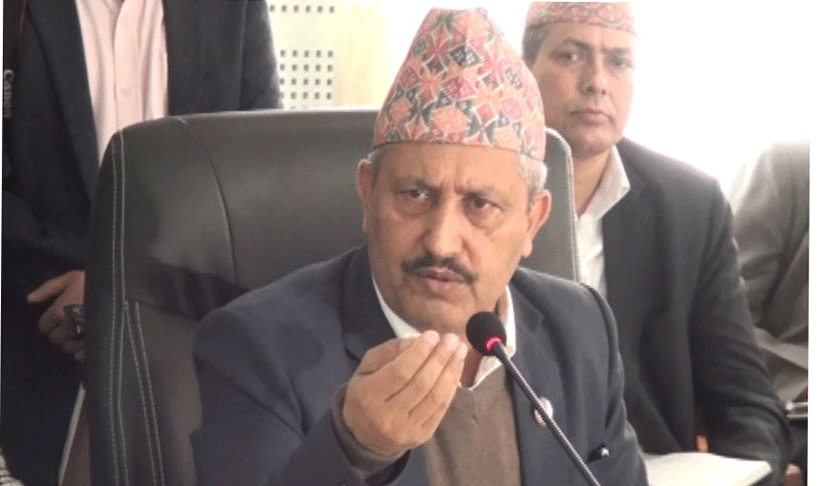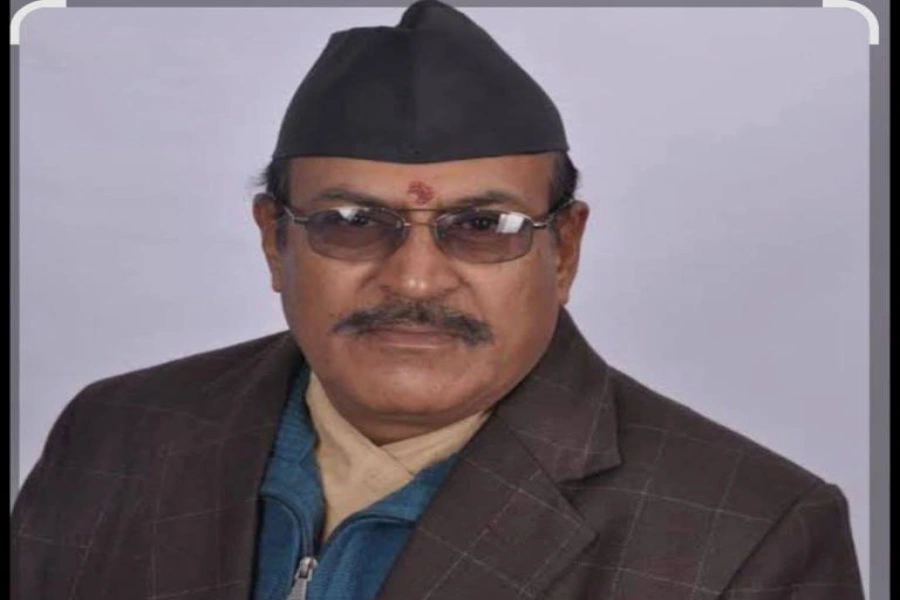
The Sushila Karki–led government, formed in the aftermath of the September 8 Gen Z movement and the unprecedented devastation of September 9, 2025, has been grappling with mounting challenges due to conflicting views and actions of its ministers.
Meanwhile, Gauri Bahadur Karki, chair of the three-member Judicial Inquiry Commission, has added fuel to the fire. He made another controversial decision by restricting the mobility of Chandra Kuber Khapung—the outgoing Inspector General of Police (IGP)—immediately after his retirement. The move has triggered deep turmoil within Nepal Police.
Karki, who has been widely criticized for ethical lapses, premature commentary, and compromised neutrality, had previously used social media to declare that Prime Minister (PM) KP Sharma Oli and Home Minister Ramesh Lekhak should be held accountable for the killing of 19 protesters on September 8 and punished accordingly.
Home Minister Lekhak resigned late in the evening on September 8, and PM Oli stepped down the following afternoon. Yet, despite being a retired Special Court judge who should refrain from political commentary, Karki was appointed the chair of the commission on September 21.
First, a former judge who flouted the decorum of his office should never have been appointed to lead such a sensitive commission.
Second, according to senior sources, when Khapung submitted the police report—detailing deployments from rank-and-file officers up to the IGP during the Gen Z movement—Karki was reportedly ready to take punitive action immediately.
Third, he fined IGP Khapung Rs 500 for not providing direct answers to the questions asked by the commission, but the underlying motive was ‘disregarding’ his order.
Choose stability, not anarchy, in this election: Khushbu Oli

Karki’s prejudiced maneuvers come at a time when the entire police organization is still reeling from unprecedented devastation—three police personnel killed brutally by protesters, offices burned down, uniforms and arms looted—and the force remains deeply traumatized.
Such a stern action against a police chief immediately after the removal of his shoulder epaulets is not only an utter undermining of the institution, but also unethical, unprofessional, and legally questionable, which renders the possibility of convening federal elections on March 5, 2026 remoter.
Now, to the events of September 8: a section of the public, including Gen Z protesters, have accused the police of using excessive lethal force. Police officials, meanwhile, maintain they acted as a last resort to save lives and protect the Parliament building.
Within the organization, the sudden action against Khapung—who faced allegations of ignoring the commission’s directives is retaliatory. While Home Minister Om Prakash Aryal never tires of repeating that he is committed to boosting police morale, commission chief Karki has made a grave blunder in the name of investigation.
Senior sources say that when Khapung submitted the report, Karki was immediately inclined toward punishment. Alarmed officers contacted commission member Bigyan Raj Sharma to restrain him. According to a Deputy Inspector General, Khapung had provided only selective details to safeguard the institution’s interest—something that greatly angered Karki.
Karki reportedly wanted to convene an immediate meeting to propose Khapung’s dismissal to Prime Minister Sushila Karki. But Sharma, a former Additional IGP, advised restraint: ‘Removing the police leadership right before retirement sends a terrible message. Let me counsel him—we must decide with reason.’
A senior officer at the Police Headquarters said that the commission chair and members had already passed judgment on social media and in the press regarding the movement, and added that one can easily predict how they would treat the police.
During the Gen Z protests, chair Karki repeatedly posted that police should be punished, arrested, or even barred from leaving the country by shutting down airports. Given this context, we need not guess what kind of report he plans to produce.
The commission seems determined to further weaken the police—like a wounded deer being chased even by a fawn. The police are vulnerable, undermined by multiple forces, and subjected to unfair and vindictive treatment.
Moreover, the commission appears to be operating in a publicity-driven manner. It has failed to maintain confidentiality, sending damaging signals externally. Summoning officers for statements is legitimate, but giving a statement does not make someone a criminal. Yet the repeated release of letters and documents—announcing ‘we did this, we did that’—undermines morale within the police institution.
A commission’s duty is to submit its report to the government; until then, its work must remain confidential and unbiased—not driven by the lure of public attention.
In any state, the police have the legal authority to use force—including, in exceptional circumstances, lethal force. This is not discretionary power; it is a constitutional duty to maintain order and protect citizens. Without it, any state risks collapsing into mob rule.
Democracies across the world grant police the authority to use proportionate force—including, as a last resort, firearms—to protect life and prevent greater harm. International norms are clear: under the UN Basic Principles, lethal force is permitted only when it is strictly unavoidable to protect life.
However, legitimacy does not erase accountability. Even when police use force lawfully, investigations must follow. Yet these investigations must be fair, impartial, and free from political bias. Reflexively blaming the police before facts are established undermines justice and the morale of those responsible for public safety.
The tragedy of September 8 requires truth—not scapegoating. The priority must be an objective examination of whether force was used legally and proportionately, not political convenience.
Chair Karki’s murky actions reveal clear prejudice. First, the commission has not completed its inquiry. Second, the Nepal Army and Armed Police Force were also deployed that day—yet only Nepal Police is being selectively targeted. Why this fixation on undermining the police leadership?
An equally crucial aspect is that this decree is whimsical, setting a dangerous precedent that could easily extend to other security institutions and their chiefs. Current IGP Dan Bahadur Karki and senior officials must have the courage of conviction to defy this unfair, unprofessional, and unethical action. Failures of leadership now will have far-reaching consequences for the nation’s entire security architecture.
I do not know IGP Dan Bahadur Karki personally, nor do I support or oppose any individual Karki. Media reports portray him as a competent officer with a clean image and strong record. But this moment demands that he stand firmly to protect the rank and file of Nepal Police.
If he fails to uphold his courage of conviction, he risks being remembered as weak—and the same fate that befell his predecessor may one day befall him.The tiger that devours others today may well devour you tomorrow.
We must mourn the deaths of the September 8 protesters with genuine grief. No democracy should accept such loss lightly. Yet we must also recognize that the police, when confronted with imminent threats to life or large-scale violence, have constitutional legitimacy to act as a last resort.