

SIRAHA, Feb 27: The Postal Highway — once a powerful and emotional election slogan across the Tarai — has conspicuously faded from this year’s political discourse. Though it still appears in party manifestos as usual, candidates on the campaign trail have neither made it a central agenda item nor woven it meaningfully into their speeches. For a project long described as the backbone of prosperity for Madhesh Province, the silence is striking.
Construction of the Postal Highway continues, but at a sluggish and uncertain pace. While some stretches show progress, locals remain unsure when, or if, the long-delayed project will finally be completed. Neither established political parties nor newer entrants can clearly state a completion timeline. The uncertainty has deepened public frustration, particularly in districts where livelihoods and mobility depend heavily on reliable road connectivity.
The Postal Highway stretches across Nepal’s southern plains from Bhadrapur in the east to Dodhara in the west, running parallel to the Indian border through Madhes settlements. It is Nepal’s oldest highway project. During his rule from November 1945 to April 1948, the eighth Rana Prime Minister, Padma Shumsher Rana, initiated construction of what was then called the traditional east–west Tarai road.
It was named the “Postal Highway” because it was meant to facilitate the swift transportation of official letters and government documents across the country. However, more than seven decades later, the vision remains incomplete. Even in the current election season, candidates have not meaningfully raised issues related to the highway or its critical bridges.
In 2011, when the foundation stone was laid for a long-awaited bridge over the Kamala River between Dhanusha and Siraha, hope surged across the region. From remote villages to bustling market centers, residents believed that a promise dating back to the Rana era was finally nearing fulfillment. The bridge was seen as the missing link necessary to ensure uninterrupted travel along the Postal Highway.
After construction began the same year, locals were confident the bridge would be completed without major obstacles. But after twelve years of prolonged construction, extensions and delays, tragedy struck. In July 2021, when the structure was reportedly 95 percent complete and preparations for inauguration were underway, a minor flood in the Kamala River caused the nearly finished bridge to collapse.
Postal Service Department to resume international postal servic...

It fell before it could even be formally opened. With its collapse, long-held hopes once again turned into despair. A bridge that had seemed within reach after seventy-seven years became yet another unfinished dream.
The Kamala bridge is widely regarded as a lifeline for connectivity between Dhanusha and Siraha. Its completion would not only reduce travel time but also significantly improve access to markets, education, healthcare and administrative centers. For many, the bridge symbolizes more than infrastructure — it represents dignity and inclusion for Madhes Province. According to the original agreement signed on June 15, 2011, a contract worth Rs 281.5 million was awarded to Pappu Lumbini JV of Kathmandu to construct the 470-meter bridge between two 1,200-meter embankments.
The project was to be completed by December 16, 2014. The deadline was extended twice until December 16, 2018, but the contractor failed to deliver. Eventually, Pappu was removed, and Lumbini JV resumed responsibility for the project.
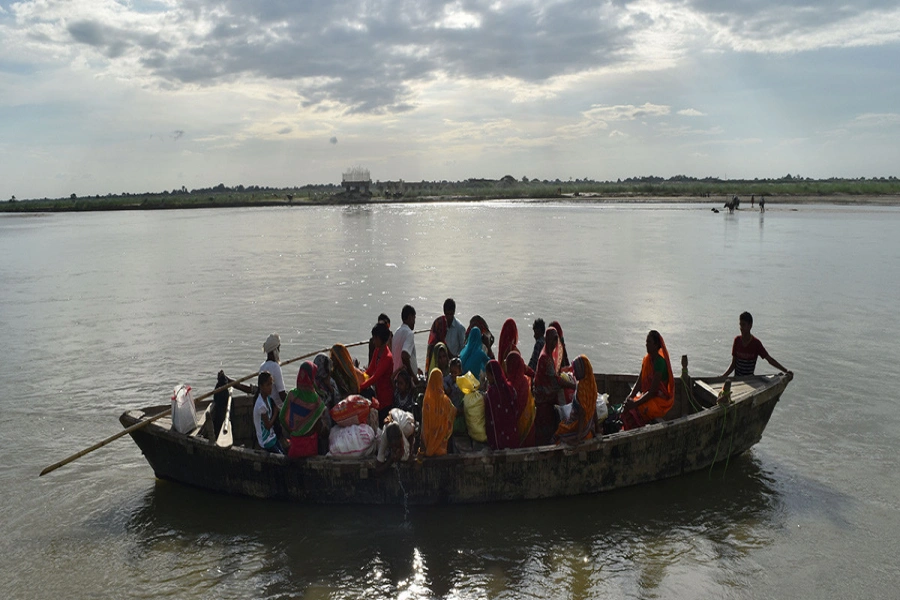
Although reconstruction work resumed, progress has remained painfully slow. Repairs are still incomplete, and residents remain unable to cross the river via the main bridge. During the monsoon, the situation becomes particularly dire. A suspension bridge built two kilometers south of the original site allows limited motorcycle crossings, but it is far from a sustainable solution for larger vehicles or commercial transport.
In April 2025, while inaugurating the suspension bridge, then Prime Minister Pushpa Kamal Dahal pledged to expedite reconstruction of the collapsed concrete bridge. However, tangible progress has stalled since then. The continuing delay has triggered local protests, and the Kamala bridge has come to symbolize what residents describe as the government’s persistent neglect of Madhes. Even four years after its dramatic collapse, reconstruction remains incomplete, deepening anger and frustration.
The broader story of the Postal Highway follows a similar pattern. The project has been discussed since the Rana era, and multiple foundation-laying ceremonies were conducted. Despite repeated announcements over the decades, work has repeatedly stalled, restarted and stalled again. The cycle continues to this day.
For generations, the Postal Highway and the Kamala bridge have served as reliable election slogans used to win the trust of Madhes voters. Parliamentary and local election candidates following the democratic movements of 1951 and 1990 frequently invoked the promise of completing the highway. Leaders who rode these commitments into power saw their personal fortunes and lifestyles change dramatically. But for many residents of Madhes, everyday realities remained largely unchanged.
The East–West Postal Highway spans 975 kilometers. When combined with 817 kilometers of 32 feeder roads intended to connect district headquarters, the total network length reaches 1,792 kilometers. A budget of Rs 47.24 billion was allocated for upgrades and expansion. Yet progress remains inconsistent, and many stretches are still under construction. During the dry season, residents travel on dusty roads that blanket homes and crops with fine soil. During the monsoon, those same roads turn into muddy tracks that disrupt transportation and isolate communities.
A 30-kilometer stretch from Kamala to the Balan River in Siraha was awarded to Swachhand Roshan Mahadev Khimti JV for Rs 1.202 billion with a 36-month completion deadline. Even after multiple extensions, the work remains unfinished.
Similarly, construction of the Sahaja River bridge linking Arnama and Aurahi rural municipalities has lagged far behind schedule. After the old bridge was demolished as part of the highway expansion, a temporary earthen diversion was constructed to the south. In the dry season, dust from the diversion makes travel difficult and hazardous. During the monsoon, it becomes muddy and nearly impassable, forcing residents to travel an additional 55 kilometers through alternative routes to reach the Siraha district headquarters.
According to the Project Office in Janakpur, only about 40 percent of the 25-meter-long and 11-meter-wide RCC Sahaja bridge has been completed, despite the contract deadline expiring. Janakpur-based Sugam Nirman Sewa signed a two-year contract on December 2, 2022, later subcontracted the project to Supriya Nirman Sewa of Dhanusha. So far, only two pillars have been cast. The contract, worth Rs 115.416 million including VAT, covers both the bridge and a box culvert in Aurahi–1, Darhaiya. While the contractor has received mobilization advances and payment for completed portions, construction of the box culvert west of Darhaiya Chowk has not yet begun.
Residents say the narrative feels painfully repetitive — promises are made, foundation stones are laid with ceremony and publicity, contracts are signed, deadlines extended, and then progress slows or stops altogether. Meanwhile, ordinary citizens continue to endure poor road conditions, disrupted travel and lost economic opportunities.
Madhes covers 21 percent of Nepal’s total land area and is widely regarded as the country’s granary. It contains 17.75 percent of Nepal’s cultivable land and 19.02 percent of cultivated land, along with the highest proportion of irrigated land at 28.68 percent. Despite its agricultural richness, industrial presence and cultural heritage, the province lags in human development indicators. Experts argue that completing the Postal Highway and fully connecting its feeder roads to the East–West Highway could unlock transformative economic growth by improving market access, irrigation logistics and cross-border trade.
For now, however, the Postal Highway remains a daunting dream of prosperity. Once a centerpiece of political speeches and campaign rallies, it now struggles even to command attention. For residents who have waited generations, the issue is no longer about symbolic inaugurations or renewed pledges. It is about whether the road that was meant to bind the plains together will ever truly be completed — or remain suspended indefinitely between promise and reality.



-1200x560-1783083574.webp)





