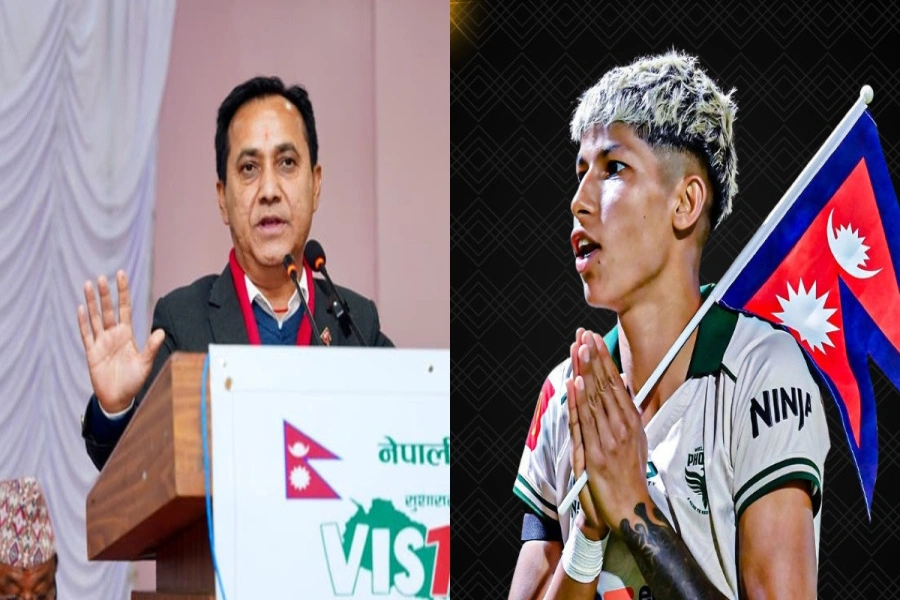
KATHMANDU, Dec 10: As the global 16 Days of Activism Against Gender-Based Violence draws to a close, CPN (UML) Vice-Chair Astalaxmi Shakya has escalated her criticism of party Chair KP Sharma Oli, accusing him of insulting women through derogatory remarks and fostering an environment of political violence against women within the party.
Speaking at an inter-dialogue program in Kathmandu on the eve of the party’s general convention, Shakya linked Oli’s recent comments about former President Bidya Devi Bhandari to a deeper pattern of disrespect and exclusion. Her remarks follow widespread backlash against Oli, who mocked Bhandari’s decision to return to active politics, saying she came “with all the razzmatazz—like a Dhami or Jhankri (traditional shamans) dancing around with peacock feathers—asking for a position.”
Kathmandu mayor Shakya fails to deliver on his promises

Shakya said such language exposes a “deeply flawed perspective on women,” adding that such remarks is “an insult to all women and a stain on political leadership.” She stressed that this behavior “is unbecoming of a leader who claims to represent equality and justice.” She further said, “Didn’t Oli came out of mother’s womb?”
Shakya went further, condemning the internal culture of the CPN (UML) that discourages anyone from questioning the party chair. She asserted that millions of party workers across the country “are loyal to the party, not to an individual,” and warned that unquestioned authority enables abuse and political violence against women to flourish.
Another CPN (UML) leader Binda Pandey reiterated the need to dismantle the long-standing tradition of male-dominated nomination processes. She called for greater inclusion of women in decision-making roles and reminded the audience that the party’s 9th General Convention had already passed resolutions on combating political violence against women which is still unimplemented. Pandey pledged to push for these issues to be formally tabled and debated at the upcoming 11th General Convention.
Other women leaders attending the dialogue echoed the concerns raised by Shakya and Pandey, underscoring that systemic political violence—manifested through exclusion, verbal attacks, and control over internal processes—cannot be eradicated without collective effort and structural changes within the party.
As the UML prepares for its general convention, Shakya’s scathing remarks reveals dissatisfaction with leadership practices. Her remarks signal a rising demand for accountability and reform within the party.