


KATHMANDU, May 8: The main opposition Nepali Congress (NC) has formally registered a seven-point dissent in the Constitutional Council (CC) meeting over the recommendation of Dr Manoj Kumar Sharma as the Chief Justice (CJ).
NC Parliamentary Party leader Bishwaraj Aangdembe presented the written objection during the council meeting held on Thursday.
In his note of dissent, Aangdembe accused the government of attempting to increase executive interference in the judiciary. He argued that recent ordinances have influenced the decision-making process of the CC in ways that contradict the spirit of the Constitution and democratic principles.
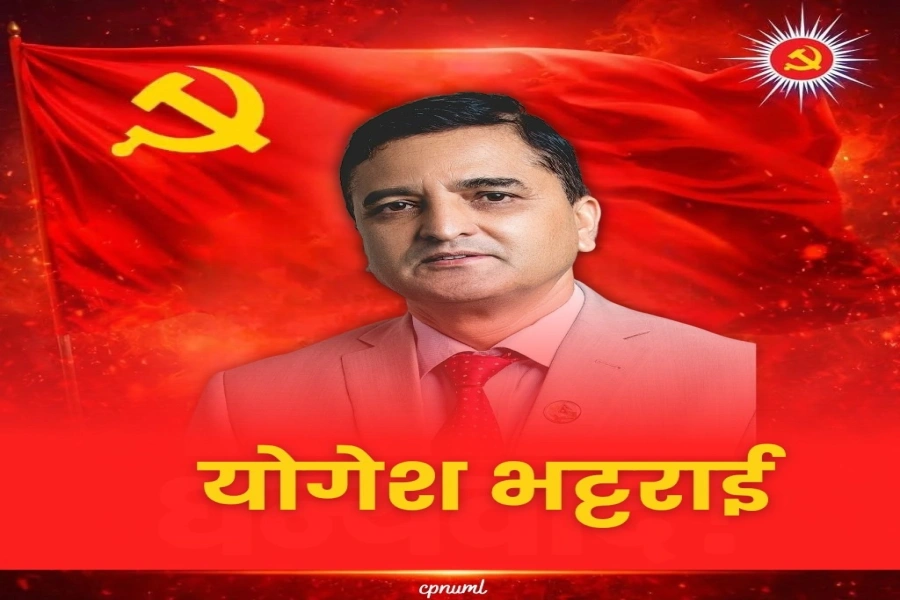
UML leader Yogesh Bhattarai registers a ‘note of dissent’ over...
The NC has also raised concerns over the amended provision that allows decisions in the six-member council with the presence of three members, effectively treating it as a majority. The party termed this arrangement legally flawed.
Aangdembe cited a 2024 Supreme Court interpretation, claiming that the presence of three members in a six-member body cannot be considered a valid majority, and said the government has disregarded this precedent.
The party further objected to the violation of the long-standing tradition of appointing the senior-most justice as Chief Justice. It noted that Nepal has followed this practice for nearly eight decades, and any deviation without strong justification amounts to arbitrary decision-making.
Referring to Article 129(6) of the Constitution, the NC argued that even the role of acting Chief Justice is meant for the senior-most judge, and bypassing this principle undermines judicial independence.
Aangdembe also warned that constitutional bodies are meant to function as watchdog institutions, but the government appears to be attempting to bring them under its control. He cautioned that such actions could weaken institutional independence and place the judiciary under executive influence.
The NC concluded that the recommendation process, conducted under an ordinance, is not in line with constitutional norms and expressed clear opposition to both the process and the decision.






-1200x560-1774606010.webp)


