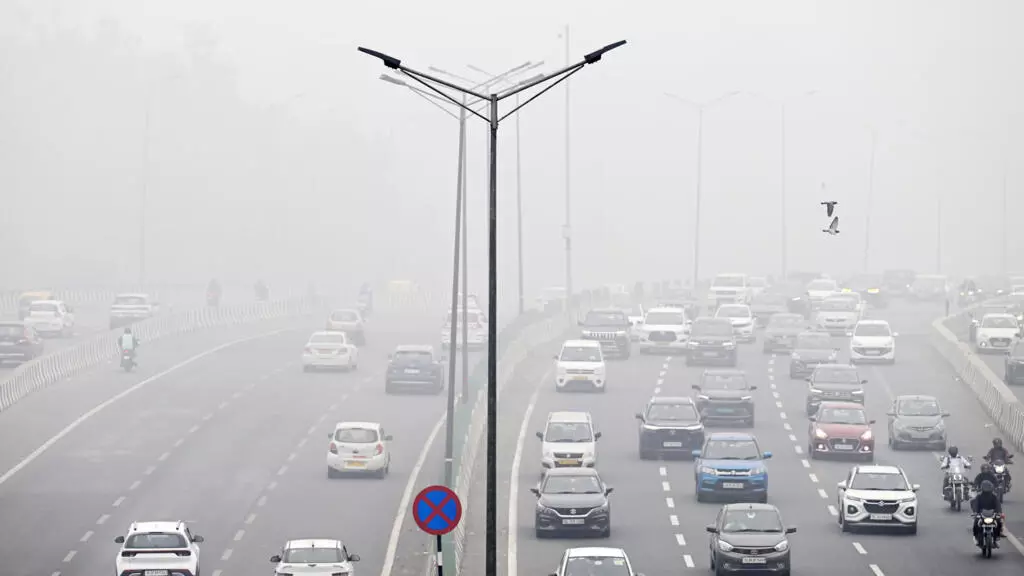
NEW DELHI, Oct 20: New Delhi was shrouded in a thick, toxic haze on Monday as air pollution levels soared to more than 16 times the daily maximum recommended by the World Health Organization. The capital and its vast metropolitan region — home to over 30 million people — is regularly ranked among the world’s most polluted capitals, with dense smog blanketing the skyline each winter.
Cooler air during this season traps pollutants near the ground, forming a deadly mix of emissions from crop burning, factories, and heavy traffic. This year, the situation has worsened due to days of fireworks set off to celebrate Diwali, the major Hindu festival of lights, which culminates on Monday night.
Toxic firecracker haze darkens Delhi after festival of lights

Earlier this month, the Supreme Court of India relaxed a blanket ban on fireworks for Diwali, allowing the use of so-called “green firecrackers” designed to emit fewer particulates. In past years, the ban has been widely ignored.
On Monday, levels of PM2.5 — cancer-causing microparticles small enough to enter the bloodstream — reached 248 micrograms per cubic metre in parts of the city, according to IQAir. The Commission for Air Quality Management warned that air quality is likely to deteriorate further in the coming days.
Authorities have announced several measures to curb rising pollution, including ensuring uninterrupted power supply to reduce the use of diesel generators. The city also plans to conduct its first-ever cloud seeding trials this month, using aircraft to disperse salt or other chemicals into clouds to induce rainfall and clear the air.
“We’ve already got everything we need to do the cloud seeding,” said Delhi Environment Minister Manjinder Singh Sirsa, adding that flight trials and pilot training have been completed.
A study published in The Lancet Planetary Health last year estimated that 3.8 million deaths in India between 2009 and 2019 were linked to air pollution. The UNICEF has also warned that polluted air puts children at heightened risk of acute respiratory infections.