

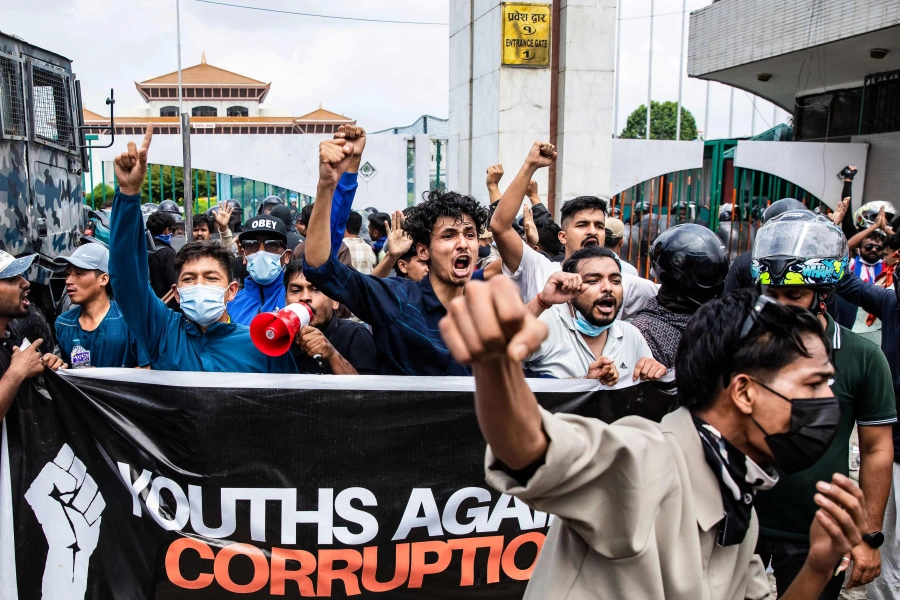
In the 21st century, digital platforms have become the dominant channels through which netizens—active participants in online communities—access information, engage in public discourse, and influence political life. Social media, mobile apps, and online forums enable them to share news, organize, and mobilize collective action far more rapidly than traditional political structures can anticipate. Unlike past revolutions that depended on charismatic figureheads, Nepal’s recent Gen-Z uprising emerged as a leaderless, digital-native movement that bypassed established party systems entirely. Yet the coordinated incumbent leadership continues to re-run the old script with the same cast, as if unaware that the digital age has already rewritten the rules.
Elections are undeniably necessary—yet simply holding one is not a solution. The very reasons for calling an early election demand serious debate, and that debate should shape the political agenda for the election. Rushing to the polls merely to restore what was lost risks reinforcing the same cycle of instability. Few leaders are willing to examine why citizens were pushed to such extremes or how law and order deteriorated so rapidly. While the timing, the date of the election, and post-election power plays dominate discussions, the most critical question remains unanswered: why are we holding it in the first place?
Some seem to believe that a fresh election will mirror the midterm polls of 1994, but today’s context is fundamentally different. We now live in what scholars describe as the era of digital democracy—an age in which netizens actively use online platforms to participate directly in political processes. This is the generation that weaponized the #NepoKids trend to expose entrenched privilege and elite corruption. Digital democracy empowers communities but brings challenges: misinformation spreads rapidly, many citizens remain marginalized, and governments often respond reactively. These dynamics make the need for capable, digitally literate leadership more urgent than ever. Despite a predominantly young population, political leadership remains dominated by figures in their sixties and seventies—an age cohort increasingly disconnected from the realities of the digital era.
The protests also exposed critical weaknesses in leadership and governance. Law enforcement struggled to respond effectively, revealing gaps in decision-making, coordination, and digital literacy. By treating the snap election as a routine, transactional political event, established parties are doing more than ignoring a protest—they are overlooking a fundamentally new and active effort by netizens to redefine political legitimacy. Technology played a central role in amplifying public reaction to police brutality, yet as the nation prepares for elections, the underlying drivers of the movement’s success—such as systemic inadequacies and insufficient institutional preparedness—remain largely unexamined.
Two-day Huawei Digital Nepal Conclave 2022

Nepal is approaching what could be its most consequential national election. The Gen-Z protests in Kathmandu demonstrated how swiftly netizens can mobilize through digital platforms, exposing gaps in leadership and the state’s grasp of digital coordination. Real-time communication consistently outpaced government responses, revealing weaknesses in both decision-making and digital literacy. This is the critical litmus test: a leader who treats the internet as a threat to be controlled cannot govern a generation that regards it as a fundamental right to be protected.
This moment raises critical questions about our democracy. Are online platforms truly accessible to all citizens, or only to those with devices, digital literacy, and reliable internet? Is digital access expanding faster than the state’s capacity to regulate, educate, or understand it? Do existing laws meaningfully govern these platforms, or are they outdated and reactive—unable to keep pace with the speed of the virtual world? While the election may address the immediate political crisis, it cannot, on its own, resolve deeper structural challenges. Without confronting these gaps, digital democracy risks remaining uneven, privileging the connected and leaving many voices unheard.
Digital governance isn’t a future challenge—it is already reshaping Nepal’s political behavior. Philosopher Yuval Noah Harari warns that AI is evolving faster than humanity’s capacity to understand or control it. Unlike past technologies—such as nuclear weapons—that required deliberate human decisions, AI systems increasingly operate autonomously, making choices at speeds far beyond human oversight. This accelerating pace signals a profound transformation in governance, society, and civic life. Experts caution that by 2030, much of the world could be under pervasive AI-driven surveillance. Data-driven digital platforms disproportionately empower those already in positions of power, intensifying systemic risks on a global scale. Unlike the industrial or green revolutions, today’s digital revolution spreads instantly across borders, adopted by societies that did not create these tools but rely on them as heavily as anyone else. The critical question is not whether we use these technologies—we already do—but whether global regulation can keep pace to safeguard democracy and the public interest.
Yet structural challenges remain. Rural communities, and low-income households are often excluded from online political discourse, undermining the promise of digital platforms as tools for inclusive participation. Laws governing these platforms are frequently outdated and struggle to keep pace with rapid technological change. Without addressing these gaps, the benefits of digital democracy risk concentrating among the already privileged, leaving large segments of society unheard. This inequality—often rooted in economic disparities—can sow the seeds for yet another revolt.
Education and awareness are essential. Around the world, schools and civil society organizations teach citizens to identify misinformation, while regulations penalize harmful disinformation without stifling debate. A combination of digital literacy programs, regulatory safeguards, and proactive communication can prevent misinformation from fueling unrest and enable responsible participation.
Elections alone cannot guarantee competent leadership. While new parties are emerging, recycled leaders from broken formations offer little hope. This risks pushing the politically engaged generation toward disillusionment—or toward populist promises that generate noise without delivering reform. Today’s youth ask hard questions: Where were these leaders educated? What ideas shaped their worldview? How adaptable are they? What does their record reveal? If political parties refuse to answer, elections alone will not suffice.
To address these challenges, Nepal must embrace global trends and cultivate visionary, adaptive leadership. Leaders who understand international currents, anticipate change, set clear directions, and act decisively are essential for building an informed, responsive, and forward-looking political system.
Unless the election produces leaders willing to institutionalize anti-corruption measures and credibly bridge the digital divide, the vote will amount only to a temporary delay—a cosmetic fix to a system whose legitimacy has already been rejected by a generation. The youth, having already demonstrated their power to dismantle a government, remain poised to mobilize mass action again if their demands for accountability and structural reform are ignored.
(The author is Associate Professor at Tennessee State University, USA)



-1782782519.webp)


-1200x560-1774606010.webp)


