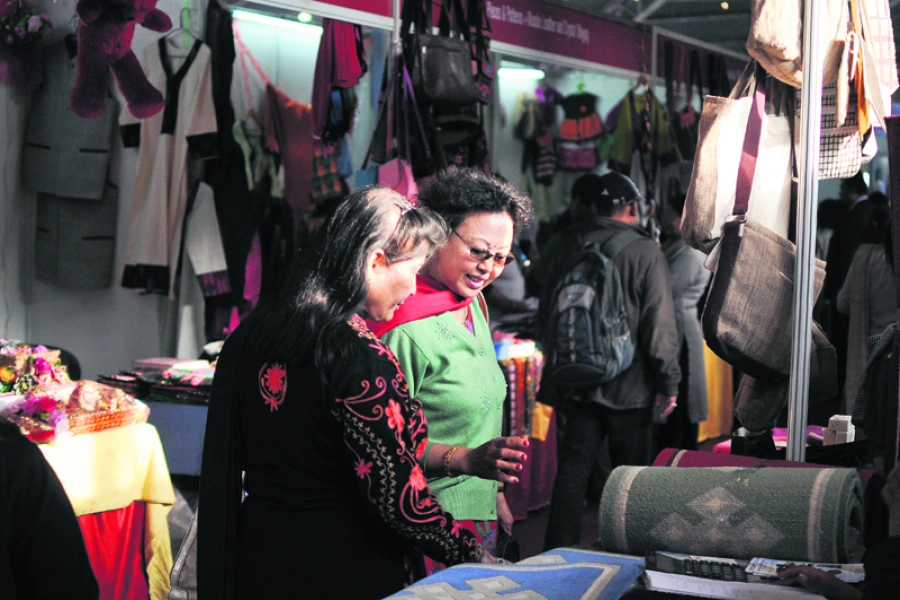
Women’s entrepreneurship in Nepal has gained increasing visibility in recent years. Government data show that nearly one-third of the country’s enterprises are now owned by women. To support this growth, governments, financial institutions, cooperatives, and NGOs have introduced a variety of measures, including access to credit, registration incentives, training programs, and schemes that encourage women to start businesses.
While these initiatives are important, evidence shows they remain insufficient to bring about transformative change. Many fail to address the deeper structural barriers that continue to limit women’s full participation in the economy.
Structural Barriers
Across Nepal, women operate within a web of systemic constraints that limit their ability to start, sustain, and expand their businesses. Deeply rooted social norms, limited household decision-making power, and the burden of unequal care responsibilities continue to shape their daily lives. Women remain the primary caretakers of families, dedicating large portions of their time to unpaid domestic and caregiving tasks. This “time poverty” leaves little room for training, networking, or scaling their enterprises.
Financial barriers further hinder women’s progress. Many struggle to meet collateral requirements because they own little or no property. Credit evaluations often carry implicit gender biases, and bureaucratic processes, especially for registration and licensing, remain cumbersome. Even when businesses are formally registered in women’s names, real control frequently rests with male family members who make key decisions behind the scenes. These factors collectively undermine women’s autonomy as entrepreneurs.
Freedom of press means freedom in country: NC General Secretary...

In rural and remote areas, the challenges are even more pronounced. Limited mobility, inadequate infrastructure, and restrictive social norms constrain women’s ability to access markets and business services. The prevalence of gender-based violence further restricts women’s freedom of movement and erodes their confidence, pushing many into the informal economy where protections are weak and vulnerabilities are high.
As a result, a majority of women-led enterprises remain small-scale and informal, with limited opportunities to grow or transition into higher-value sectors. Without formal recognition, these businesses lack legal protection, steady income, and access to institutional support systems. The combined impact of social expectations, structural disadvantages, and institutional gaps traps many women in low-return economic activities that neither reflect their potential nor enable upward mobility.
A Capability-Based Approach
Nepali women entrepreneurs are more than economic contributors–they are potential drivers of social transformation. To understand the systemic constraints that limit their true potential and design strategic interventions, the capability-based approach developed by Nobel laureate Amartya Sen provides a holistic framework for governments and development partners.
Rather than focusing solely on the resources women receive, such as loans, training, or subsidies, a capability-based approach asks what women are genuinely able to do and become. It emphasizes real freedom: the ability to choose viable opportunities, exercise agency, make decisions, and pursue lives they value.
Applied to Nepal’s context, this approach raises several critical questions. Do women have not just capital, but the agency – the power to make business decisions independently? Do they have sufficient time and space, given their disproportionate household workload, to invest in and grow their enterprises? Do they possess the confidence, leadership skills, and digital literacy needed to navigate modern markets? Are they part of supportive networks such as mentors, peers, business associations that foster learning, resilience, and scaling? And most importantly, are they recognized and respected within their communities as legitimate entrepreneurs?
Viewed through this lens, several systemic gaps become visible. Even when women are documented as business owners, their real control is often curtailed. Mentorship networks and role models are scarce, especially outside urban centers. Institutional obstacles, including gender-insensitive lending practices and difficult registration procedures, disproportionately deter women from formalizing their ventures. In many cases, women enter entrepreneurship not out of genuine choice, but because they lack alternative livelihood opportunities. This restricts their ability to shape their own economic destinies.
A Roadmap for Change
To unlock the full potential of women entrepreneurs, Nepal must adopt capability-informed strategies that expand women’s real freedoms to flourish as leaders and innovators, contributing not only to economic growth but to broader social transformation.
Governments, the private sector, and development partners need to work together to build an enabling environment that promotes equal opportunity through fair policies, supportive laws, and gender-responsive institutional arrangements. Simplifying business registration through one-stop digital platforms, making credit assessments more gender-sensitive, and reducing reliance on traditional collateral would help dismantle major institutional barriers. Equally important is ensuring that policy benefits, such as access to start-up loans, tax exemptions, and grants for women-led enterprises, are implemented transparently and distributed equitably.
Integrated solutions such as combining access to finance with comprehensive business development services (BDS) should be prioritized. These BDS offerings should include market linkages, financial and digital literacy, branding support, legal guidance, and, crucially, mentorship and peer networks. Strengthening women-led cooperatives, self-help groups, and incubators can help build social capital and promote collective resilience. These platforms provide shared resources, peer learning, and support systems essential for navigating business challenges. Mobile or hybrid training models, designed to accommodate women’s caregiving responsibilities, have proven effective in improving participation and income control.
A robust monitoring and evaluation framework is equally critical. Interventions must measure more than registration number and financial outcomes; they should also track changes in women’s agency, decision-making power, time use, confidence, and social recognition. Engaging women themselves in defining what success looks like will help ensure that programs genuinely expand capabilities rather than simply meeting institutional targets.
Finally, societal transformation requires cultural change. Awareness and advocacy campaigns led by the government and development partners should challenge entrenched stereotypes about women’s roles, highlight successful women entrepreneurs as role models, and encourage the active participation of both men and women in designing, implementing, and evaluating initiatives that advance women’s economic agency and genuine freedom.
The author has extensive experience in private sector development, public-private partnerships, and project management.


-1780813474.webp)