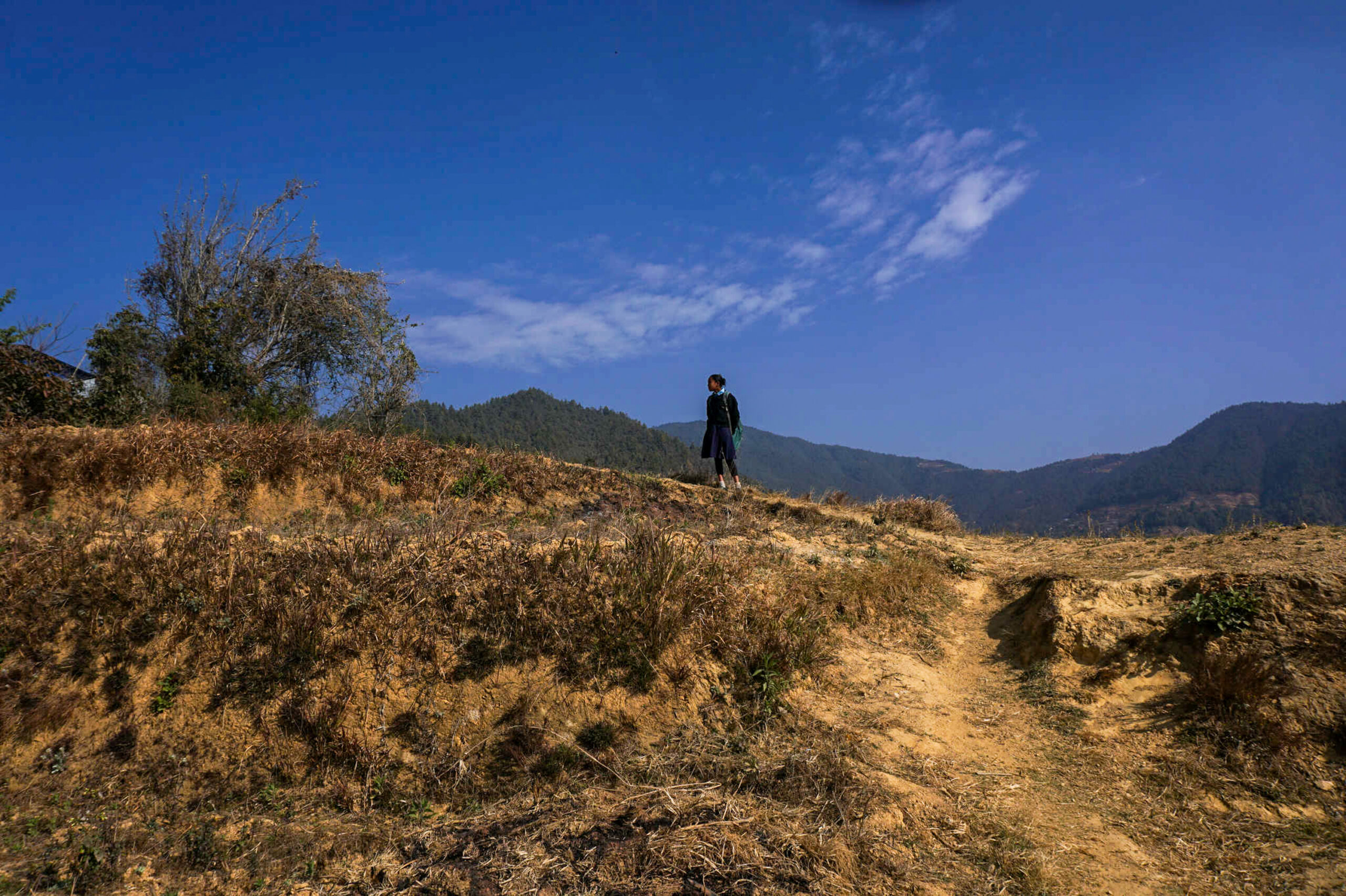
PHAKHEL CHAUR, BAGMATI PROVINCE, NEPAL, April 13: In this town 31 kilometers (19 miles) southwest of Kathmandu, most students only sporadically go to school. For some, the walk takes hours. The paths are frequently blocked by mudslides. And parents struggle to justify sending their children: The school is in disrepair, with few books and supplies. It’s common for the children to work at home or in the fields rather than attend classes.

Most students speak Tamang, a local language with about 1.4 million native speakers. The school’s main instructional language is Nepali, and all the kids learn English, too. Many students struggle to read and write in all three of these languages. In 2024, only half of the students in grades 9 and 10 met basic learning standards.
A small, one-time grant of 500,000 Nepali rupees (about US$3,650) might have done just enough to attract students and convince parents to send them to class, says Uma Tamang, principal of Shree Kalika Secondary School, which serves grades 1-12 as well as preschool. That grant was scheduled for this year as part of a US$40 million program run by the United States Agency for International Development. The first portion of the grant – 300,000 rupees (about US$2,200) – was already disbursed. The second portion – the remaining 200,000 rupees – was scheduled to arrive later this year.

Eleven-year-old Aasha Bholon waits as Surya Bahadur Pakhrin serves her a snack. The school offers free food to help the children stave off hunger — and ensure they keep coming back. Malnutrition rates are high in Nepal: A quarter of all children under the age of 5 are stunted. In Makwanpur district, where the school is located, the acute malnutrition rate — the measure of malnutrition for kids ages 6 months to just under 5 years — is about 7%, according to a 2016 report.
E-learning centers in Banepa community schools

All of the money was intended for books, educational toys and basic maintenance of the property, as well as festivals the school hoped would engage the community.

Lack of funding at schools is just one challenge in rural Nepal. Together with poor living conditions and few jobs, many young Nepalis find little reason to stay. More than 2 million Nepalis work abroad. The money they send home makes up about a quarter of Nepal’s GDP. But often, conditions in jobs abroad are just as harsh as those at home.
But when US President Donald Trump ended nearly all foreign aid in January, Tamang realized that the remaining money would never come.

Students run and relax in the playground. When they’re not at school, most children help their families work at home or in the fields.
The money wouldn’t have solved all of their problems, Tamang says, but it would have created a school environment that kept kids coming back and helped them learn — and helped their parents understand the importance of education.

Students from grades 1 through 5 line up for physical education class on a sunny day in February. Teachers say regular exercise helps the kids pay attention when they return to their classrooms.
“We didn’t just dream of decorating school classrooms with new toys and colorful learning materials,” Tamang says. “We envisioned creating a brighter future for children from poor families by strengthening primary education."

Principal Uma Tamang says the quality of education at Shree Kalika Secondary School is poor due to a lack of sufficient teaching materials. Young children don’t find the environment stimulating, she says, adding that she hoped USAID funding would bring teaching resources, toys and even money to paint the walls. That all would have helped children engage in the learning process, she says. Instead, she says, students struggle. Poor scores stack up year after year. By grade 10, Tamang says, many students drop out to look for jobs in Kathmandu.
Reporter Yam Kumari Kandel visited the school in February to learn about conditions there, and what was lost when the USAID program was cut.

Inside the classrooms, the challenges are stark. Supplies are scarce, and the spaces are poorly maintained — a reflection of the school’s chronically low funding.
This story was originally published by Global Press Journal.