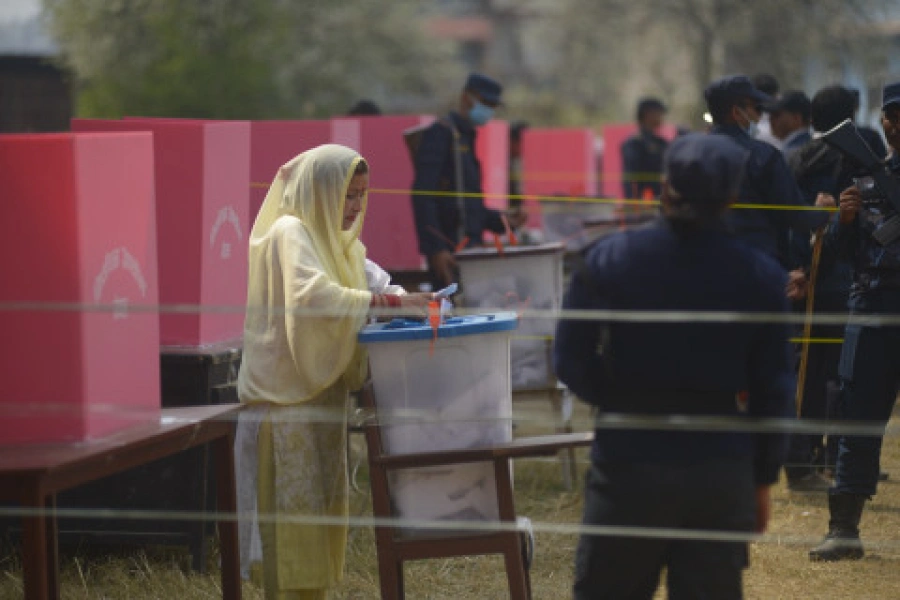
After seven decades of political experiment, it is now clear that Nepal has embarked on a new direction. The Nepali people want change, and they have expressed this by enthusiastically rejecting the established political parties. This is not the kind of transformation that can happen overnight. What the electorate seeks today is a renewal of hope: hope that politicians will, at the very least, work in service of citizens; hope that the people of Nepal can feel at home in their own country rather than constantly searching the horizon for a ticket out; and hope that those in power will prioritize the public good over personal enrichment. Hope, however, is not a plan. It cannot bear the weight of the immense challenges that lie ahead. Constitutional issues remain unresolved. Geopolitical pressures persist. Partisan patronage, bureaucratic lethargy, and unaccountability are entrenched. Corruption is no longer a deviation from the norm; it is systemic. The budgetary process rewards political bargaining over coherent national planning. The list is long and daunting, too extensive to fully unpack here. The real test of Nepal’s new political leadership will not be measured by the volume of its promises, but by the consistency of its delivery. The enthusiasm that has brought new political actors to power can fade just as quickly if it is not met with tangible improvements in governance, transparency, and development.
The constitution itself presents a fundamental challenge. Although the Constitution of Nepal was intended to provide a stable foundation for the republic, in practice, it has introduced numerous complications. Nearly one-third of the national budget is consumed by federal expenditures. The federal structure is only partially understood and inconsistently applied. Provinces continue to grapple with their authority, struggling for financial independence while navigating overlapping responsibilities with the federal government. Power-sharing between institutions is frequently contested, leading to political deadlock rather than effective governance. For many citizens, the constitution feels less like an authentic expression of Nepal and its people and more like a document that was negotiated among political parties. In the days ahead, political courage and honesty will be essential to acknowledge what is not working, to amend structural weaknesses that have hindered governance, and to initiate a national dialogue that includes all political forces—including those operating outside the current constitutional framework, such as the Monarchy.
Nepal’s New Era: Hope, Energy, and the Mandate to Deliver

Corruption has become systemic; it permeates multiple layers of the state, affecting procurement processes, infrastructure projects, and public services. Curbing it will require more than the occasional high-profile arrest. Such moments may attract press attention but rarely alter the fundamental architecture of power. The people of Nepal are demanding an uncompromising approach to corruption, backed by transparent systems, digital governance, genuinely independent oversight institutions, and—most critically—the political will to reform from within. Although political structures have changed, the administrative culture has remained largely static: slow, hierarchical, and resistant to change. The civil service must be restructured to meet the demands of modern governance—adaptive, efficient, responsive, technology-friendly, and free from partisan capture. Without this transformation, even the most well-intentioned political leadership will struggle against institutional inertia.
The national budget process also requires urgent reform. For years, budget decisions have been shaped less by long-term development strategies and more by short-term political calculations. Projects are announced without proper feasibility studies, funds remain underutilized, and development priorities shift with political currents. A new approach is essential—one grounded in fiscal discipline, national priorities, need-based planning, and strict accountability in public spending.
Nepal’s geopolitical realities add further complications. Situated between two major powers, Nepal must manage its relationships with both strategic clarity and careful diplomacy. External influences—economic, political, and diplomatic—often find their way into domestic institutions. Guarding against this requires not only effective diplomacy but also strong domestic institutions capable of withstanding external pressure. A clear "Nepal First" approach to foreign policy would provide an important guiding principle: every international engagement should be evaluated against a single, simple question—does this benefit Nepal?
Let history remind the new guard that political change in Nepal has rarely been smooth or predictable. From the end of the Rana regime, to the restoration of democracy, and through the transition to a republic, each shift has been accompanied by a wave of public optimism. Citizens believed that each new uprising would finally deliver accountability, stability, and prosperity. For the first time since 1959, Nepal may see the emergence of a two-thirds majority in the House of Representatives. This is significant, particularly because the BP Koirala-led government in 1959 did not last even two years. History does not have to repeat itself, but it serves as an admonitory tale. Nepalis are not looking for speeches; they are looking for results—the gradual but essential work of making government function. Public patience is not unlimited. The people’s mandate is not merely a political conquest; it is an opportunity to rebuild trust in the state. The new leadership can translate hope into reality through honest governance, bridging the gap between what democracy promises and what institutions deliver. Nepal no longer needs new faces performing the same old politics—politics of bickering and brinkmanship. This moment demands responsibility, courage, vision, and a redefinition of true leadership.
(The author is Executive Secretary of The Dor Foundation and a Central Member of Rastriya Shakti Nepal.)