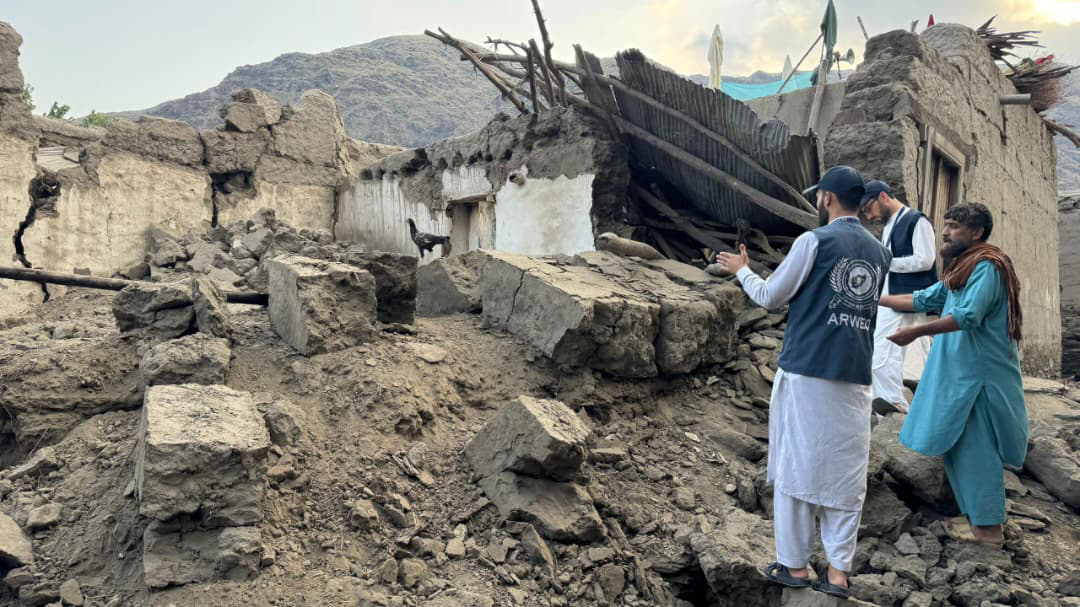
While the earthquake caused much death, destruction and tragedy, it also galvanized our society, particularly the urban youth. NGOs, local communities and neighborhoods, friends and individual volunteers sprang up and coalesced to provide relief, reaching out even to the remote areas of affected districts outside the Kathmandu Valley. The Nepali Diaspora snapped into action raising thousands of dollars for victims back home.This spirit of volunteerism, empathy and philanthropy among the common people contrasted, sadly, with the apparent ineptitude and inaction on the part of the political leadership. Though the government now appears to be pulling its act together, its initial days were marked by a bewildering silence and leadership vacuum, worsened by clumsily introduced rules that backfired as desperate 'control' attempts.
This contrast between social initiative and political ineptitude highlights the gap between our social potential and our effete and corrupt political actors—and the ineffective political structures they have set up to govern us. Why should a society with so much energy, positivity and goodwill be bound by political structures that smother it?
This earthquake was damning evidence of the inadequacy of our leaders and the political structures they have set up. It would be a crying shame if, following this catastrophe, we went meekly back to the same old governmental and political structures, led by the same old faces, that proved so woefully inadequate and unresponsive at a time of need and crisis. This crisis should therefore also be an opportunity to reconsider our political arrangements and initiate required changes. A 'National Unity Government', as being touted by some politicians, is not the answer. Instead, we should consider the some basic—but crucial—changes which should help make positive and real differences to our polity.
Youth representation and influence in Nepali politics/government should increase. Despite all the talk of "inclusion", post-2006 political setup has blissfully excluded the largest and most important chunk of our country's population, the youth. Youth representation and participation in the Constituent Assembly and other important political offices is non-existent. After the second Jana Andolan in 2006, the youth of Nepal have become all but disengaged and disenfranchised from the political process, including from constitution process.
Yet, following the quake, the youth were the first to rise up to the challenge of rescue, relief and rebuilding. The post-quake youth mobilization is a beacon of hope for the country's future. This youth energy and positivity should be harnessed and given permanence by incorporating it into mainstream politics. It would be a tragedy to let it wash away with the monsoon in the next few months. Some sort of mechanism has to be found to include the hitherto excluded youth into mainstream politics and indeed the constitution-making process.
Thankfully, the earthquake has raised the profile of socially and politically conscious youth-led organizations like Bibeksheel Nepali, which could be a potential medium for changing Nepali politics. One hopes such organizations will receive the support they deserve to make an impact beyond relief and reconstruction work.
Local elections have to be held within 2015. Relief and reconstruction work would likely have been more effective and equitable had locally elected bodies been in place. It is a mockery of democracy to go without elected local bodies for almost a decade after the establishment of Loktantra anyway. Leaders of the three-party syndicate—NC, UML and UCPN (Maoist)—have concentrated power in their own hands and none is able to challenge them. The 601 CA representatives have proved thoroughly ineffectual at disciplining this Three-party Syndicate (TPS) or at representing the interests of the people.
Locally elected bodies may not solve all our problems but will surely be a major step toward creating a truly democratic and accountable society (and hopefully containing the tyrannical powers of the TPS). These elections cannot be postponed under any pretext now. Elected local representatives should be in place by the beginning of 2016.
Again, one hopes our re-energized society, including organizations like Bibeksheel Nepali, will keep up the pressure on our unreliable politicians who are adept at finding excuses to postpone elections.
The effort to set up a federal government structure needs to be re-examined. The wisdom of federalism for Nepal from a cost-effectiveness perspective has always been questionable. While federalism may lead to more social and spatial equity, it will likely also raise the costs of the government. Can a small, poor country like Nepal afford it? Is it the best use of our limited resources?
The recent earthquake has highlighted yet another reason to be skeptical of federalism. Even our simple, centralized government proved tardy and inefficient in responding to the needs of the people. A federal structure could add more complexity and layers of bureaucracy. Relief material stuck only at TIA airport in the current centralized system may have got stuck at every state border in a federal system.
It is high time we questioned whether the social and spatial equity supposedly delivered by a federal structure would be worth the complexity, inefficiency and higher expenses of a federal system. We need to seriously consider whether alternative methods can also provide equity and accountability without compromising efficiency and cost-effectiveness. The merits of a decentralized local government system must be weighed against a fully federal one. There should have been a wide and open debate on this matter before the TPS and Madheshi Morcha imposed federalism on us for reasons of political expediency.
A distinction should be made between the political leadership and the government. One fully deserves the peoples' opprobrium; the other deserves our support. It is easy to muddle up the politicians with the government, but is a mistake to do so. The Prime Minister and his cabinet, along with top leaders of all political parties, proved incapable of providing much-needed leadership during the crisis. That the politicians made no preparations for this disaster despite sufficient warnings about it for the last decade is inexcusable, and deserves criticism.
However, politicians should not be confused with the government. The government agencies, consisting of the Civil Service, Police, Army and others, have tried to do their level best despite the leadership vacuum at the political level. They cannot be blamed for the politicians' failings. The government agencies have their own weaknesses, but the key failing was that they were not even utilized to their potential by the political leadership during this crisis.
The general populace should therefore not let their (rightful) indignation with the politicians also mar their relationship with the various government agencies. One hopes NGOs and volunteers will cooperate and co-ordinate their efforts with the government as much as possible during the reconstruction and rehabilitation phase demanding transparency and efficiency in return. The government, equally, should give up its overbearing attitude and transform itself into truly a people-oriented service.
The recent quake has laid bare some of the underlying weaknesses of our existing political setup. Had they been adequate, governmental response to this well-forewarned crisis would not have been as inadequate as it was. On the other hand, a disengaged and apathetic youth was awakened by this crisis. The positive energy and innovative ideas of this group should be included in the political processes of creating new Nepal.
It would be an utter loss for the country if this major historical event resulted in no more than another round of political musical chairs, rather than deeper corrections in our corrupted and ineffective political system. One hopes the newly energized youth groups will, in addition to their heroic relief efforts, also lead the charge in demanding necessary political changes such as the ones discussed above.
The author holds an MSc in Development Economics from Oxford University
apbasnyat@gmail.com
Related story
38 aftershocks recorded following 6.1 magnitude Sindhupalchowk...