Not doing so would mean, Lama must pay Rs 650 to the tempo owner from her own pocket, which she simply cannot afford. [break]
"The income is so poor that paying even Rs 100 to anyone without earning is difficult," said Lama. "It is no longer as lucrative as it used to be."
She carefully counts passengers in her vehicle and refuses to leave the Sundhara station in a hurry despite a signal to move out. "Let me wait for few more passengers," she insists.
As no passenger hops into her tempo even after a few minutes of wait, Lama starts driving with some reluctance. "I have a daughter at home. She is more attached to her father as I cannot give her much time. Do such children lack affection for their mothers when they grow up?" Lama asks, sounding a bit sad.

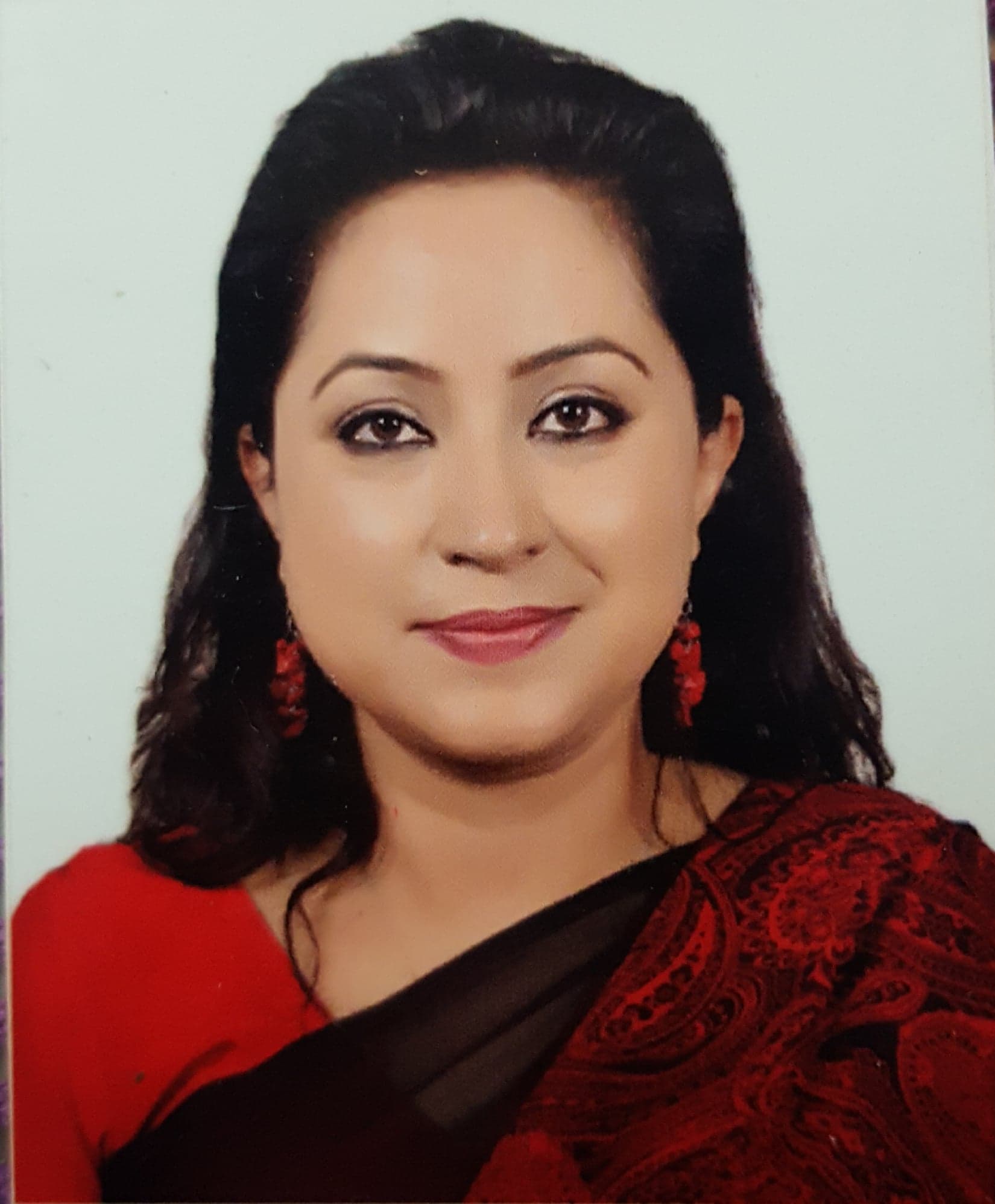
Sarita Lama
Driving tempo was not Sumitra´s dream as a small girl. But after faring poorly in the SLC exams 11 years back, Lama stumbled into this profession. The initial years were exciting as the earning was high and the traffic rules were not as strict as they are now.
These days, with a large number of microbuses and other vehicles vying for passengers on the same routes, there has been significant decline in the earnings of tempo drivers. Stricter traffic rules and rude traffic behaviors have only added to the challenges faced by electric tempo drivers, many of whom are women.
"The scene was entirely different then," agrees Krishna Maya Tamang, 30, who has been driving the safa tempo for 11 years now. "We used to earn Rs 10,000 to 12,000 per month 7/8 years ago."
Even today we earn almost the same amount. In addition, it was a matter of pride to drive a safa tempo earlier. Even the traffic police viewed us differently. Things are no longer the same," said Tamang, a central member of Nepal Transportation Labor Union.
According to Tamang, "The notion of ´women behind the wheel´ no more impresses anyone, for it has become a normal thing. Few are good, but many traffic police misbehave with the drivers, irrespective of their gender."
Tamang says there are very few stations where they are allowed to stop to drop or pick up passengers.

Sundari, Krishna Maya and Smriti
"If we are to drive without breaching traffic rules, we will have very few passengers," said Tamang. "Those hours when we move without enough passengers weigh heavily on our mind. Every day we have to pay the promised amount to the owner, no matter how much we earn."
Sundari Lama, who plies Sundhara-Chakrapat route, who had been listening carefully, said that she had wanted to go to a Gulf country earlier and is now regretting the decision to stay back in the country to drive a tempo.
"Having to pay to the owners despite dismal earnings, tolerating harassments from the police, passengers, fellow drivers and conductors is normal for us," Sundari explains. "I was set to go to Qatar but later started driving tempo with the help of one of my friends. The only thing we like about driving tempo is we meet many likeminded sisters here. Otherwise, the work is very demanding with little reward."
Ramhari Nepal, vice president of Bagmati zone branch of Nepal Transportation Labors Organization, admits that driving tempo has indeed become very challenging compared to the past. "It has become so not only for the drivers but also for the owners due to load shedding, lack of genuine spare parts of the vehicle and so on.
Regarding the laborers, they are suffering at the hands of the traffic police mainly because traffic rules have become stricter."
According to Nepal, there are 300 plus women tempo drivers in the valley, while 450 tempos are in running condition.
----
INTERVIEW
 Sumitra Dangal, first women tempo driver
 How is tempo-driving different now compared to when you started in 1998?
Back then, it was hard for people to imagine women on the driver´s seat. It was supposedly men´s job. But I wanted to not only drive tempo but everything that men think women should not or cannot do. So despite having a bachelor´s degree in Law, I decided to drive tempo.
When did you establish Mahila Utthan Samuha Bikash Kendra and for what?
I am not the kind of person who thinks only about herself. After I started driving tempo, I wanted to bring other poor and deprived women into this field. I did it by gathering the needy women and personally persuading them to try this job. Many were reluctant to do it, but I continued in my pursuit. I trained 14 women for tempo driving within 6 months of my coming to the field. But then I thought it would be better to do it through an organization and established one in 2000.
But you did not limit yourself to just tempos, right?
I am proud to say that I have the experience of not only driving but also flying and steering ships. I can drive anything. I used to drive train in Janakpur once. I drive trolley, tractor and other heavy vehicles. I am responsible for black topping many roads in the Valley and elsewhere.
You have often said that you can transform the transportation sector if the government allowed you to lead the sector?
Yes, since I have been working in the transportation field for long now, I do have enough experience and, more importantly, being a women I can make things better for this section of society if I am at the decision-making level.
What are the changes you´d make?
You know, our society is still rigidly patriarchal. From outside it may look like more women have been enjoying freedom, but things have not changed much. I would bring such systems and policies in the transportation field through which I would effectively change the mindset of both male and female for a gender balanced society. I also know where loopholes are and what needs to be done for the transportation field in general.
Related story
Prime Life, Union Life and Gurans Life ink a merger agreement









-1778746562.webp)