B P returned to advocate a new approach, reconciliation between nationalist and democratic forces. This was the solemn appeal to all Nepali, including the king, to work together for national unity and reconciliation to protect territorial integrity and sovereignty through the reestablishment of peaceful multiparty democratic polity in Nepal. With this new and bold initiative propounded by B P, NC had abandoned armed struggle from foreign land, India, to overthrow party-less undemocratic Panchayat system established and lead by the king himself.
B P’s return was at a time when one would easily loose his/her freedom or even life and limb just for advocating a different political belief. The country was run by an immature 31-year-old young king surrounded by utterly selfish and power-hungry cronies. Political parties were banned in Nepal since 1960 and citizens were denied basic civil and political liberties for more than 16 years. Nepal was fortified under the name of home-grown Panchayati totalitarian regime, which had destroyed monumental achievements and huge potentialities leashed by the 1951 revolution—a revolution where even the caged monarchy sided with NC to overthrow 104 years of Rana oligarchy to establish democracy for the first time. But this partnership did not last long and the true intention of the king supporting democracy was shortly exposed.
B P in 1959 was the president of the NC and he had visited almost the entire country on foot seeking support for the party. His charisma, honesty and hard work had given him a thumping two-third majority. B P was just 45 years old when he became the first elected prime minister. Though he was elected for 5 years, the king did not allow him to run the government for more than 18 months. On Dec 15, 1960, King Mahendra unconstitutionally disbanded parliament elected for the first time in Nepal and put thousands of political activists into prison. B P was illegally and unethically incarcerated for 8 years without any charge.
It would not be inappropriate to state that the action taken by the king on Dec 15, 1960 was the bloodiest blow Nepal suffered and its dream to become a modern prosperous democratic nation badly shattered. Our country suffered because natural course of history was turned to the other direction. Many countries who gained freedom and established democracy then have achieved phenomenal economic and social prosperities and raised the living standards of their people.
Maybe B P was wrong to consider the existence of monarchy indispensable for the survival of this nation. Therefore, now, the goal is with the present political leadership to prove him wrong and preserve the territorial integrity and sovereignty of Nepal along with the establishment of a peaceful functional multiparty democracy without monarchy.
Though B P never shied away from mentioning this at every possible occasion and termed Dec 15, 1960 a black day, this reality, however, never prejudiced his mind and he never bore a personal grudge and revengeful attitude against the institution of monarchy. Personal loss and gain had very little impact on his judgments, which is very uncommon in today’s politics in Nepal, compared to the larger national interest. He was respectful toward monarchy from his deep understanding of Nepal’s history and geo-politics. He believed that monarchy could be used to play a catalyst role to preserve and protect Nepal’s unity, territorial integrity and sovereignty in times of national crisis. Till the end of his life, he had in public and private repeatedly stated that a true alliance between democratic forces and monarchy was indispensable for the survival of unified Nepal. This is the bedrock of B P’s “Policy of National Unity and Reconciliation”. Unfortunately, monarchy and other national as well as international players of politics in Nepal failed to understand his prophetic statements.
When B P returned from India with the policy of National Reconciliation, he was widely misunderstood not only by his adversaries but by many of his own party workers. His adversaries were of two kinds: Those from the establishment considered him and his party workers anti-national and a threat to sovereignty and stability of Nepal. They were the far-rightist elements who had surrounded the king and benefited from the system. Second, the leftist elements charged him for surrendering with monarchy for power. His own followers harbored a deep sense of disbelief against monarchy. However, B P reminded the noble cause of politics and historical responsibilities of NC to his party men and convinced them that nation again needs their service and sacrifice.
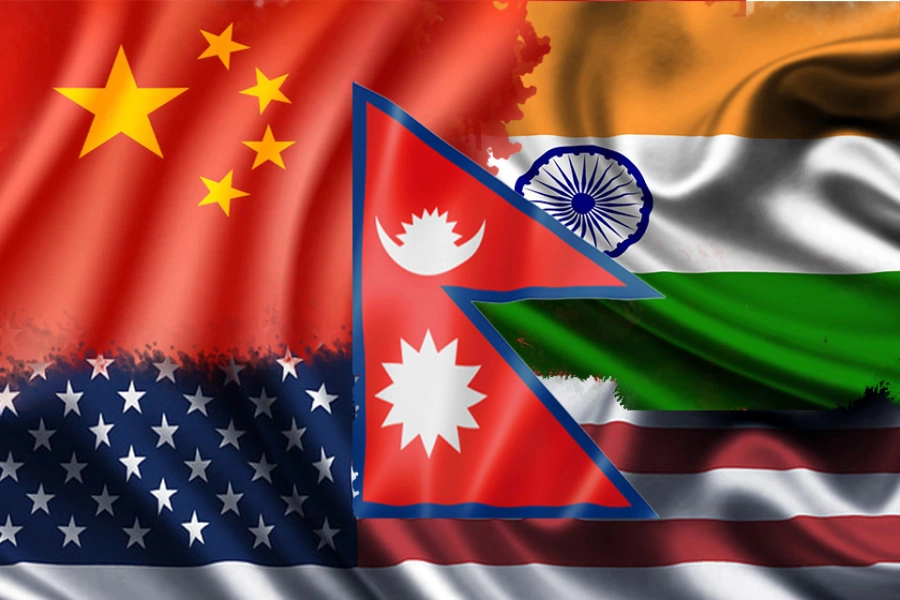
Before taking a decision to adopt a new course of National Reconciliation, B P had deeply analyzed the global and regional power politics and came to the conclusion that Nepal’s sovereignty was under threat. The events in Sikkim, Tibet, Afghanistan and Bangladesh were an eye opener. Cold War was at its peak and animosity between China and Soviet Union and growing friendship between US and China were visible. All these developments substantially increased their interest in Nepal due to its strategic location. However, he was more concerned with the emerging Soviet influence in South Asia. Indian interest and influence in Nepal was always there but that was also rising disproportionately. Till that time, B P and his party’s focus was to reestablish multiparty democracy for which he was directly fighting with monarchy from foreign land. In such a situation, B P thought that fighting for democracy only would not fulfill the duty toward the nation. So B P changed that course and convinced his friends and followers that without giving up the demand for multiparty democracy, reconciliation between democratic and nationalist forces was essential to save Nepal’s sovereignty.
B P’s decision to return to Nepal Dec 30, 1976 did not go in vain. His presence in Nepal created a ripple in the establishment and a strong alternative emerged against the autocratic Panchayati system and initiated a wave of change. The Panchayati system could not even resist the presence of a frail man with a huge sense of moral authority. Within three years of his return, the king was forced on May 24, 1979 to conduct referendum to decide the future of the unquestionable Panchayati system. Though the result of referendum between multiparty democracy and reformed Panchayati system held on May 2, 1980 was unexpected, B P accepted the verdict. However, he reminded the king to fulfill his repeated vow to respect minority opinion. These commitments were made at different occasions before the referendum—on the occasion to celebrate Panchayati day and King Mahendra’s birth celebration on Dec 16, 1979 and immediately after the announcement of the referendum result. Unfortunately, the king and panchhas backtracked from the public commitment by ignoring 45 percent vote cast for multiparty democracy and continued with the party-less Panchayati system. Thus a great opportunity to settle the longstanding political dispute in Nepal was missed.
Even then, B P’s policy of neither fight nor surrender to king had begun to pay and that continued till NC obtained full-fledged multi-party parliamentary democracy in 1990. He principally wanted to avoid any forms of forceful confrontation among Nepalis, including that with monarchy, to ensure that no outsider could have chance to interfere with Nepal’s internal affairs. B P had repeatedly said that for the betterment of nation and institution of monarchy, king should remain within the bounds of constitution and hand over to the people their right to govern through their elected representatives.
B P was ignored then by the king and cronies. Except for his friend and living founder member of NC Krishna Prasad Bhattarai, NC leadership and other political leaders have also ignored his passionate plea. Kishunjee who celebrates his 87th birthday on Jan 1 strongly believes that for the continuation of a sovereign Nepal, both monarchy and democracy should work hand in hand. Maybe they are wrong to consider the existence of monarchy indispensable for the survival of this nation. Therefore, now, the goal is with the present political leadership to prove them wrong and preserve the territorial integrity and sovereignty of Nepal along with the establishment of a peaceful functional multiparty democracy without monarchy. However, if something otherwise happens and the country slips into anarchy and division, the prophetic statement of B P would haunt them forever.
regmikumar@hotmail.com
Related story
National Unity and Reconciliation Day being observed today