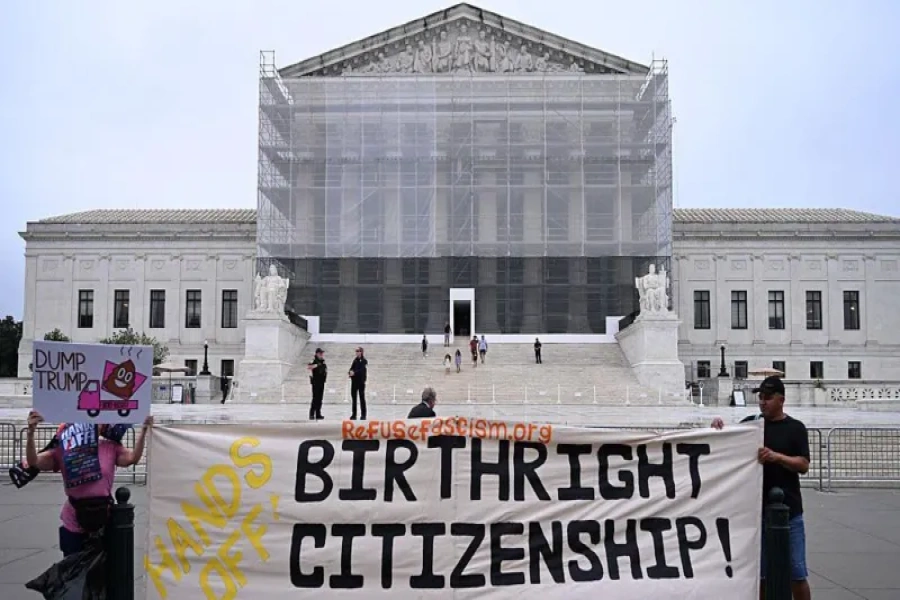
WASHINGTON, Dec 6: The US Supreme Court has agreed to take up a case that questions if all children born in the country automatically receive citizenship, the BBC reported.
The case stems from an order President Donald Trump signed in January to end birthright citizenship for children of parents without legal status or staying on temporary visas. Lower courts blocked the move, so the issue has now reached the top court.
A hearing date has not been set, and a ruling will take months. Whatever the court decides will shape Trump’s immigration agenda and may influence how the country defines citizenship, the BBC noted.
US Supreme Court backs Trump’s move to control birthright citiz...

For more than 150 years, the common reading of the 14th Amendment has been that anyone born in the US is a citizen unless their parents are diplomats or part of foreign military forces. The amendment says all people born or naturalized in the country and subject to its jurisdiction are citizens.
Trump’s team argues the phrase about jurisdiction excludes children of parents who are not in the US legally or permanently. They describe the order as part of their effort to reshape immigration rules and respond to what they see as security concerns, the BBC stated.
Civil rights groups disagree. Cecillia Wang of the ACLU said no president can undo what the amendment guarantees. She called birthright citizenship a long-standing principle and said the Supreme Court should settle the matter.
Only around 30 countries offer citizenship based on birth inside their borders. After Trump’s order faced challenges, several federal judges ruled that it violated the Constitution.
Two federal appeals courts also kept injunctions in place. Trump then appealed to the Supreme Court, which later ruled that the lower courts had gone too far with their injunctions but did not rule on the actual citizenship question, according to the BBC
Government lawyers say the amendment was written after the Civil War to protect the rights of freed slaves and their children. They argue it was never meant to cover children of parents without permission to live in the US. They also say the belief that birth on US soil guarantees citizenship has caused serious problems.
Pew Research Center data shows that about 250,000 babies were born to unauthorized immigrant parents in 2016, down from a 2007 peak. By 2022, about 1.2 million US citizens had been born to such parents. A study from the Migration Policy Institute and Penn State says ending birthright citizenship could add millions more to the population living in the US without legal status over the next several decades, the BBC reported.