

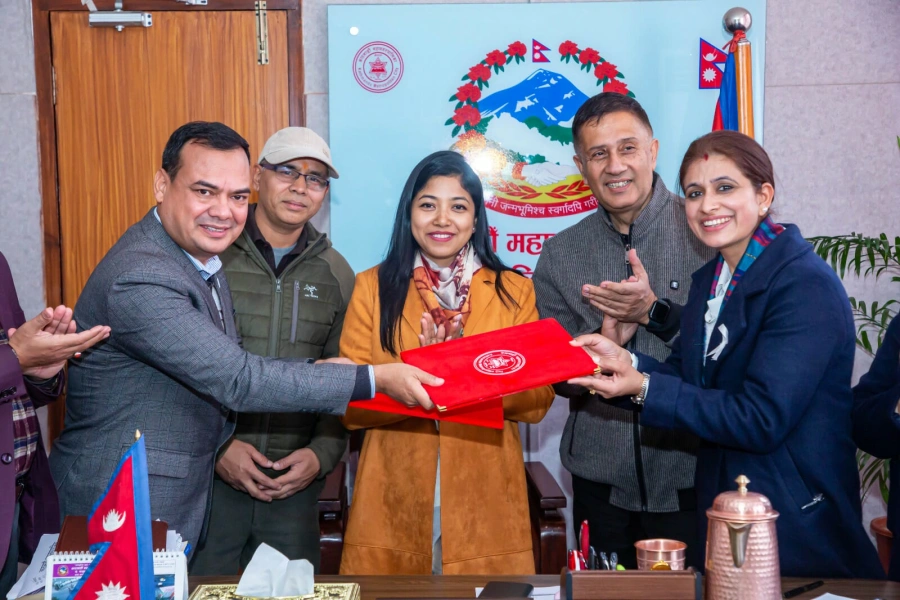
KATHMANDU, Dec 4: Kathmandu Metropolitan City (KMC) has signed an agreement with SOS Children’s Villages Nepal to provide temporary and alternative care for children rescued from risky situations, children without biological parents and those in need of substitute care.
The agreement was signed today by Samiksha Nirola, Chief of the Social Development Department, and Dr. Gangabahadur Gurung, National Director of SOS Children’s Villages, in the presence of Deputy Mayor Sunita Dangol, Chief Administrative Officer Saroj Guragai, and executive member Mahesh Nepali.
Deputy Mayor Dangol said the collaboration marks an important step toward securing a safe future for children without biological parents. “There were concerns that children rescued from high-risk situations could end up in worse conditions. Partnering with SOS, which has years of experience in child protection, helps address these concerns,” she said.
Luxury redefined

She added that the initiative will focus on fostering children’s physical, emotional, and mental development, building confidence and creating a safe, self-reliant future.
Chief Administrative Officer Guragai emphasized that sustainable results come from combining knowledge, resources, and expertise. SOS National Director Gurung noted that while the organization has been working in child protection for 53 years, this is its first formal collaboration with a local government. He highlighted that the partnership’s main goal is to advance the best interests of children, serving over 20,000 children annually.
Under the agreement, services will include temporary protection, healthcare, psychosocial support, family reunification, rehabilitation, alternative care, social security, and socialization for children at risk or in need of special care within Kathmandu Metropolitan’s jurisdiction. Programs will be based on risk and needs assessments conducted by a joint team, including social workers and child psychologists.
For children who can remain with their biological families, family-strengthening programs will provide support in education, health, nutrition, and livelihoods. For children unable to stay with their families, SOS will provide family-based care, including education, healthcare, and overall well-being.
Additionally, children over 14 years old previously in other homes will receive vocational training at SOS centers based on recommendations from the municipality and available slots. For rescued children or those without identified parents, SOS will provide temporary shelter for up to 10 children per year, offering healthcare, education, and care for those needing special protection due to disabilities or other vulnerabilities.
The agreement also covers capacity building, regular review meetings, and training for caregivers and administrators in child protection and alternative care. SOS will submit reports on children under its care every 15 days initially, and every six months thereafter, while the municipality will coordinate documentation, record-keeping, and family interactions.
The five-year partnership begins immediately and aims to ensure the safety, development, and well-being of Kathmandu’s most vulnerable children.

-1200x560-1779899638.webp)










-1779842101.webp)






