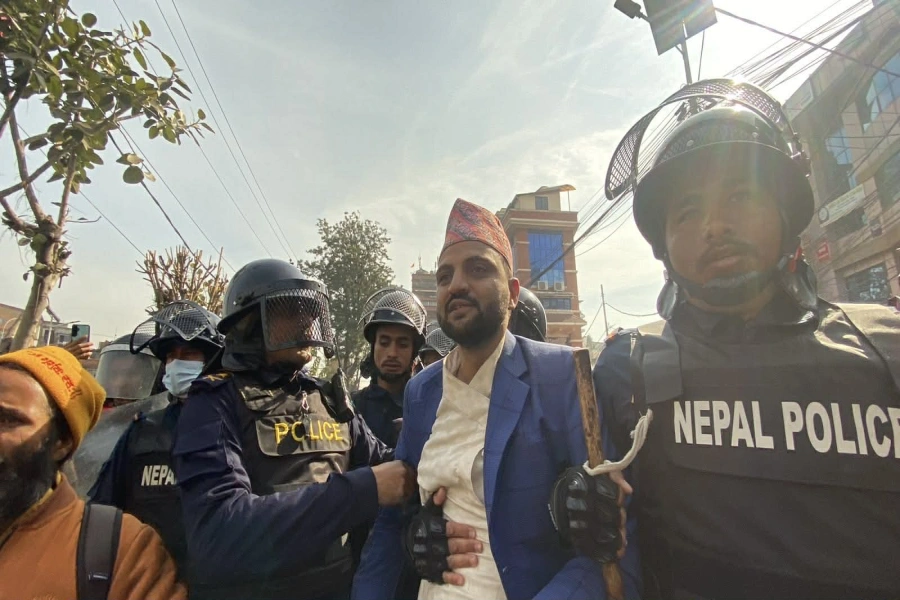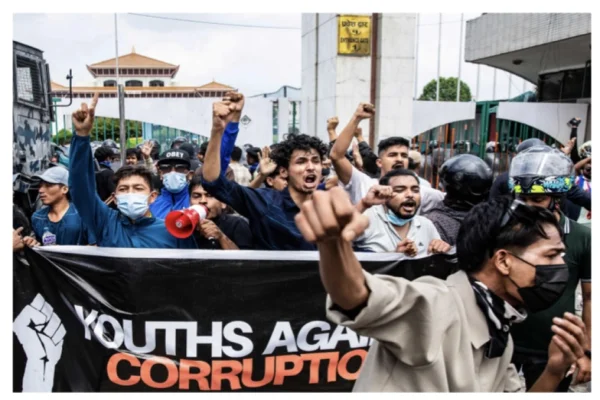
The Gen Z movement that took place on September 8 and 9 and the looting, vandalism and arson carried out under its cover, have had a serious impact on the country’s political–administrative structure, law and order and social stability. The frustration of the younger generation over corruption, inequality and the state’s lack of accountability towards the people is natural. However, there is growing public attention to the destruction and violence adopted in the name of addressing legitimate demands. This has caused massive economic, social and human losses to the country. According to the committee formed to assess the damage caused by the movement and to prepare a plan for the reconstruction of public infrastructure, physical damage worth more than Rs 84.45 billion was incurred, over 2,400 people were injured, 77 people lost their lives and thousands of vehicles and buildings were torched—figures that clearly show how dangerously the movement spiraled out of control. In a democratic society, peaceful protest is a natural right of citizens. The more violent a movement becomes, the more its moral foundation erodes. The Gen Z movement initially began as a positive campaign with broad public support. However, once arson of public property, vandalism of infrastructure, attacks on vehicles and anarchic activities emerged, the core objective of the movement weakened. Violence always benefits two sides: anarchic elements get an opportunity and the state gets an excuse to use force and impose harsh controls. As a result, destruction and legal disputes become bigger agendas than the movement’s original goals.
Former PM Oli testifies before NHRC on his role during Gen Z pr...

Data on damage from the local level to the federal structure reflects the misguided path of the movement. Damage to 2,671 buildings has severely disrupted service delivery. The destruction of 12,659 vehicles has not only crippled the functioning of government offices but also thrown citizens’ daily lives into disarray. With 2,168 institutions directly affected, the governance system has become unstable. An estimated Rs 36.3 billion will be required for reconstruction alone—an amount that is not easy to mobilise in the current economic situation. This is the core reason local governments complain that although they have carried out “temporary reconstruction,” they are in no position to build permanent structures. Amid budget cuts, reprioritisation and pressure from mandatory expenditures, the burden of destruction has ultimately fallen on the shoulders of the very youth who claim to lead the country. While there is already mounting concern over the deteriorating law and order situation post-Gen Z protest, the government’s decision to release those involved in illegal activities, arson, vandalism and violence carried out in the name of the movement without proper investigation has risked deepening a culture of impunity. If the argument is that no one should be punished simply for participating in a movement as stated in the agreement reached between the government and the Gen Z representatives, the country will invite a repetition of such incidents. Impunity can turn violence into a “successful strategy,” potentially leading to even greater destruction in the future.
Nepal has paid a heavy price in the past in the name of struggle and movements. Violent movements breed fear and unrest; they cannot deliver lasting solutions. Leaders like Mahatma Gandhi, Martin Luther King Jr. and Nelson Mandela made change possible—but the source of that change was not violence. Peaceful resistance, organisation, discipline and moral legitimacy are the foundations of victory. The violent actions carried out in the name of Gen Z have shaken the psyche of ordinary citizens within the country and tarnished Nepal’s image as a peace-loving nation in the international arena. Early consequences are already visible, from stricter visa regimes to impacts on foreign employment. Another important aspect highlighted by the Gen Z movement is that youthful energy has been directed against the country’s misgovernance. If such energy is misused—or allowed to be misused—it can cause serious harm to the nation. Those leading movements must ensure that damage is not caused and that such energy is not exploited. Nepal is already a democratic state; peaceful voices of citizens are not suppressed here. Those who dislike democracy and seek to fulfil their own interests by abusing it have exploited the situation. Those who assume leadership of a movement must take responsibility for it and be held accountable for the damage inflicted on the country. Problems arise when there is no clarity on how to responsibly conclude a movement one has led. Irresponsible movements lead a country nowhere. Peaceful means should be adopted to protest the shortcomings of the state. Those who arbitrarily cause damage to the nation must face strict action. Those who commit wrongdoing must bear the burden of the destruction they cause.