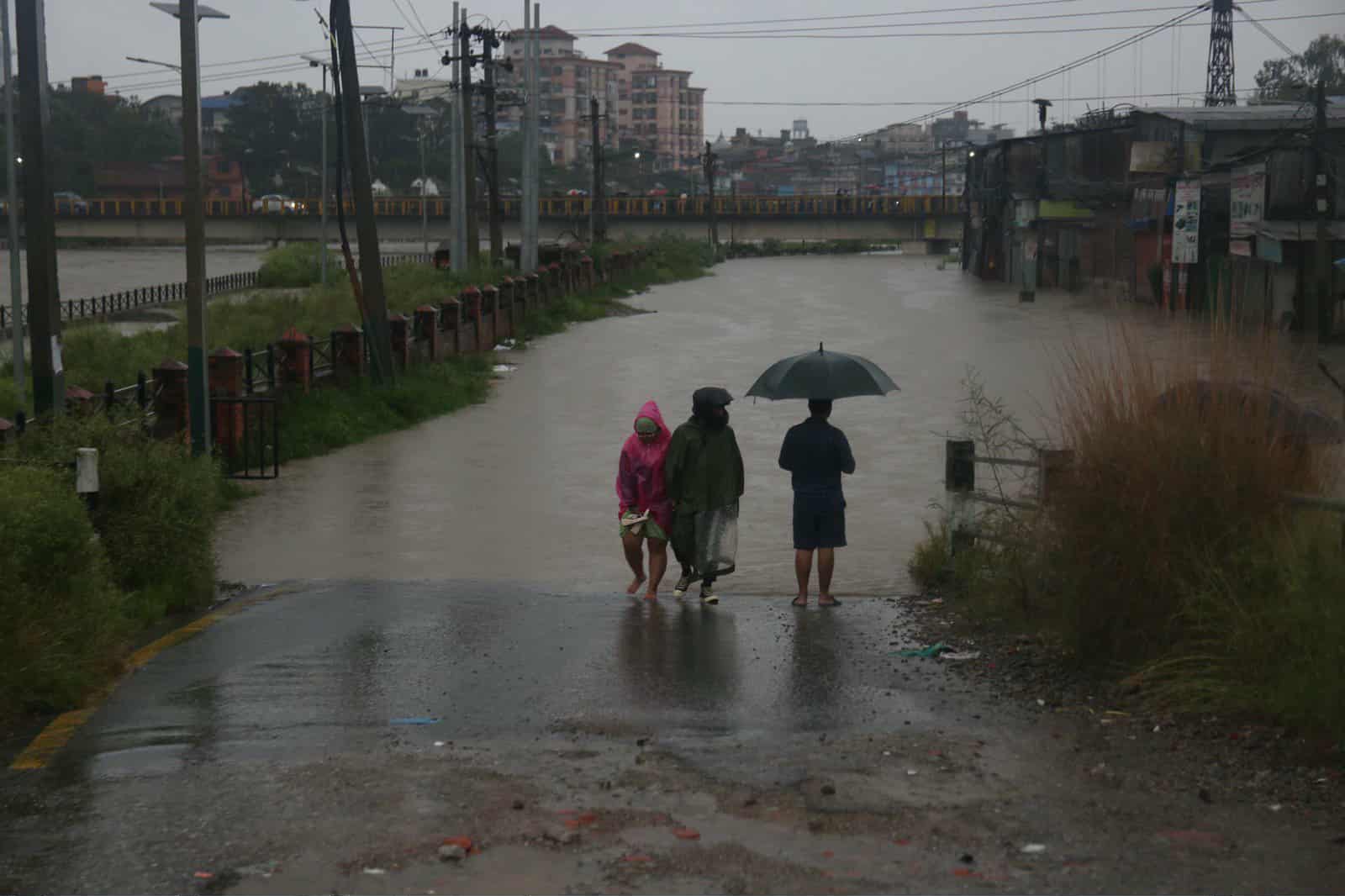
Nepalis woke up to yet another calamity just as they were preparing to conclude their greatest festival, Dashain. Torrential monsoon rains have once again laid bare the country’s vulnerability to natural disasters, causing widespread destruction, especially across eastern and central Nepal. Continuous downpours over the past two days triggered floods and landslides, killing at least 49 people, injuring 20, and leaving several others missing. Most casualties occurred in the hilly districts of Koshi Province, where Ilam suffered the heaviest toll. At least 37 people were killed, one went missing, and seven were critically injured in multiple landslides. Two deaths were reported in Udayapur, one in Khotang, and six in Panchthar—all within the same province. In Madhesh Province, three people were killed and two injured in Rautahat, while one person remains missing in Bara after being swept away by floodwaters. Kathmandu also reported one person missing in flash floods. In another heartrending incident, four trekkers from Bhaktapur—including three members of the same family—went missing while crossing the swollen Bering River in Rasuwa district on their way to Langtang village. Yet amid this tragedy, there is a silver lining. The government’s improved preparedness and early response this year stand out as a rare example of effective disaster management in Nepal. Unlike last year’s monsoon disaster, which caught authorities off guard, this time the government acted swiftly and decisively—reducing human casualties and minimizing property losses.
Environmentalists call for comprehensive media coverage on disa...

Disasters cannot be prevented, but their impact can be significantly reduced with foresight and coordination. The Department of Hydrology and Meteorology’s timely forecast of heavy rainfall allowed people to stay alert and take precautionary measures. Security agencies were placed on high alert and vehicle movement was restricted in areas at high risk of landslides. Police went door-to-door warning residents living along riverbanks, while mobile service providers—Nepal Telecom and Ncell—broadcasted mass alerts about potential dangers. For once, the presence of the state was visible when it mattered most. Ministers and senior officials remained vigilant round the clock, ensuring that rescue and relief mechanisms functioned without delay. There were no reported deaths due to failed or delayed rescue operations—a rare achievement in Nepal’s disaster history. This experience has proven an important point: the difference lies not in resources but in resolve. The same state machinery that often appears sluggish and indifferent can deliver when guided by leadership that is alert, empathetic and accountable.
Heavy rainfall on Friday and Saturday also caused major rivers—including the Bagmati, Trishuli, Rapti, Kamala, and Sunkoshi—to overflow, inundating settlements in low-lying areas of Madhesh and Koshi provinces as well as parts of the Kathmandu Valley. A large number of people were displaced in various parts of the country as a result of flood and landslides. Many of the displaced are now taking shelter in community buildings, schools and temples. The Ministry of Physical Infrastructure and Transport reported that several sections of major highways have been destroyed, causing loss worth billions and paralysing the day to day life of people. Authorities have urged residents in eastern Nepal to remain cautious as the risk of further landslides and flooding remains, even though the monsoon system responsible for the heavy rain has now weakened. Rescue teams, including the Nepali Army and police, continue to assist affected communities and carry out search and relief operations in the hardest-hit areas. The immediate challenge now is rehabilitation—helping people rebuild their homes, livelihoods and the vital road networks that connect them to the rest of the country. Prime Minister Sushila Karki’s government deserves credit for its proactive and coordinated response. But beyond the commendation lies a deeper lesson: disasters will keep testing us, but our response need not always end in despair.