KATHMANDU, April 30: Weak regulation and poor oversight have exposed small investors to risks from business entities, including hydropower companies, that go public by issuing shares.
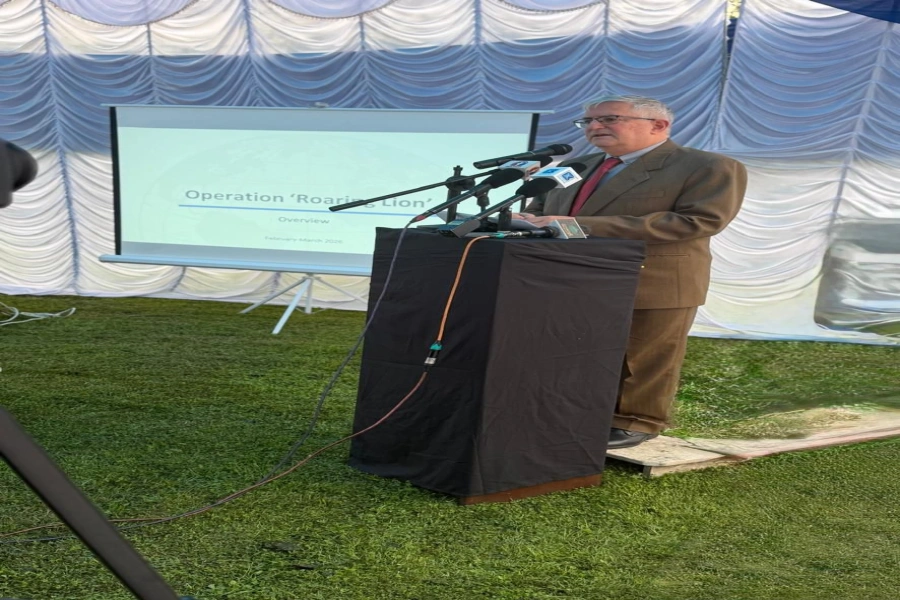
Speaking at a program on Tuesday, hydropower developers said a number of companies in poor financial health have been converting into public limited companies just to gather money from general people to fulfill their vested interests.
“In many cases, the promoters are found leaving the companies by offloading their shares after the private companies convert into public limited companies, it has created unlimited risks to people who invest their money in general shares floated by the companies,” said Kumar Pandey, former vice-president of the Independent Power Producers’ Association, Nepal (IPPAN).
According to IPPAN, more than 100 hydropower companies are now listed in the Nepal Stock Exchange (NEPSE). Additionally, 40 other hydropower companies have been waiting for the regulator’s approval to issue their initial public offering (IPOs).
As per the financial report published by the hydropower companies, almost half of them underwent financial losses in the last two fiscal years. Many of them were found to have manipulated their financial reports to show profits before issuing their IPOs.
BFIs compete to lure investors with schemes for share loans

The hydropower producers can apply for IPOs with the regulatory body after they complete 50 percent of their construction. Likewise, they can float the primary shares following completion of 65 percent of the work. “The revenue generated from selling of electricity by these companies is used to settle their loans.”
Pandey added that wrong precedents have been set due to the lack of proper regulation of hydropower companies going public. According to him, additional funds out of people’s money have also been generated under various programs like ‘Janata ko Jalavidhyut Karyakram, Nepal ko Pani Janata ko Lagani’ and Hydroelectricity Investment and Development Company Ltd (HIDCL), which have risked investors’ money.
Despite the poor financial health of the hydropower companies, the share prices of these companies are found to scale up in the country’s secondary market. Over the past year, the hydropower index soared by around 1,400 points to 3,894.76 points, show the records with the NEPSE. “There is no clear correlation between the financial health of hydropower companies and the abnormal surge in their share prices,” Pandey said.
Bhagirathi Bhattarai Gyawali, member of the Electricity Regulatory Commission, sought a strong role of the board members of hydropower companies to work in the interest of the developers and small investors. “There is a need for devising mechanisms to address grievances of minority shareholders in the sector.”
Deepak Gyawali, former Minister for Water Resources, stressed on the need for minimizing corruption at both the central government and local levels to reduce installation and operation costs to ensure profits for hydropower developers.