KATHMANDU, Nov 25: Digital abuse and online violence have emerged as some of the fastest-growing threats to women’s rights worldwide. Studies indicate that up to half of all women globally have experienced some form of online harassment or abuse. For adolescent girls, it often begins as early as ages twelve to fourteen, at a time when much of their social and emotional development is increasingly taking place online.
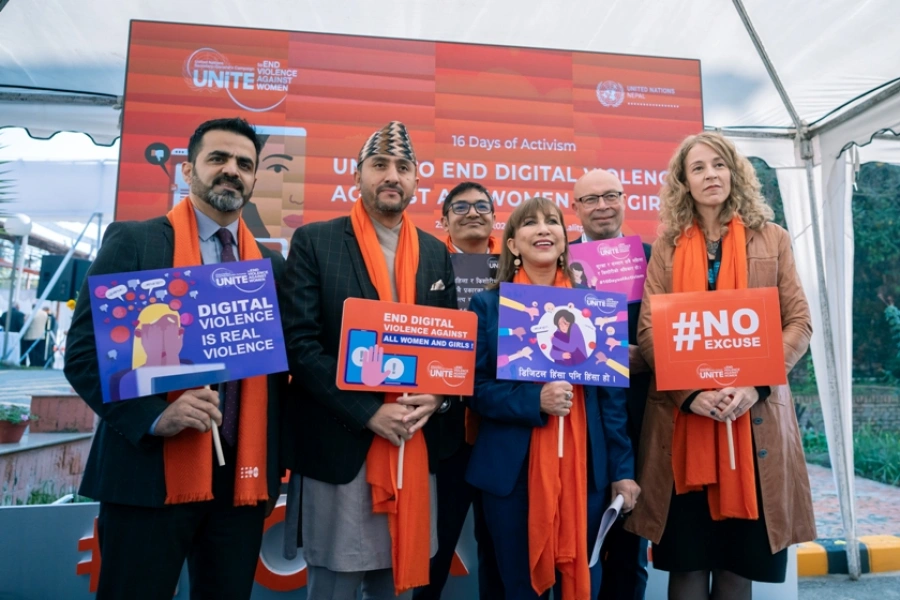
The United Nations in Nepal on Tuesday launched the 16 Days of Activism Against Gender-Based Violence campaign alongside Minister for Communication and Information Technology Jagdish Kharel, reaffirming Nepal’s commitment to making digital spaces safer for women and girls. This year’s global theme, Unite to End Digital Violence Against All Women and Girls, highlights the urgent need to protect young people navigating rapidly expanding digital environments.
Addressing the event, Minister Kharel stressed the importance of fostering a safe, inclusive, and empowering digital ecosystem for every Nepali citizen. “Digital safety is now central to civic participation, access to information and the full exercise of rights in Nepal’s evolving digital landscape,” he said.
Two-day Huawei Digital Nepal Conclave 2022

The programme brought together government officials, UN agencies, development partners, youth networks, civil society, the private sector, and media—all reinforcing one message: digital violence is real violence. Online abuse, sexual extortion, non-consensual image sharing and the spread of misogynistic content cause serious harm to the lives, dignity, and autonomy of women and girls.
Speaking on behalf of the UN in Nepal, Resident Coordinator Hanaa Singer-Hamdy emphasized that digital violence is not only an attack on the rights and dignity of women and girls but also a direct threat to their participation in public life. She noted that online abuse is silencing women journalists, discouraging women leaders, and deterring girls from digital platforms where their voices are vital. Protecting women and girls online, she said, requires a whole-of-society approach—challenging harmful norms, strengthening accountability, and investing in systems that safeguard digital rights. She also stressed the need for digital literacy and online safety education for adolescents, especially boys, to foster resilience and encourage respectful online behaviour.
The event featured a youth-designed mural symbolizing the collective commitment to reclaiming safe digital spaces, along with a fireside chat with influencers and digital rights experts on the rise of online abuse and the need for stronger protections.
Young participants shared personal experiences of online harassment and called for stronger support systems for survivors, action against harmful content, and safer digital platforms for women and girls.
The UNiTE 2025 campaign runs until December 10 under the theme UNiTE to End Digital Violence Against All Women and Girls, urging everyone to stand together against digital violence and uphold digital rights as fundamental human rights. It calls on parents, educators, policymakers and technology companies to take shared responsibility in creating online environments where all women and girls can learn, participate and thrive without fear.