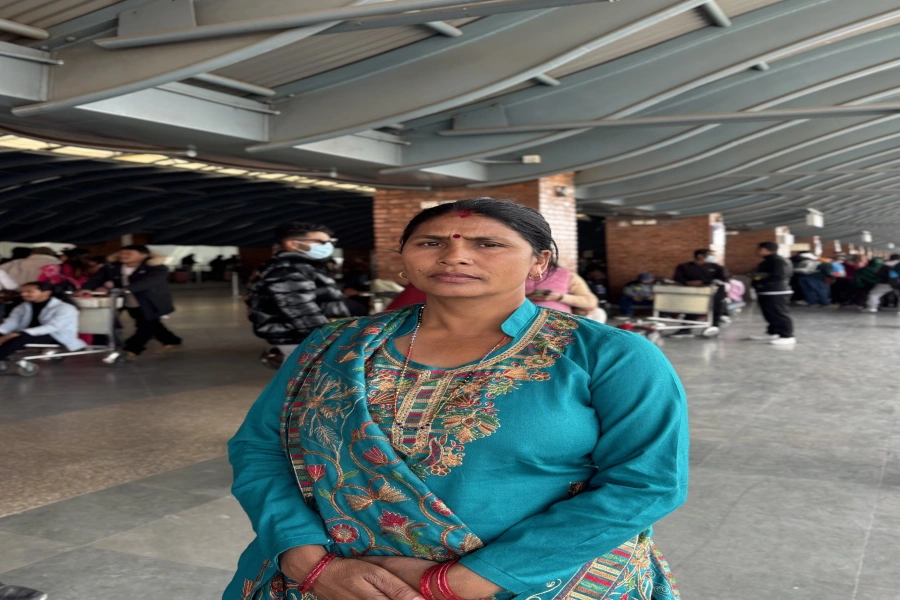
KATHMANDU, March 2: Devi Sunar had come to Kathmandu to see her 23-year-old son Arjun off to Saudi Arabia, his first job abroad.
Instead of bidding him farewell at the departure gate, she now waits anxiously outside the International terminal at the Tribhuvan International Airport (TIA), uncertain when he will be able to leave.
Devi said the family had spent months arranging the required funds for recruitment fees, medical tests, and travel expenses.
“It took us a long time to manage the money,” she said. “We thought once he leaves, things will slowly improve.”
Arjun was set to travel to Saudi Arabia for work for the first time. But with the Middle East tense after the US and Israel’s attack on Iran and the confirmed killing of Iran’s Supreme Leader Ayatollah Ali Khamenei, flights to the Gulf have been suspended.
Nepali authorities have acted swiftly in response. The government temporarily suspended labor permits for Nepalis traveling to Gulf countries, citing security concerns.
Labor, Employment and Social Security Minister Rajendra Singh Bhandari said, “All labor approvals for foreign employment are suspended until further notice. Nepalis stranded at the airport have been advised to return home, and the government is on standby for possible evacuation if needed.”
Nepalis worry for their loved ones in Middle East

According to Chandra Bahadur Siwakoti, Spokesperson at the Department of Foreign Employment, the decision to halt labor permit issuance will remain in effect until further notice. Likewise, a 24-hour call center at the Ministry of Labour has also been put on alert.
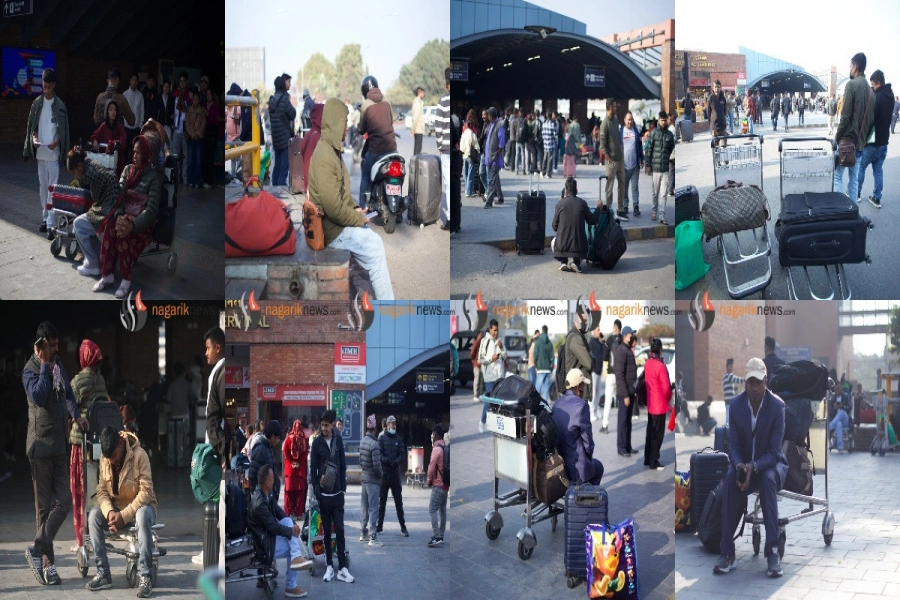
At TIA, Arjun is among more than 1,600 passengers affected after at least 10 international flights to and from Gulf destinations were disrupted. Flights operated by Qatar Airways, Flydubai, Air Arabia, and Jazeera Airways were among those affected. Countries including Qatar, the United Arab Emirates, Kuwait, Iran, Iraq, Israel, Jordan, Lebanon, and Bahrain have either closed or restricted their airspace amid escalating regional conflict. Qatar Airways announced that operations cannot resume as long as the country’s airspace remains closed, promising further updates once authorities declare it safe.
Waiting with uncertainty
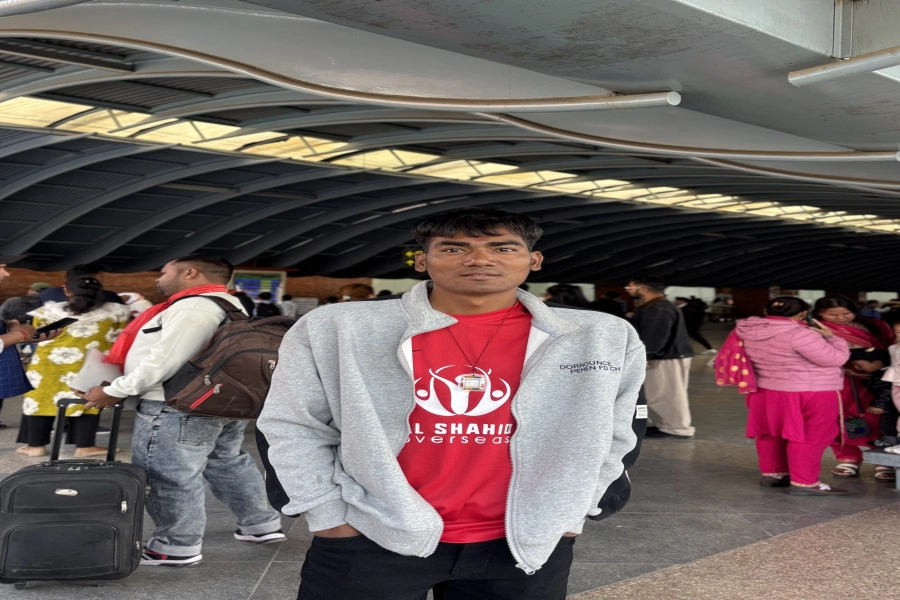
Among those stranded are Rajesh Dhami, 24, and Roshan Dhami, 31, neighbours from Belchauri in Kerabari, Morang. They are part of a group of five young men from Morang and Jhapa, scheduled to fly to Dubai. They have been waiting since Saturday.
For Rajesh, this was his first opportunity to work abroad. Back home, eight family members depend on him.
“The manpower company told us to wait a few days,” he said. “But we don’t know how many days. My family is expecting me to start earning soon.”
Roshan, who has previously worked in the Gulf but was heading to Dubai for the first time, supports a family of six- his parents, wife, and two children. With elections approaching in the country, the group is unsure whether to return home temporarily or remain in Kathmandu in case flights resume on short notice.
“It feels safer to stay here. But, if we go back, and flights open suddenly, it will be difficult to return,” Rajesh said. “If we stay, we spend more money.”
A disruption beyond travel
The disruption at TIA is not just a logistical problem. The stakes are high for Nepal’s economy as well, where remittances are the lifeline for millions of families. Remittance inflows, the lifeblood for millions of families and a key contributor to Nepal’s GDP, surged 39.1% year-on-year in the first six months of the current fiscal year 2025/26, according to the Nepal Rastra Bank. Between mid-July and mid-January, Nepal received Rs 1.06 trillion (USD 7.50 billion) from overseas workers, with net secondary income reaching Rs 1,168.02 billion. While inflows have grown sharply, the number of Nepalis obtaining final labor approvals for foreign employment has fallen, underscoring the delicate balance between the demand for overseas work and the risks posed by geopolitical tensions.
For families like the Sunars and Dhamis, every day of delay is not just anxiety at the airport, it is postponed income, deferred plans, and mounting financial pressure.
Airport authorities have said they are coordinating with airlines for rebooking and alternative arrangements, but further disruptions remain possible if airspace restrictions continue. While some flights were successfully operated until Saturday night, several others were cancelled or placed on standby as the situation evolved.
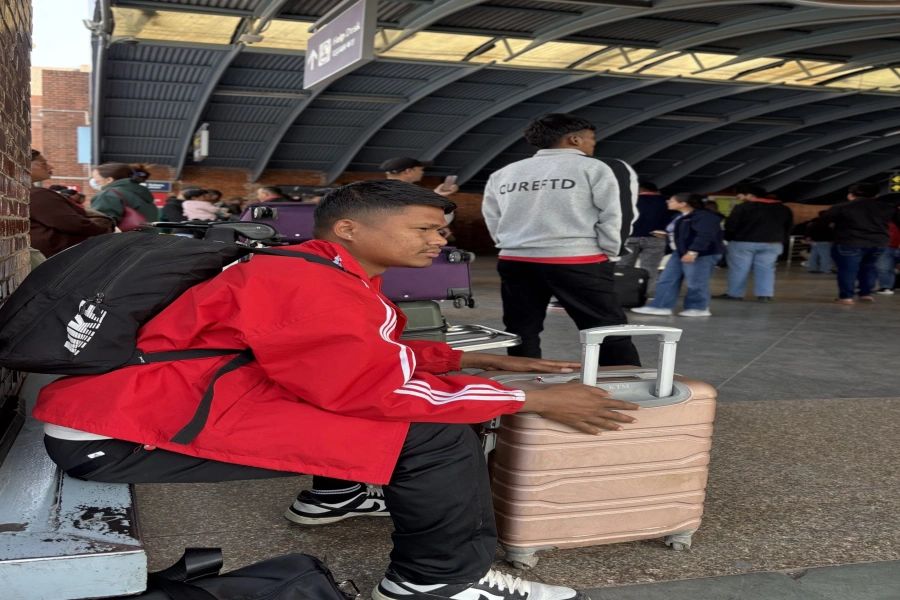
The uncertainty is compounded by Nepal’s upcoming elections. Many families are unsure whether to return home temporarily or remain in Kathmandu, incurring additional expenses for accommodation and food. Among them, dozens of young men sit on their luggage, repeatedly checking their phones for updates, while relatives who had come to bid farewell linger in confusion.
Guidance from authorities
Nepalis abroad are being urged to stay vigilant as regional tensions escalate. The Non-Resident Nepali Association (NRNA) has called on over 1.9 million Nepalis in countries including Israel, Iran, Qatar, Kuwait, UAE, and Bahrain to prioritize safety and exercise heightened vigilance. The association urged Nepalis to stay indoors unless absolutely necessary, follow local directives, and maintain regular contact with Nepali embassies, local communities, and the National Coordination Council.
Nepal’s Ministry of Foreign Affairs echoed the concern, calling on all parties to exercise maximum restraint and resolve differences through diplomacy. The Nepali Embassy in Qatar has also advised workers to follow security protocols, remain indoors, avoid unverified news, and maintain constant communication with embassy officials.
For first-time migrants like Arjun and Rajesh, the uncertainty is particularly distressing. Recruitment processes often involve substantial expenses, and joining dates are fixed. Though manpower agencies have advised them to wait, none of the workers said they had received firm assurances from employers regarding how long their jobs would remain secure. For these workers, the crisis is not only about geopolitics. It is about delayed earnings, anxious families, and the cost of waiting.