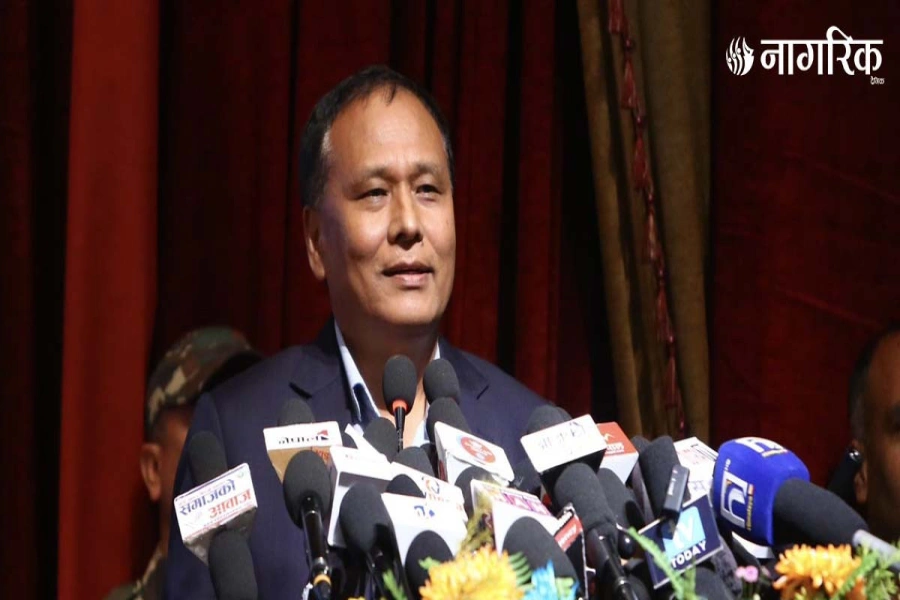
KATHMANDU: The E-Governance Board has convened a multi-stakeholder discussion on the proposed National Data Exchange Platform and data interoperability, a move officials say will simplify government services, enhance transparency and advance Nepal’s digital governance agenda.
The initiative, part of the government’s Digital Nepal framework, is expected to revolutionize service delivery by enabling different government bodies to securely share information through a single interface. Officials said the system would help streamline operations, reduce duplication, and strengthen accountability across public institutions.
ICC T20 World Cup: England set Nepal a challenging 185-run targ...

Addressing the event, Chiranjibi Adhikari, Senior Vice President of the Federation of Computer Association Nepal (CAN Federation) and CEO of One Cover Pvt. Ltd., said the platform will ease the burden on citizens who currently have to submit the same details to multiple agencies. “This initiative will make service delivery faster, transparent, and reliable. Citizens will only need to provide their personal and biometric information once,” Adhikari said.
Adhikari also noted that while tools like the Nagarik App have laid the foundation, the lack of data interoperability continues to create inefficiencies. Agencies such as the Employee Provident Fund and the Social Security Fund follow separate standards, while hospitals are unable to access patient histories from insurers. “The lack of interoperability is a major obstacle. A unified data platform is the solution,” he added.
According to the E-Governance Board, the platform will allow automatic and secure data transfers between agencies, integrating both government and private organizations into a connected ecosystem. Experts said the system could also be leveraged by sectors including healthcare, taxation, customs and national identity management, with potential for artificial intelligence to improve data analysis.
Alongside efficiency, officials stressed that the system will prioritise security and standardisation. By introducing common data protocols, agencies will be able to “speak the same language,” ensuring smoother collaboration and better protection of sensitive information.
The inclusion of the National Data Exchange Platform in the government’s annual policies and programmes reflects its commitment to modernising governance and restructuring service delivery. “The platform is more than a technological upgrade—it is a transformative leap for Nepal,” Adhikari said. “It will simplify administration and empower every citizen.”