It all began on December 22 when the Deputy Commander of the Maoist army, Chandra Prasad Khanal, stirred the hornet´s nest by declaring in Butwal that the ex-rebels would recruit more youths into PLA ranks if the NA goes ahead with its ongoing recruitment drive. Currently, the PLA has 19,602 UN-verified combatants in 28 camps across the country.
A public statement issued a day later by the United Nations Mission in Nepal (UNMIN), alerting both sides that any new recruitment would be a breach of past agreements including the Comprehensive Peace Agreement (CPA), complicated an already prickly relationship between the two armies. What followed were the NA chief calling on the Prime Minister, the Defense Ministry sending a letter to the NA to stop its recruitment, army generals holding meetings after meetings and NA-PLA relations dominating teashop chats.
While the UNMIN statement gave the PLA some comfort, it certainly made the NA feel under pressure, and this was reflected in meetings with the latter and in their quotes to the media. However, statements in this regard coming from the NA, PLA and UNMIN look reasonably justified. The problem lies in their ways of interpreting past agreements, which essentially prohibit any recruitment, and in the short-sightedness of the agreements, which are silent on what to do when positions fall vacant in NA ranks. The issue poses a pressing problem because the army integration process still hangs in the balance.
Maoist: `Wait and see`
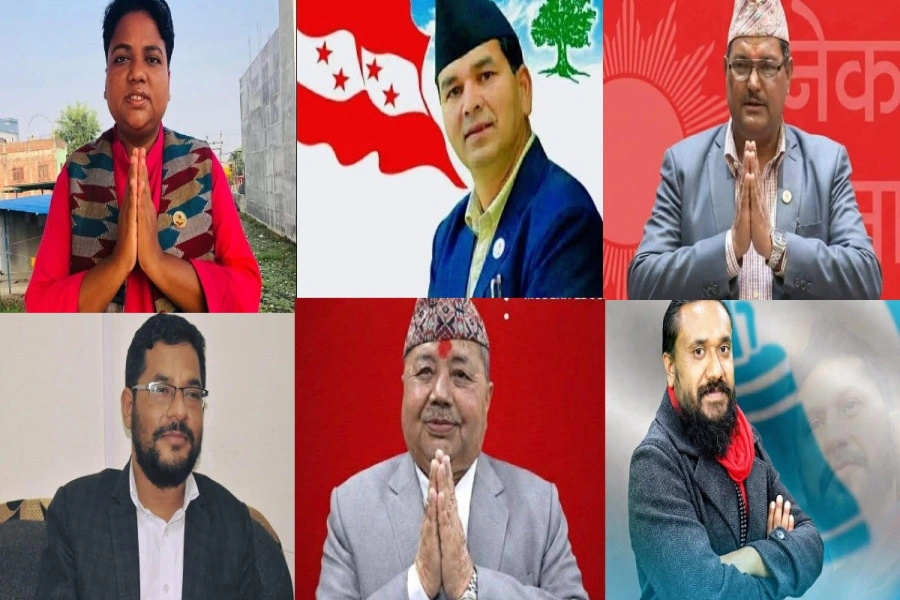
Former deputy commander of the PLA and Maoist leader Barsha Man Pun says they will abide by past agreements, but – he warns – if the NA continues with its recruitment, they will be left with no option than to induct new personnel in PLA ranks. “Why does the NA go for new recruitment? It is certainly [in preparation] for war,” he says. “In that event, we should also be ready.”
However, adds Pun, the PLA won’t go ahead with new recruitment for now. “The NA is under the government,” he says. “So, we should wait for the government’s position on this. Questions will be raised if the NA really completes its current recruitment drive.”
According to Pun, the UNMIN statement – together with Prime Minister Pushpa Kamal Dahal’s initiative to stop NA recruitment – made them rethink PLA commander Khanal’s warning about a new recruitment drive by the PLA.
On the other hand, despite warnings from PLA commanders and PM Dahal’s orders to halt ongoing recruitment, defiant NA generals are still determined to go ahead with their plan to recruit more than 2,800 soldiers.
Given last year´s NA recruitment that went ahead without any protest, fresh NA recruitment this year has become, more than anything else, a prestige issue for the Maoists, who are at the helm of power.
Army: Recruitment a `routine program` with govt’s prior approval
Army spokesperson Brig. Gen. Ramindra Chhetri says the new recruitment drive to fill posts that fell vacant in the last two years since the CPA was signed in November 2006 is part of the army’s “routine program”. “It is a process that started under the general principles set out under the Interim Constitution by representatives from the Public Service Commission, the Defense Ministry and Army Headquarters,” says Chhetri.
NA top brass maintain that Army Headquarters had informed the Defense Ministry about the recruitment process and called applications through public notice in the state-owned Gorkhapatra daily on November 1 and 2. More than 50,000 youths from across the country have applied for the posts. “Stopping this process in the middle of the selection process would not be justified in any sense,” an NA source told myrepublica.com.
Last year too, under the GP Koirala-led government, the NA had recruited hundreds of youths including 143 officers, with government approval. It is a mere coincidence that at a time when the recruitment controversy is picking up, low rank army personnel recruited last year are completing their first military training next week. “This is a permanent army, not like the rebel one. It has its own system and neither the constitution nor the peace agreement bars it from recruiting personnel to posts that fall vacant,” says a senior general.
Justifying the ongoing recruitment, the NA says the incumbent government has allocated about Rs 7 million in the annual budget for the purpose of recruitment.
UNMIN dissuading both armies from recruitment
Criticisms from some quarters against UNMIN, arguing that the UN body didn’t do enough to stop the recruitment, sound somewhat hollow, as UNMIN doesn’t have any enforcement authority and it had alerted the government of the day last year as well as this government well before the NA recruitment started. UNMIN says none of the past agreements, unlike the interpretations by NA generals, implies that filling of vacancies is allowed.
During the negotiation of the Agreement on the Monitoring of Management of Arms and Armies (AMMAA), there was no suggestion that the provision therein stipulating “no additional recruitment” allows the filling of vacancies, nor did it indicate any change of position from the prohibition against recruiting “new people” contained in the Ceasefire Code of Conduct, said Kosmos Biswokarma, UNMIN’s Senior Media Officer.
Moreover, the UNMIN-chaired Joint Monitoring Coordination Committee (JMCC), which has representatives from both the armies, was not informed in advance of the recruitment plans in either 2007 or 2008. JMCC, according to AMMAA, is the monitoring, reporting and coordinating body responsible for supervising compliance by the parties with AMMAA.
UNMIN had tried to dissuade both armies from starting recruitment last year as well as this year. The only difference was: it was engaged in quiet diplomacy last year, while it went public this year. It seems UNMIN issued the latest statement only after Maoist leader Khanal dropped the bombshell because it wanted to avoid any sort of confrontation or recruitment race.
“In the context of earlier reports of new recruitment by the Nepal Army in 2007, Special Representative of the Secretary-General Ian Martin wrote to then Prime Minister and Defense Minister Girija Prasad Koirala on 10 October 2007 saying that new recruitment was a breach of the Agreement and of the Ceasefire Code of Conduct,” Biswokarma told myrepublica.com. However, neither Koirala nor the NA heeded UNMIN’s concerns then. The Maoists also remained unusually quiet.
This year also, even before the NA published recruitment notices in the newspapers, UNMIN chief Martin had drawn the attention of Defense Minister Ram Bahadur Thapa on September 16, 2008 to the recruitments. “(Martin) subsequently wrote to the Defense Minister repeating UNMIN’s position that new recruitment by either the Nepal Army or the Maoist army would breach previous agreements,” said Biswokarma. The government is yet to respond to UNMIN’s letter.
However, UNMIN officials declined to comment when myrepublica.com asked what was the most UNMIN could do in the event NA goes ahead with its recruitment. UNMIN said its position is that the recruitment of any new people by the Nepal Army or the Maoist army is a breach of the Ceasefire Code of Conduct, the CPA and AMMAA.
“UNMIN has consistently taken this view, and has communicated it repeatedly to the Government,” added Biswokarma.
Even after a timely warning from UNMIN and a public call for application of the accords, the Maoist-led government maintained a conspicuous silence for over two months, and asked NA headquarters to stop the recruitment only when the process was in full swing.
tilak@myrepublica.com, yuvraj@myrepublica.com
Related story
PM stresses amity over enmity in foreign policy