The recent BBC documentary on Generation Z is undeniably powerful in its emotional resonance. It captures pain, anger, and perceived injustice in a manner that moves viewers deeply and commands national attention. In doing so, it performs an essential democratic function: amplifying voices that feel unheard and bringing lived experiences into the national conscience.
Yet while the documentary succeeds in evoking empathy, it stops short of examining the deeper governance questions that such moments demand. Emotional narratives, when not anchored in systemic analysis, can inadvertently reduce complex institutional challenges into simplified binaries of victim and perpetrator. Durable reform requires more than the documentation of harm; it requires careful scrutiny of decision-making chains, legal mandates, administrative supervision, and political direction.
Drawing extensively on social media footage, archived news coverage, and individual testimonies, the documentary constructs a compelling narrative foundation. However, the limited exploration of oversight gaps, operational constraints, resource limitations, and the broader state framework leaves a significant policy dimension underdeveloped.
Siddhartha’s Quest: The Birth of Yearning

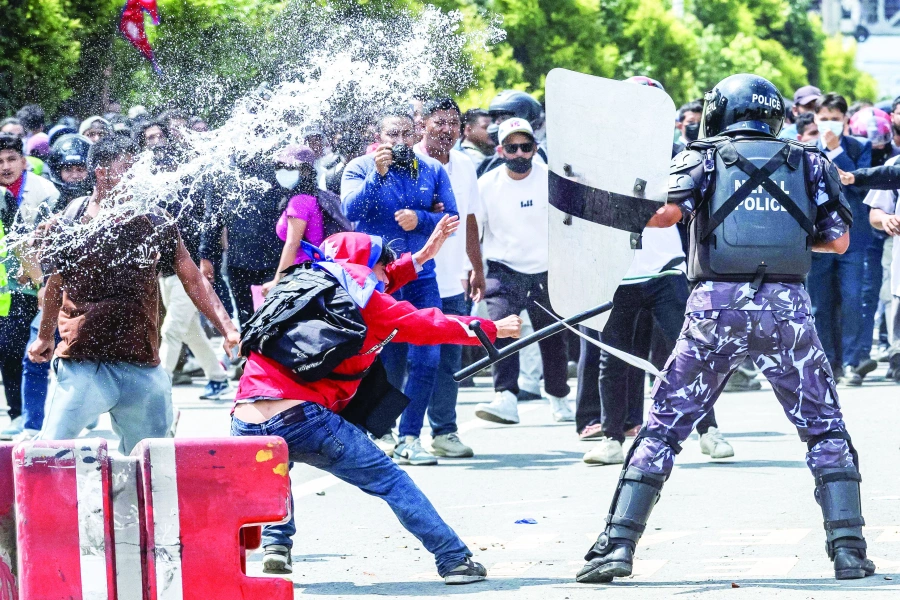
In this context, the portrayal of the Nepal Police risks isolating the institution from the wider machinery of the state within which it operates. Such framing may unintentionally obscure the layered nature of accountability—spanning executive instruction, legislative design, bureaucratic supervision, and field-level implementation. When responsibility is not traced through all relevant tiers, public debate can gravitate toward visible actors while leaving structural questions unresolved.
In a democratic society, scrutiny of coercive institutions is both legitimate and necessary. The more consequential question, however, is whether that scrutiny leads to institutional learning or entrenches polarization. A reform-centered discourse must therefore clarify lines of authority, strengthen credible civilian oversight, protect operational decision-making from undue partisan influence, and embed safeguards that ensure transparency and proportionality.
Historically, the Nepal Police has often stood at the forefront of political turbulence, absorbing public anger during periods of national strain. As the operational face of state authority, it becomes the most immediate point of contact between citizen grievance and government response. Yet accountability processes have frequently remained confined to front-line actors, without sufficiently interrogating supervisory and policy-level responsibilities.
This pattern weakens both justice and institutional resilience. When corrective measures fail to extend upward through the governance hierarchy, the result is cyclical blame rather than institutional improvement. Over time, this dynamic erodes public trust, diminishes morale, and strains the broader relationship between state and citizen.
The present political moment offers an opportunity for re-calibration. The objective is not institutional protection, but institutional maturity. A police service that safeguards the social contract must operate with professional autonomy, clear legal mandates, transparent oversight, and insulation from informal political pressure. Reform efforts should therefore address command accountability, legislative clarity, civilian review mechanisms, operational standards, and communication protocols in a coherent and coordinated manner.
Emotional truth has opened an essential national conversation. Whether that conversation results in meaningful governance reform—or remains an episodic expression of outrage—will depend on the willingness of political leadership and institutional actors alike to confront systemic gaps with sobriety and resolve. It is therefore essential that public discourse moves beyond personalization and toward structural accountability, ensuring that scrutiny strengthens democratic institutions rather than deepening mistrust.