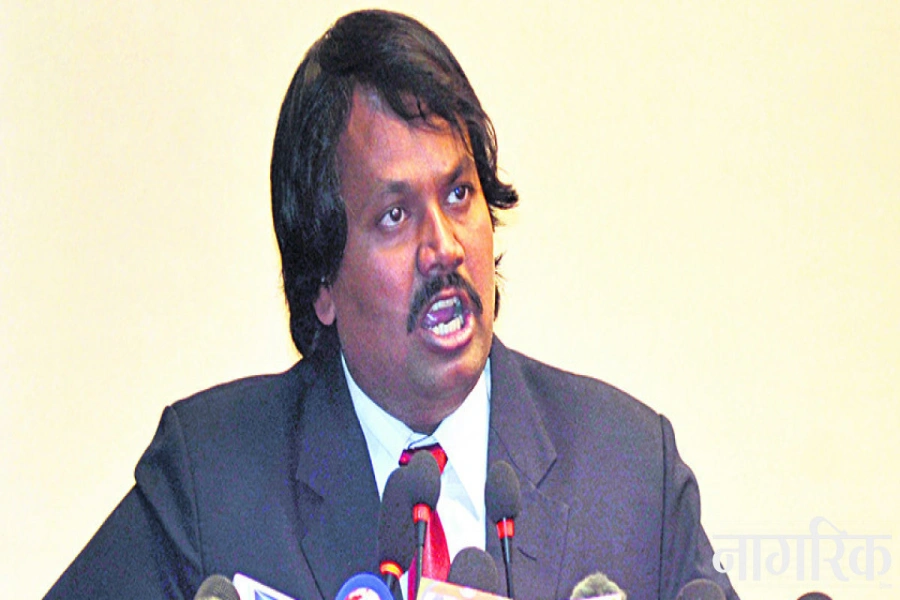
Balen Shah often receives widespread praise on social media for acting quickly and implementing decisions without delay. Some supporters compare him to a Bollywood protagonist dismantling a broken system from within on behalf of ordinary people. Many back him regardless of what he does because they have already boarded the "Balen Shah train."
Others, however, are highly critical of his actions on the very same social media platforms. They have no interest in boarding the train. In fact, some want not only to slow it down but to derail it altogether because they believe it is heading toward an autocratic destination.
Balen Shah has become one of the most polarizing figures in Nepal’s public life. For some, he is a reformer willing to challenge entrenched systems and deliver visible results. For others, he represents the dangers of moving too quickly and placing excessive trust in individual leadership.
The striking divide between these two groups deserves closer examination. The disagreement extends beyond one politician. It reflects deeper differences in how people define effective leadership, evaluate change, and balance reform with institutional safeguards.
Supporters and critics often reach different conclusions not because they observe different actions, but because they apply different standards to the same actions. Those who prioritize rapid reform tend to view him favorably, while those who emphasize due process, consultation, and institutional checks are more likely to be critical.
Supporters see him as a reformer willing to confront an ineffective system. Critics, however, worry that disruption can weaken the very institutions needed for long-term governance.
Debates over squatter relocation, evictions, and public land management illustrate how the same decisions can produce sharply different interpretations. Supporters focus on restoring order and enforcing rules equally, while critics emphasize the immediate impact on affected individuals and communities. The disagreement often lies less in the objective itself than in how efficiency, fairness, and compassion should be balanced.
Kathmandu’s new Mayor Balen Shah’s wife says - “From my Balen,...

His direct communication style also reflects a broader divide between trust in individual leadership and trust in institutions. Supporters view it as transparent and accessible, whereas critics argue that bypassing established channels weakens institutional norms and procedures.
Public perceptions are further shaped by confirmation bias—the tendency to notice information that supports existing beliefs while discounting contradictory evidence. Supporters may highlight actions that reinforce their view of Balen Shah as an effective reformer, while critics focus on incidents that validate concerns about his leadership style. Over time, these selective interpretations deepen political divisions even when people are observing the same events.
At its core, the debate over Balen Shah is not simply about one leader. It reflects competing visions of leadership: change versus stability, decisive action versus institutional restraint, and individual initiative versus collective decision-making.
Ultimately, the debate is about more than policy choices. Supporters value bold action that drives change, while critics prioritize institutional safeguards designed to prevent unintended consequences. Perhaps the debate reveals less about Balen Shah himself than about the values citizens bring to politics. Whether people interpret the same actions as decisive leadership or executive overreach often depends more on the standards they use to judge leadership than on the actions themselves.
Understanding why citizens disagree about Balen Shah is only part of the story. Public perception alone does not determine a leader's effectiveness. The deeper question is whether the qualities that make someone an effective reformer are the same qualities required to become an effective national leader.
From Reformer to Statesman
To assess the transition from reformer to national leader, it is important to examine his approach to governance.
While reformers are often defined by courage and a willingness to challenge the status quo, national leaders must balance courage with patience. Bold action can initiate reform, but effective state leadership also requires strategic planning, institution-building, and careful implementation.
Direct communication and decisive action are valuable reformist traits, but national leadership demands something more: the ability to build consensus, accommodate competing perspectives, and work through institutions to achieve lasting change.
History offers many examples of leaders who excelled at challenging existing systems but struggled when required to govern them. In Nepal, leaders such as Pushpa Kamal Dahal and K.P. Sharma Oli successfully challenged the existing political order but faced significant criticism over their governance. Disruption and institution-building require different skill sets. One rewards confrontation and speed; the other depends on patience, compromise, and sustained coalition-building.
Generation Z leadership has demonstrated strength in challenging existing systems. The question is whether its supporters have chosen Balen Shah as someone capable of succeeding in the second, and arguably more difficult, phase of leadership: governing effectively.
The Psychology of Disruptive Leadership
One striking pattern is that many of the controversies surrounding Balen Shah concern not the goals themselves—whether protecting public land or improving city governance—but the methods used to achieve them. His administration has emphasized rapid action, visible enforcement, and direct communication with citizens. These are hallmarks of a political disruptor: a leader who accelerates change by challenging established practices.
From the perspective of psychology and leadership studies, his approach reflects a results-first philosophy. The emphasis is on producing visible outcomes quickly, even when doing so creates conflict with institutions, stakeholders, or affected communities.
Leaders with a strong action bias often view delay as failure, prompting them to move ahead before building sufficient support for a policy. In such situations, consultation may be seen as slowing momentum rather than strengthening long-term implementation. The risk is that, while attempting to solve systemic problems, leaders may overlook the emotional and economic consequences experienced by those most directly affected.
His reliance on social media reinforces this leadership style, allowing him to communicate directly with citizens while sometimes heightening tensions with existing institutions. Although direct communication can strengthen connections with ordinary citizens, it can also encourage leaders to bypass traditional power structures, believing that public approval alone provides sufficient legitimacy. The danger is that short-term political gains may gradually erode public trust in institutions.
Similarly, successful disruptors often possess strong self-efficacy and a high tolerance for uncertainty, enabling them to take controversial positions despite legal and political risks. However, the same confidence can become problematic when leaders assume that their personal judgment outweighs that of experts, courts, or other stakeholders.
The central challenge for leaders like Balen Shah is preserving the decisiveness that drives reform while embracing the collaboration required for effective governance. His long-term legacy may depend on whether he can transform bold leadership into durable institution-building.
Ultimately, the question is not whether Balen Shah can challenge the system. He has already demonstrated that he can. The real test is whether he can transform that system into stronger and more resilient institutions. History ultimately judges leaders not by how forcefully they challenged the status quo, but by what they left standing after the challenge was over.
The author holds a degree in Psychology and Critical and Creative Thinking and lives with her family in Boston.